
Why we go to the office is changing: Office design for teams
Your people spend longer than ever getting to work, and they notice when the trip buys them nothing they could not have had at home. The answer is not to abandon the office but to design it around what remote work struggles with: fast, face-to-face teamwork. Here is what is changing and how to respond.
The commute is getting longer everywhere
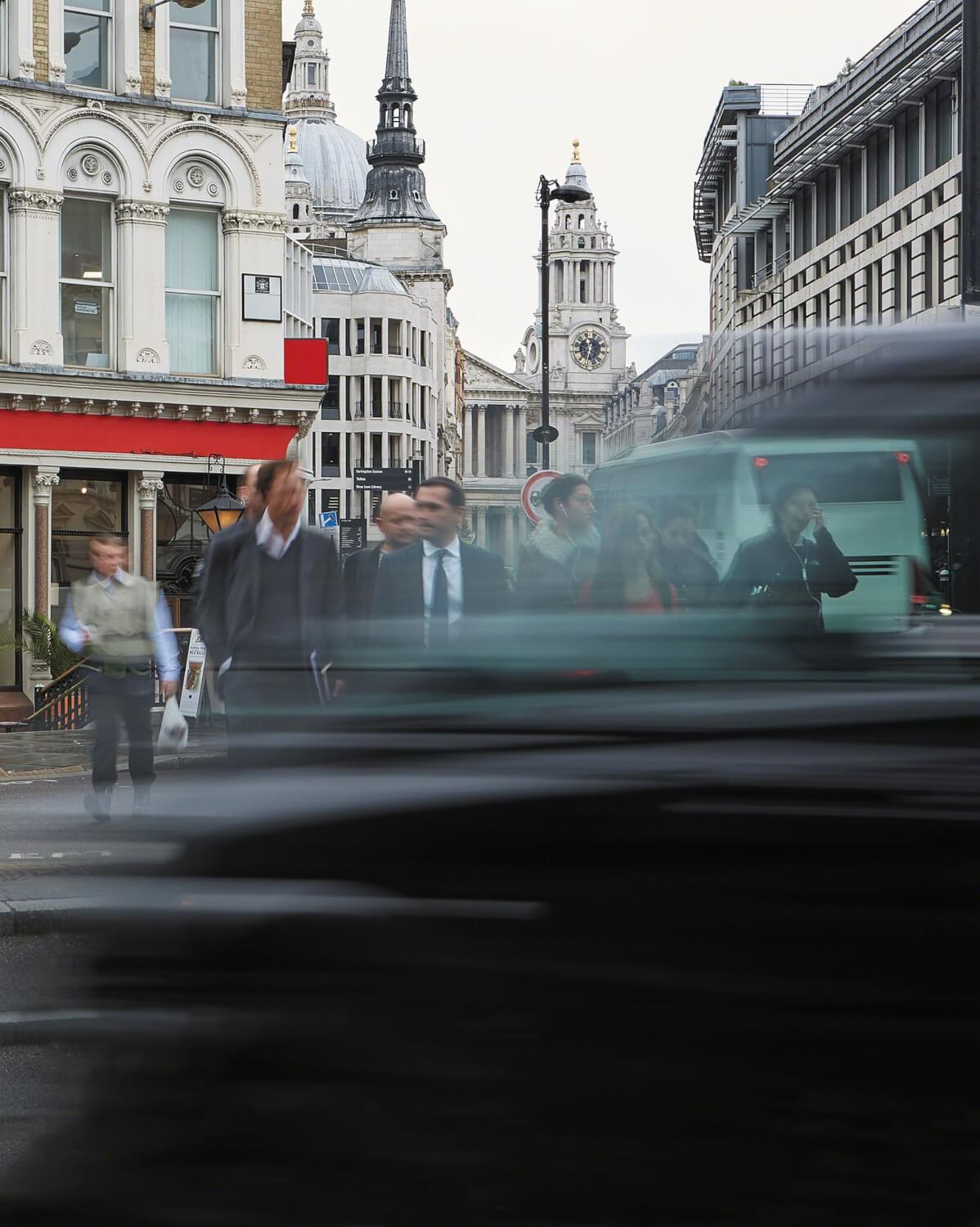
Worldwide, the time people spend travelling to work is rising. New data shows the average American spends over 27 minutes each way commuting. Since 1980, people have lost an amount of time equal to an additional full work week per year just travelling to and from work.
This is not an American problem. Only two American cities make the top 20 for commute times. Mexico City, London, Berlin, Paris, Singapore, Sydney and Toronto all carry the unfortunate title of some of the worst commutes in the world.
The cause is familiar in Belgium too. Rapid economic growth adds jobs in major cities while affordable housing stays scarce, so people live further from the centre. Every extra minute in traffic raises the bar for what the office must deliver.
Why remote work is not the full answer
Some tasks lend themselves to working remotely, but not all of them. Harvard Business Review reported on a four-year study of a major technology company that found remote workers communicated 80% less about their assignments than colocated team members did.
Not everyone has the choice either. According to the Steelcase Global Report: Engagement and the Global Workplace, 55% of people around the world never work remotely. For them, the quality of the office is the quality of their working day.
Work has shifted from relay race to team sport
People now spend more than half of their day working on a team, and that share keeps rising as organisations look to teams to reach the market faster.
High-performing teams move projects back and forth constantly, like a football or basketball team, and depend on one another to finish the work. That is a break from the old pattern, where one person completed a part and passed it on like a relay team. This iterative style works better in person.
Design thinking, for creative problem solving, and agile, for quick execution, push in the same direction. Teams switch modes quickly and physical presence keeps work flowing. Being together also builds community, relationships and trust, the currency of innovation.
What a good home for a team looks like
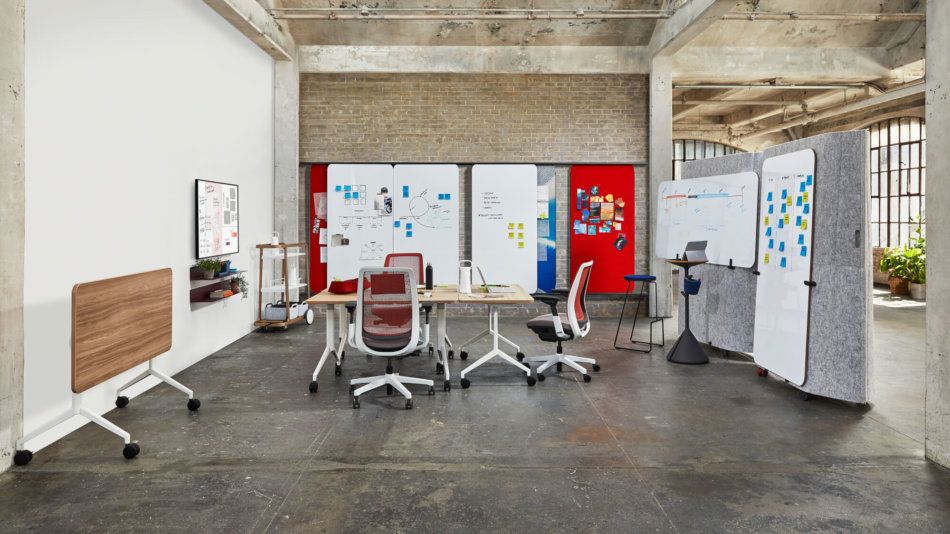
Offices built for a linear process, with rows of desks or closed private offices, do not support iterative teams or the casual encounters that spark ideas. That is why organisations commit more space and budget to team homes and shared areas. Designers suggest a successful home for a team should:
- Help people work in close proximity with easy access to their information
- Empower teams with furniture and tools they can adapt to the task at hand
- Allow people to switch quickly between digital and analogue tools
- Create places that encourage people to engage actively with each other and their content
What shared spaces need to get right
Shared spaces carry the rest of the load: the calls, the quiet hours, the informal conversations. To help people be productive and feel good, successful shared spaces consider:
- The right levels and types of privacy: visual, acoustic and territorial
- Postures that suit the task, from lounge and task height to stool height or standing
- Deliberate proximity between people, their tools, the furniture and the wider space
- A clear expression of the brand and culture of the organisation
How to start rebooting your own office
You do not need a move to make the trip worthwhile. Start by mapping what people actually come in to do, then check whether your floor plan supports those activities or fights them.
- List the activities that genuinely need people in the same room, such as kick-offs, workshops and sprint reviews
- Give each team a home base it can adapt itself, rather than scattered desks
- Add enclosed settings for calls and focus work so open areas can stay social
- Review the layout after a few months, because teams keep changing shape
Designing an office people choose to travel to
The common mistake is to treat this as a furniture question. It is a brief question: what work happens here, who does it together, and what do they need within reach.
Alternativ works from that brief and turns it into team zones and shared spaces that hold up as you grow. We think twice to deliver once.
Scroll or drag
Frequently asked questions
Because iterative teamwork moves faster face to face. Research reported by Harvard Business Review found remote workers communicated 80% less about their assignments than colocated team members did.
No. The Steelcase Global Report: Engagement and the Global Workplace found that 55% of people around the world never work remotely, so the office remains their only workplace.
Design for activities that need people in the same room, give every team an adaptable home base, and add enclosed settings for focus work.
Curious how your office could support the way your teams really work?
Get in touch with Alternativ for a no-obligation conversation.