
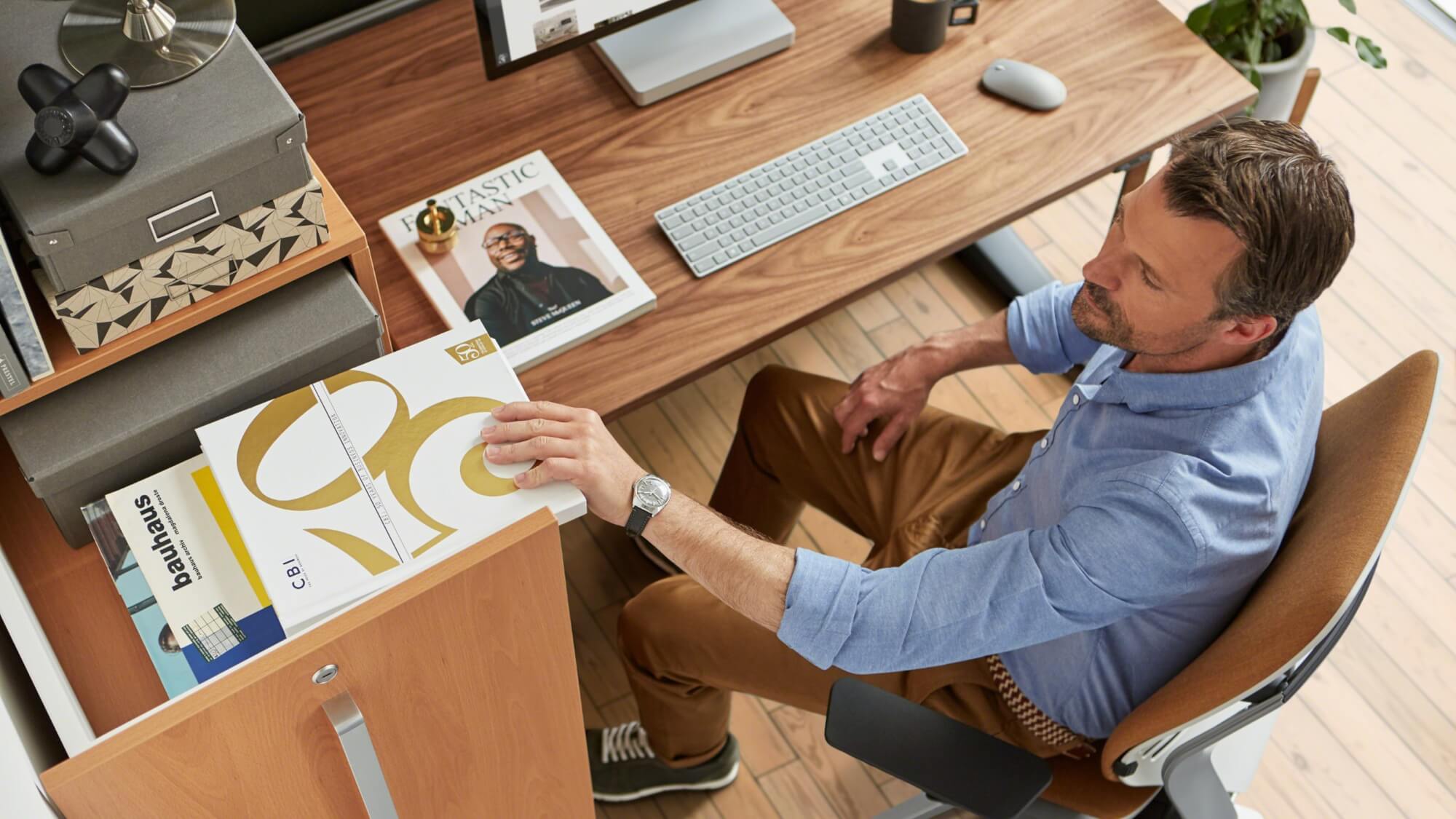
Reduce workplace stress: Six design dimensions that help people recover
If your people come home with the laptop and log back on in the evening, they are not unusual. Stress at work is widespread, and the cost lands on both the employee and the employer. The environment you provide is one of the few levers you actually control. Here is what the research says and what to change.
What a major study found about working conditions
A first-of-its-kind, in-depth study of more than 3,000 US workers by the Rand Corp., Harvard Medical School and the University of California, Los Angeles delivered a blunt message to employers. While many organisations struggle to find and retain highly skilled talent, people on the job are stressed and their physical and mental health is paying the price.
Wow, work is a pretty taxing place for many people, lead author Nicole Maestas told the Associated Press. I was surprised by how pressured and hectic the workplace is.
- Working on their own time — about half say they work off hours to meet the demands of their job
- Not enough time — 1 in 4 perceives they have too little time to do their job
- Telecommuting remains rare — 78% are required to be present in their workplace during working hours
- Poor conditions — 55% work in unpleasant and potentially hazardous conditions
- Frequent disruptions — nearly 20% are interrupted fairly often and view this negatively
- Desires do not match reality — nearly two-thirds say their desired and actual working conditions do not match
Why stress blocks exactly the work you need most
There is a message for employers here. Working conditions really do matter, says Nicole Maestas.
The problems organisations face today are more complex. They require people to innovate, solve problems and work in fundamentally new ways. That kind of creative work depends on taking risks and experimenting, and those behaviours are close to impossible in a stressed state of mind.
When people are in environments that support positive emotions, they are free to be productive, collaborative and creative, says Beatriz Arantes, senior researcher for Steelcase WorkSpace Futures.
Wellbeing is more than a fitness centre
Many organisations start with the physical when they address wellbeing: fitness centres, ergonomics, healthier food. Those help, but research points to designing for holistic wellbeing, covering physical, cognitive and emotional needs together.
A thoughtfully designed ecosystem of spaces, planned around people and with a holistic view of technology and space, helps people achieve more and have a less stressful experience at work. Ongoing Steelcase research identified six dimensions of wellbeing that the physical environment influences directly.
Six design dimensions that relieve stress at work
Each dimension translates into concrete decisions about layout, furniture and the range of settings you offer.
- Optimism — give people choice and control over where and how they work, with spaces for quiet focus and collaboration areas that teams can modify themselves.
- Mindfulness — support focus and minimise distraction with varied settings for individual concentration or one-to-one connection, and let people step away to recharge.
- Authenticity — let individuals and teams choose the environments that suit their working style, and encourage them to display personal items at workstations.
- Belonging — provide social spaces that encourage personal and professional connection, intuitive and easy to reach for both co-located and distributed teams.
- Purpose — create settings for physical and virtual collaboration, use the environment to display materials and communicate team purpose, and provide space for one-to-one and small group work.
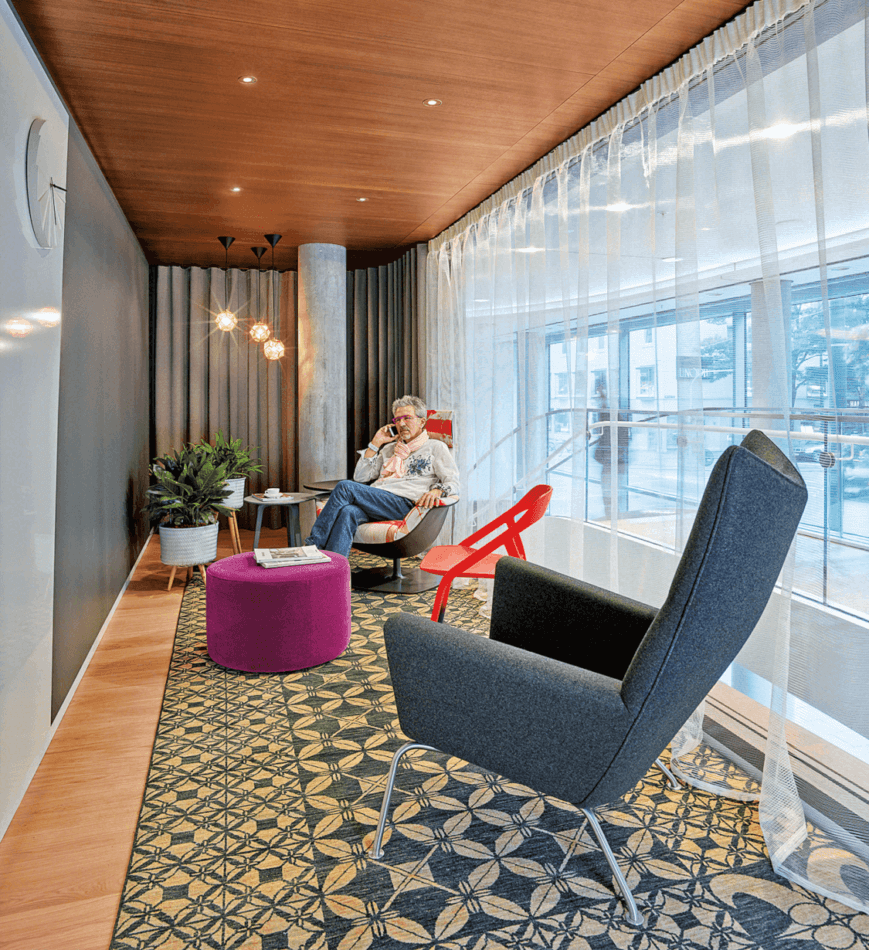
- Vitality — offer indoor and outdoor spaces with posture choice, sitting, standing, perching and lounging, and encourage walking to build energy and improve alertness and focus.
Why no single space can do it all
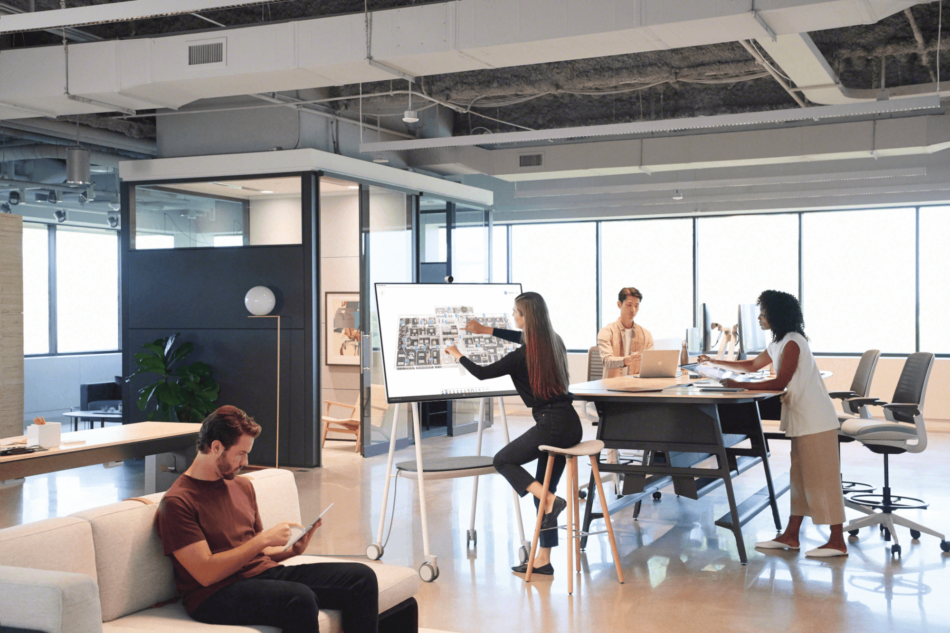
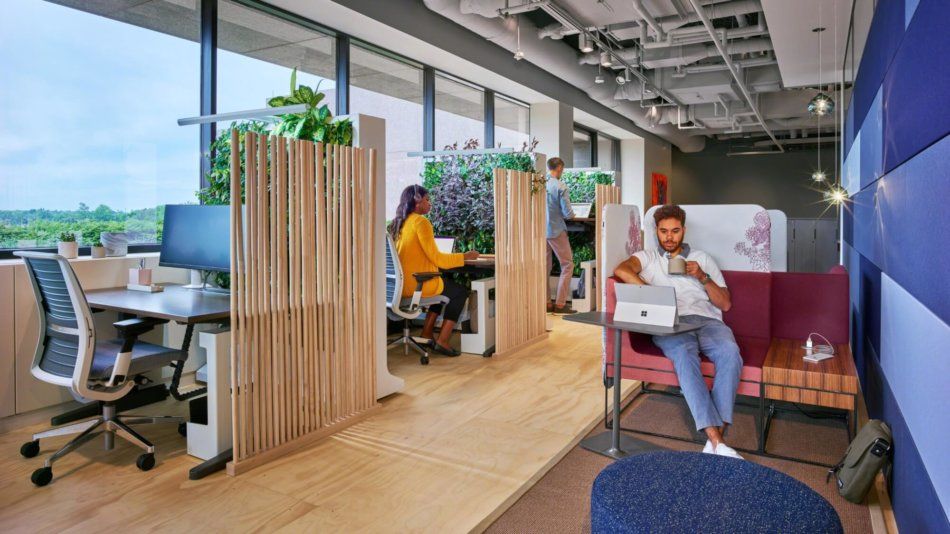
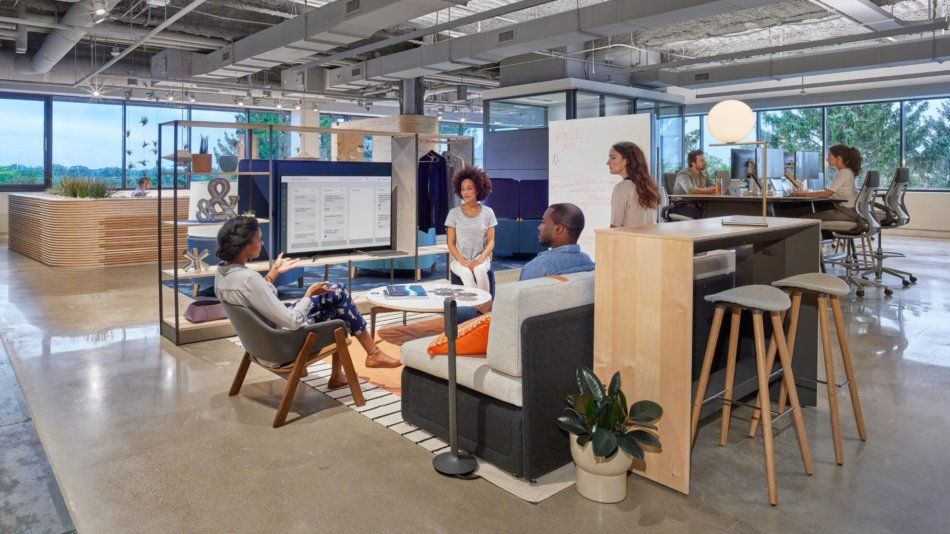
No single setting supports holistic wellbeing on its own. What reduces stress is variety plus agency: a range of spaces to choose from, and genuine choice and control over where and how people work.
Attaining wellbeing at work means creating healthy physical, cognitive and emotional states over time, not one intervention. A floor with only desks and meeting rooms forces every activity into two settings.
Where to start in your own office
Begin with the complaints you already hear. Interruptions point to zoning and acoustics. Booking a meeting room to take a call points to a missing setting. People never leaving their desk points to a lack of alternatives worth walking to.
Alternativ designs and builds offices around that logic: map the activities first, then create the range of settings each one needs. We think twice to deliver once.
Scroll or drag
Frequently asked questions
Yes. Steelcase research identified six dimensions of wellbeing that the physical environment influences directly, and the Rand, Harvard and UCLA study showed how strongly working conditions affect people.
Optimism, mindfulness, authenticity, belonging, purpose and vitality. Each one maps to concrete choices about layout, furniture, acoustics and the variety of settings available.
Because no single space supports everything. Giving people a variety of settings plus control over where and how they work is what creates a less stressful experience.
No. Physical measures help, but research points to designing for physical, cognitive and emotional needs together rather than treating wellbeing as a facility you add.
Want an office that takes pressure off your teams instead of adding to it?
Get in touch with Alternativ.