
How to choose an ergonomic office chair your team will actually sit in
Office chairs come in every shape and size, and the choice rarely gets the attention it deserves. Yet your people sit for most of the working day, at home and at the office, and neck and back problems follow quickly when the chair does not match the body using it. Here is how to pick one that does.
Adjustability is the whole point
A chair is only ergonomic in relation to a person. What matters is the range of settings and how easily the chair adapts to the height and weight of the user.
Five adjustments do most of the work. Check every one of them before you compare prices.
- Seat height, adjusted to leg length so the feet rest flat on the floor and the knees form a right angle
- Seat depth, adjusted to the length of the upper legs
- Backrest height, so the curve of the support matches the curve of the user's lower back
- Armrests, set so the shoulders and neck stay relaxed, with the arms close to the body at roughly 90 degrees
- Backrest tilt, so the chair follows the movements of the user instead of working against them
Not everyone is an average user
Most ergonomic office chairs are made for people of standard height and weight. Smaller people are often overlooked, because factories base their designs on users of around 1.8 metres.
The fix does not have to be expensive. A well-placed footrest is often enough for shorter colleagues to sit comfortably. Larger or heavier users may benefit from a chair with an extra thick cushion or reinforced upholstery.
If your team spans a wide range of body types, plan for more than one model, or for one model with a genuinely wide adjustment range.
Take the context into account
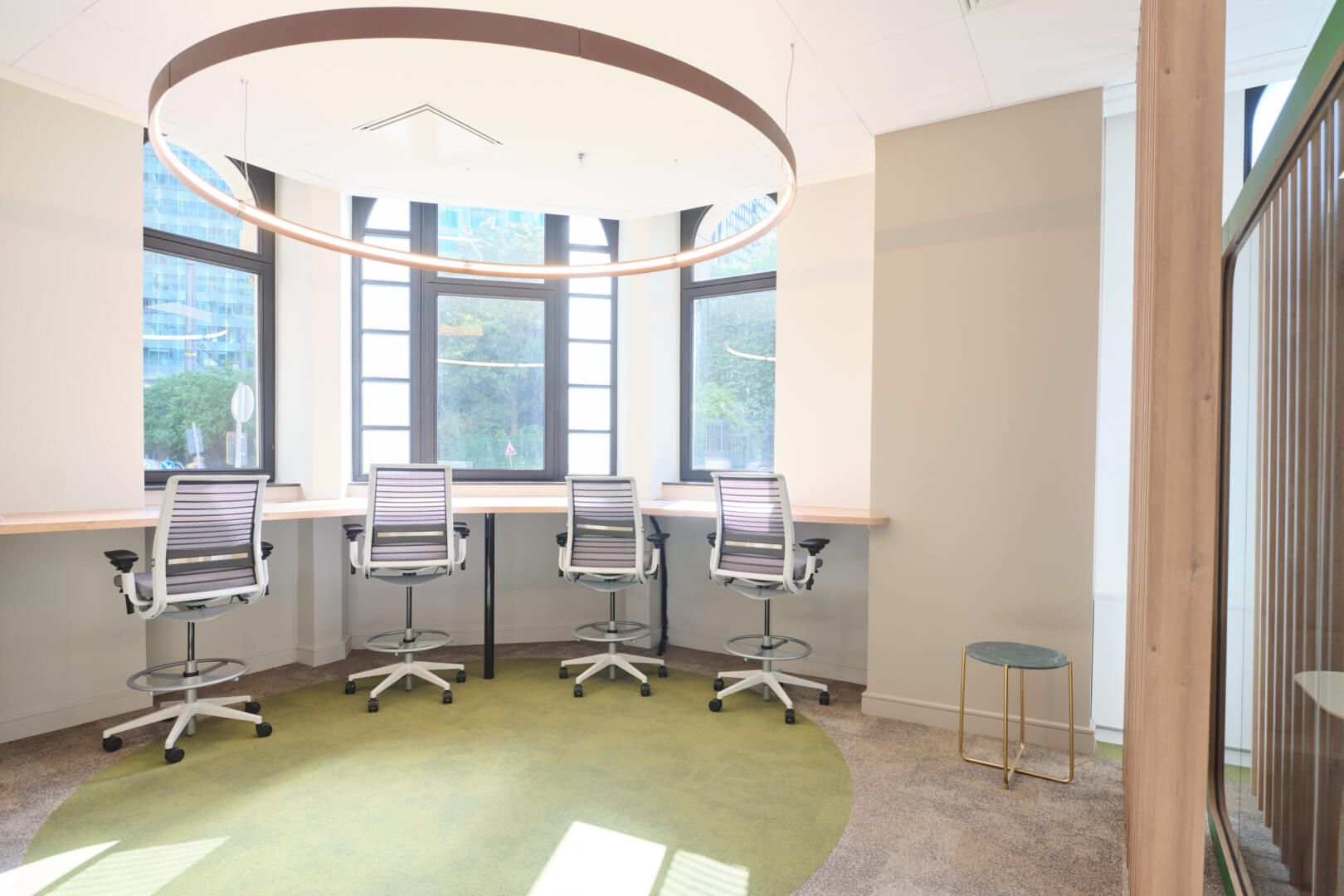
It makes no sense to buy a low office chair for people working at a standing desk. The setting in which the chair is used belongs in the decision.
- Desk type and height, especially where sit-stand desks are in use
- Appearance: design and colour should fit your branding and the image of your company
- Floor covering, because not every castor rolls smoothly on every surface
- Your budget, weighed against how long the chair should last
How to run the selection without guesswork
The only reliable test is people sitting in the chair. A specification sheet cannot tell you whether the lumbar support lands in the right place.
Put two or three candidate models on the floor for a few weeks and let the full range of body types use them for real work. Then ask specific questions rather than which chair people liked.
- Can you set it up correctly within a minute, without instructions?
- Does the seat edge press behind the knees after an hour?
- Do the armrests fit under your desk?
- Does the lumbar support sit where your back actually curves?
- After a full day, where do you feel it?
Why the cheapest chair usually costs more
A chair with few adjustments suits one body type and works against every other. The cost shows up as complaints, absence and replacements a couple of years later.
Ask about the warranty, the availability of spare parts such as castors and gas lifts, and whether the upholstery can be replaced. A chair that can be repaired stays in service far longer, which is better for your budget and for your sustainability targets.
Do not forget the home workstation
Whether people work at home or in the office, they sit for the same number of hours. A well-equipped office loses much of its value if the same person spends two days a week on a kitchen chair.
Include home working in your ergonomics policy: a decent chair, a screen at eye level and an explanation of how to adjust both. The training matters as much as the purchase, because an ergonomic chair left at its factory settings is simply a chair.
Frequently asked questions
The ability to adjust it to the person. Seat height, seat depth, backrest height, armrests and backrest tilt should all be adjustable to the user's body.
Set the seat height so your feet rest flat on the floor with your knees at a right angle, match the seat depth to your upper legs, and position the backrest curve against your lower back.
Most chairs are designed around users of roughly 1.8 metres. A footrest usually solves it for shorter colleagues, while larger or heavier users may need a thicker cushion or reinforced upholstery.
The desk it will be used with, the floor covering and the castors, how the design fits your branding, and your budget over the expected life of the chair.
Want help narrowing down the options for an ergonomic office chair or other office furniture?
Get in touch with Alternativ.