
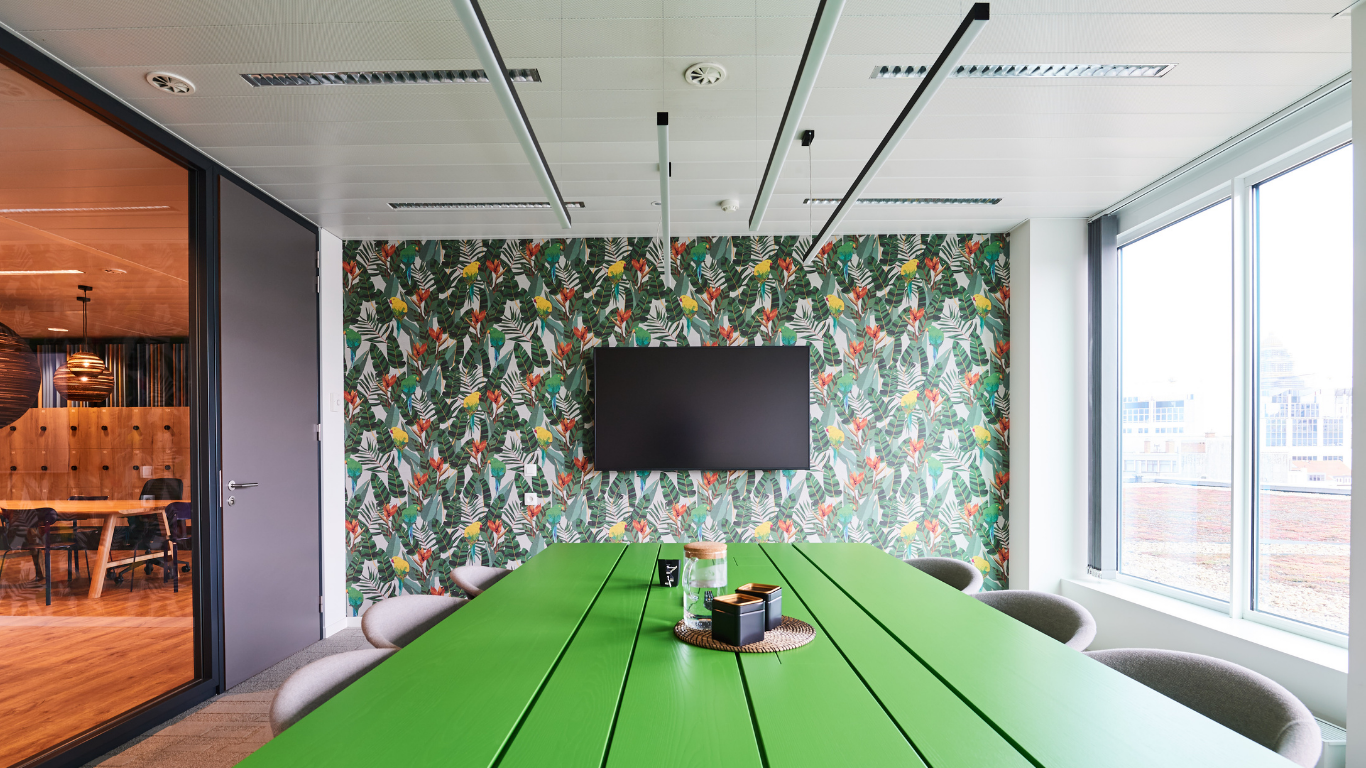
Conference room design: Three things that decide whether meetings work
Most conference rooms are furnished around a table that happened to fit, and everything else is improvised afterwards. Yet the room shapes how people speak, listen and decide. Three choices carry most of the weight: the table, the equipment and how much the space looks like your company. Here is how to get each one right.
Why in-person meetings still deserve a proper room
We work from home more often and Teams, Skype and other online meetings have become the norm. Still, some conversations are simply better in person.
Not everyone finds it easy to speak up in a virtual meeting. Online you also miss the non-verbal signals that show someone disagrees, and long video sessions with many participants drain energy. Getting together in the office now and then is worth it, provided you create the right context and atmosphere.
1. Choosing the conference table
The table is the centrepiece of the room and the piece most likely to be wrong. Three factors decide the choice.
- Available space. Allow at least one and a half metres between the chairs and the walls.
- Shape. A round table creates a more intimate atmosphere and seats more participants, with at least 10 cm between each chair, but a rectangular table also makes a pleasant meeting space.
- Finish. Choose a worktop material that does not show every coffee ring and fingerprint.
When flexibility beats one big table
If you want the room to serve several purposes, one large conference table may be the wrong answer. Smaller tables that can be pushed together or split apart let the same room host a board meeting, a workshop and a training session in the same week.
Check the practical details before ordering: whether the tables lock together evenly, where the cable routing goes, and whether one person can move them without help.
2. Equipment and comfort in the conference room
Think through the communication and auxiliary resources the room needs. A projector and screen, a flip chart, and a smartboard so colleagues working from home can follow proceedings. Then the small things: holders for pens, notebooks and files.
Comfort matters as much as technology. Plants, atmospheric lighting, comfortable chairs and a few well-chosen interior pieces turn a functional room into one people are willing to sit in for two hours.
- A screen and camera positioned so remote participants can see everyone at the table
- A flip chart or writable wall for the thinking that happens out loud
- Enough power and connection points, reachable from every seat
- Chairs rated for long meetings, not just for looks
- Acoustic treatment, so the room does not echo on a video call
3. Branding and company image
Your conference room is where clients and candidates form an impression, so it should reflect your identity. Strategic colour choices and the right designer furniture do most of the work.
Beyond that, small signals help. Put your logo on the meeting room wall, or hang an image that shows what the company actually does. The aim is that anyone sitting down knows whose room they are in.
Mistakes that make a good room feel wrong
Before you sign off the layout, check the room against the ways conference rooms usually disappoint.
- A table so large that people at either end cannot hold a conversation
- Chairs pushed back against the wall because the clearance was underestimated
- A screen placed where half the table has to turn around to see it
- One oversized room when the real need is two smaller ones
- Glass everywhere and nothing soft, so every meeting sounds harsh
Frequently asked questions
Allow at least one and a half metres between the chairs and the walls, so people can get in and out without disturbing the meeting.
A round table feels more intimate and seats more participants, allowing at least 10 cm between chairs. A rectangular table works well too, especially for presentations.
A projector or screen, a flip chart and a smartboard so home-working colleagues can follow along, plus practical extras such as holders for pens, notebooks and files.
Use several smaller tables that can be combined or separated instead of one fixed centrepiece, so the room adapts to the meeting rather than the other way round.
Planning a new conference room or rethinking the one you have?
Let Alternativ know what you need and we will help you set it up.