
What is an agile work environment, and how do you actually build one?
Many organisations adopt agile ways of working and then keep the office that was built for the old ones. The result is daily stand-ups in a corridor and brainstorms that disturb everyone trying to concentrate. An agile work environment is the physical half of the method. Here is what it means and how to create it.
Where agile working came from
Agile working is nothing new. The method emerged years ago in companies that wanted to encourage the autonomy of their employees and respond to customer wishes more quickly.
It brought multidisciplinary teams, short sprints that allow rapid adjustment, and simple tools such as whiteboards where project progress is visible to everyone. Along the way came the realisation that the working environment itself has to support all of this.
What an agile work environment means in practice
Short communication lines are as much part of an agile working environment as ergonomic office chairs are part of a modern office. Daily stand-ups, planning sessions and other brief meeting moments are essential, and they need somewhere to happen.
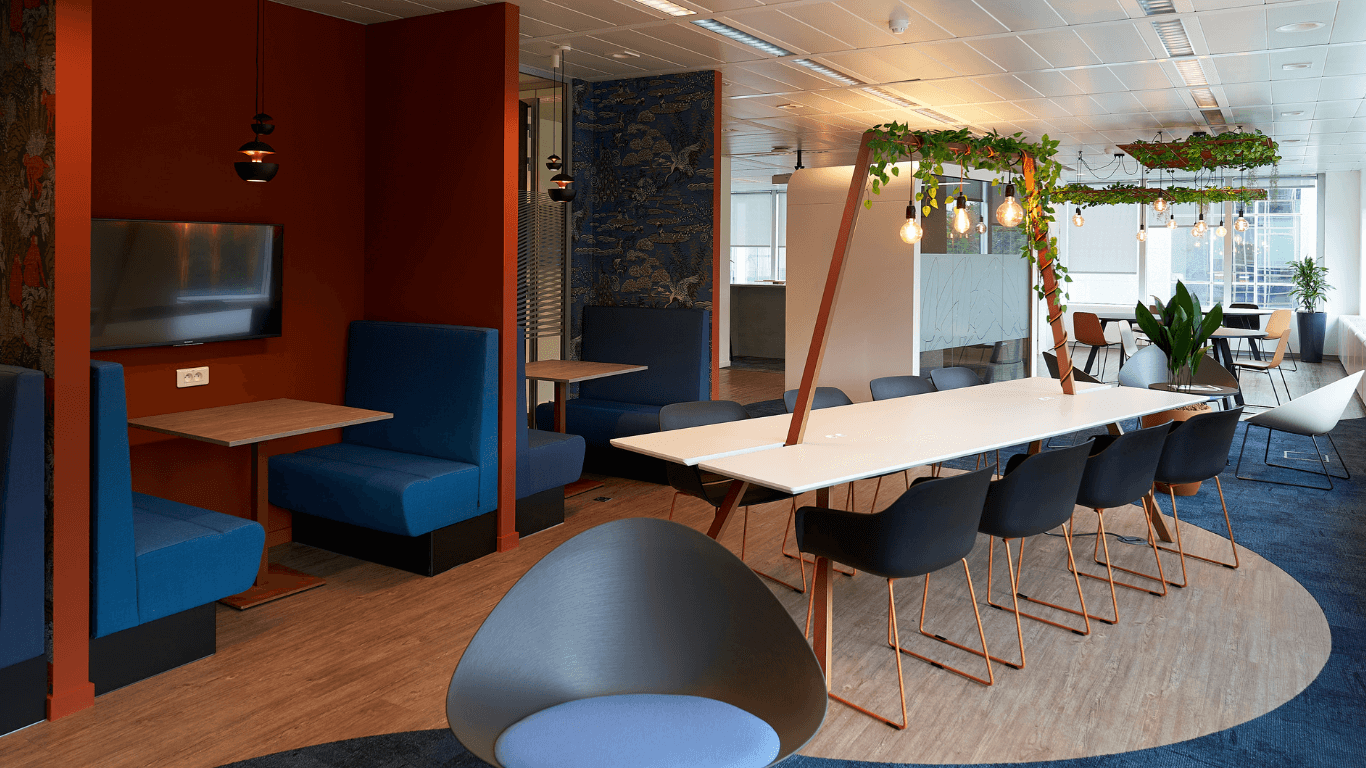
That means a workplace built for cooperation and dialogue between teams: well-equipped conference rooms, but also comfortable corners that invite spontaneous conversation without disturbing the people around them. Acoustic partition walls make a real difference here.
- A visible team area with whiteboard or wall space for sprint boards
- Room to hold a stand-up without booking anything
- Well-equipped meeting rooms for planning and reviews, including remote participants
- Acoustic partition walls between talking zones and focus zones
- Somewhere quiet to retreat to when the work needs deep concentration
Creativity needs permission and space
Creativity and out-of-the-box thinking are inextricably linked to the agile approach. Translated into an office set-up, that means letting go of the classic idea that everyone has their own desk and chair.
A lounge area in the kitchen, or a graffiti artist giving the hallway walls a makeover: why not? The point is that the space should look like a place where new ideas are expected, not merely tolerated.
Ask your own people what they consider a pleasant and inspiring workplace, and what they need in order to come up with new ideas. The answers are usually more specific and cheaper to act on than you expect.
How to make your office more agile, step by step
You rarely need a new building. Most offices become noticeably more agile through a sequence of modest changes.
- Map how your teams actually work: sprint rhythm, meeting frequency, team sizes
- Give each team a home base with visible board space, close to the people they work with
- Separate talking from concentrating, using partitions, pods or distance
- Add modular zones that can be reconfigured when teams change shape
- Check the technology, so remote colleagues can join a stand-up without friction
- Review after a few months and adjust, exactly as you would in a sprint retrospective
Common mistakes when going agile
Agile offices fail in predictable ways, and almost always because one side of the equation is missing.
- Adding collaboration space without adding quiet space to balance it
- Buying whiteboards but keeping teams scattered across different floors
- Fixing the layout permanently, which removes the flexibility agile depends on
- Deciding everything centrally instead of asking the teams what they need
Building an agile workspace with Alternativ
Whether you are setting up a new office or renovating your existing workspace, Alternativ makes it simpler to give your team an agile working environment. Together we set the goals and needs, draft realistic plans, organise the office so it encourages agile working, integrate modular zones that guarantee flexibility, and supply a range of premium office furniture.
Frequently asked questions
A workplace designed to support agile ways of working: short communication lines, daily stand-ups, visible progress and easy collaboration, balanced by quiet areas for focused work.
Space for stand-ups and team boards, well-equipped meeting rooms, informal corners for spontaneous conversation, and acoustic separation so talking does not disturb concentration.
Not necessarily, but the classic one desk per person layout often gets in the way. Teams work better when they can sit together and reconfigure as projects change.
Separate the activities. Acoustic partition walls, enclosed rooms for calls and dedicated quiet zones keep collaboration from crowding out focus work.
Curious what an agile work environment would look like in your office?
Get in touch with Alternativ and we will map it out together.