
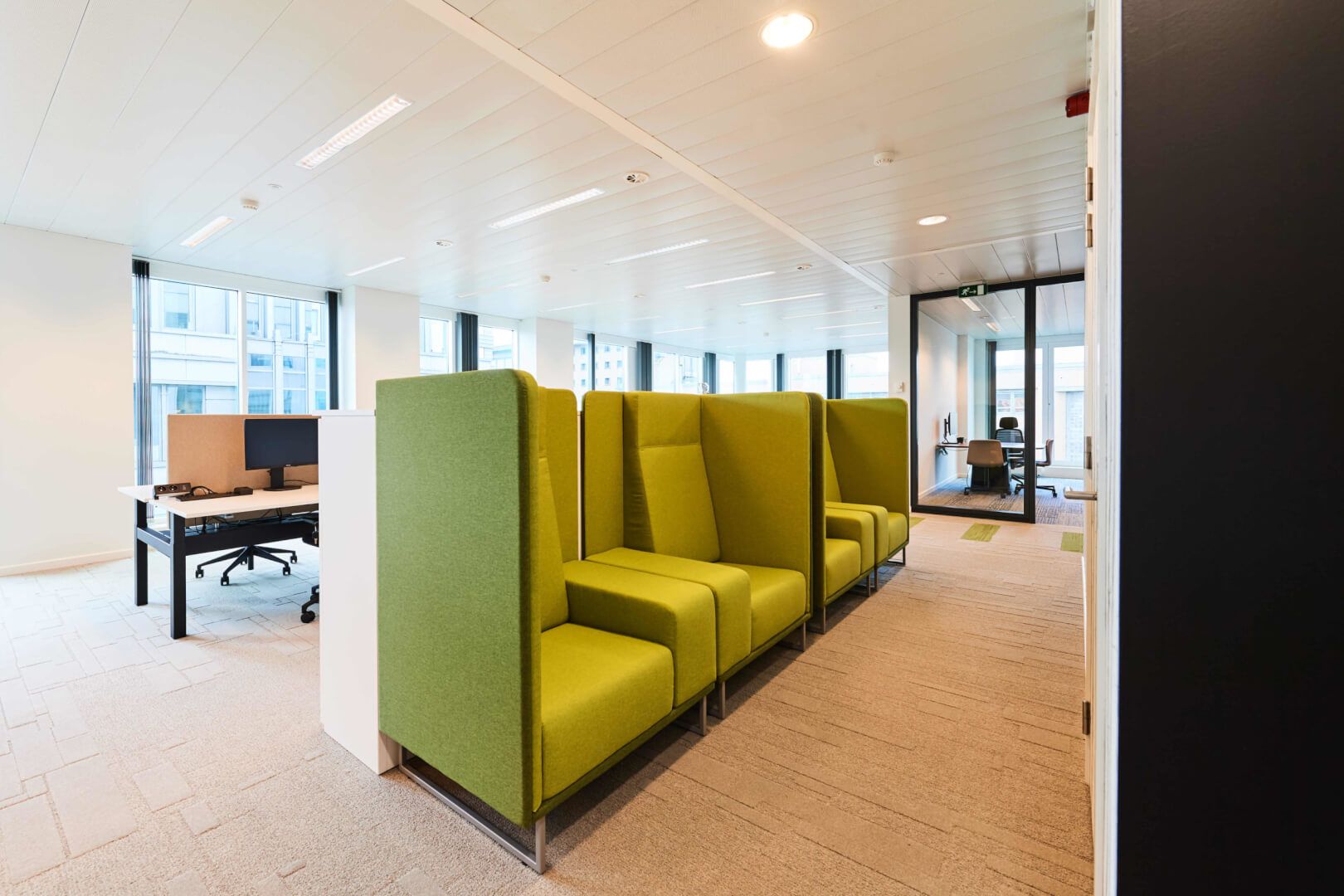
Office acoustics: How to turn noise from irritation into focus
Poor office acoustics are one of the most common reasons employees struggle to concentrate. The fix is rarely more silence and almost always smarter design: zoning the floor by activity, adding sound-absorbing materials, and using acoustic partition walls to separate focus work from collaboration. Here is how to assess the problem and solve it.
Why office acoustics matter more than most teams think
Open-plan offices trade walls for flexibility, and noise is the price. What one person experiences as a lively, social workspace, another experiences as a constant interruption. After years of hybrid work, many people are simply less used to ambient office noise, so the contrast feels sharper when they return on-site. Acoustic comfort deserves the same attention as ergonomics or brand identity, because it directly affects how well people do their jobs.
What the research says about noise at work
The World Health Organisation has long warned against frequent exposure to noise. Belgian social secretariat Liantis surveyed 2,316 employees about noise at work and found that four in ten office workers are disturbed by it. The biggest culprits:
- Talking colleagues — 79.1%
- People walking around — 55.3%
- Noise from outdoors — 21.8%
- Lifts, printers and other equipment — 18.8%
The hidden cost of a noisy workplace
Noise is not just annoying. It makes concentration harder and is linked to stress-related symptoms such as poor sleep and fatigue. At extreme and prolonged levels, it can even damage hearing. For employers, the real cost is indirect but significant: every interruption breaks deep work, and it takes time to get back on task. Multiply that across a floor of people and the impact on focus, error rates and wellbeing adds up quickly.
Acoustic comfort also shapes how people feel about coming in. When the office is the place where focused work is hardest, hybrid employees simply stay home for anything that needs concentration. Good acoustics make the office worth the commute again.
The ABC of acoustic design: absorb, block, cover
Acoustic professionals work with three levers, often called the ABC of acoustics. A balanced office uses all three rather than relying on one.
- Absorb. Soft, porous materials soak up sound so it does not bounce around the room. Acoustic ceiling rafts, wall panels, carpet and upholstered furniture all reduce reverberation.
- Block. Physical barriers stop sound from travelling. Partition walls, glazed fronts, phone booths and concentration pods separate noisy activities from quiet ones.
- Cover. A low, steady background sound (sound masking) makes speech from neighbouring desks less intelligible and less distracting, without adding noticeable noise.
How to improve office acoustics, step by step
Effective acoustic design is layered. In practice, it comes down to a clear sequence:
- Zone the floor by activity. Separate quiet focus zones, phone booths and concentration rooms from collaboration and meeting areas, so loud and quiet work no longer compete.
- Add absorption where people sit. Treat ceilings and walls in open areas first, since they are the largest reflective surfaces.
- Contain the loudest activities. Use partition walls and enclosed rooms for calls, video meetings and brainstorming.
- Tune the details. Soft flooring, planting and a modest level of sound masking smooth out what remains.
Acoustics for hybrid and activity-based offices
Today's office is a multifunctional space. Welcoming clients, preparing presentations, taking video calls, answering email and brainstorming all happen under one roof, and each activity has a different acoustic need. An activity-based layout gives every task its own setting: open benches for collaboration, enclosed rooms for calls, and quiet zones for deep work. The goal is not silence, but the right amount of sound in the right place.
Modular acoustic partition walls
For over 25 years, Alternativ has specialised in designing and building partition walls. Removable, modular partition walls let you adapt the space as teams grow and ways of working change. Available in single or double glazing or solid wood, they are built for noise reduction and easy reconfiguration, so your acoustic strategy keeps up with your organisation instead of locking it in place. Key advantages:
- Easy installation, dismantling and reconfiguration
- A clean, modern design with various finishes
- Strong, measurable noise reduction
- Mobile options for extra flexibility
A quick office acoustics checklist
If you answered yes to several of these, your office has an acoustic problem worth solving.
- Do people wear headphones just to concentrate?
- Are meeting rooms booked simply to take a call?
- Is speech from neighbouring desks clearly intelligible across the room?
- Are ceilings and walls in open areas left hard and untreated?
- Do calls and collaboration happen in the same open space as focus work?
Frequently asked questions
If people regularly wear headphones to concentrate, book meeting rooms just to make calls, or complain about distraction, acoustics are likely the issue.
Absorb, block and cover. Absorb sound with soft materials, block it with partitions and pods, and cover residual speech with gentle sound masking.
No. Modular walls can be installed, moved and dismantled as your team grows or your layout changes.
Start by separating loud, collaborative zones from quiet focus areas, then add absorption to the ceilings and walls where people sit.
Want to find out how to improve the acoustics in your office?
Contact Alternativ for a no-obligation conversation.