
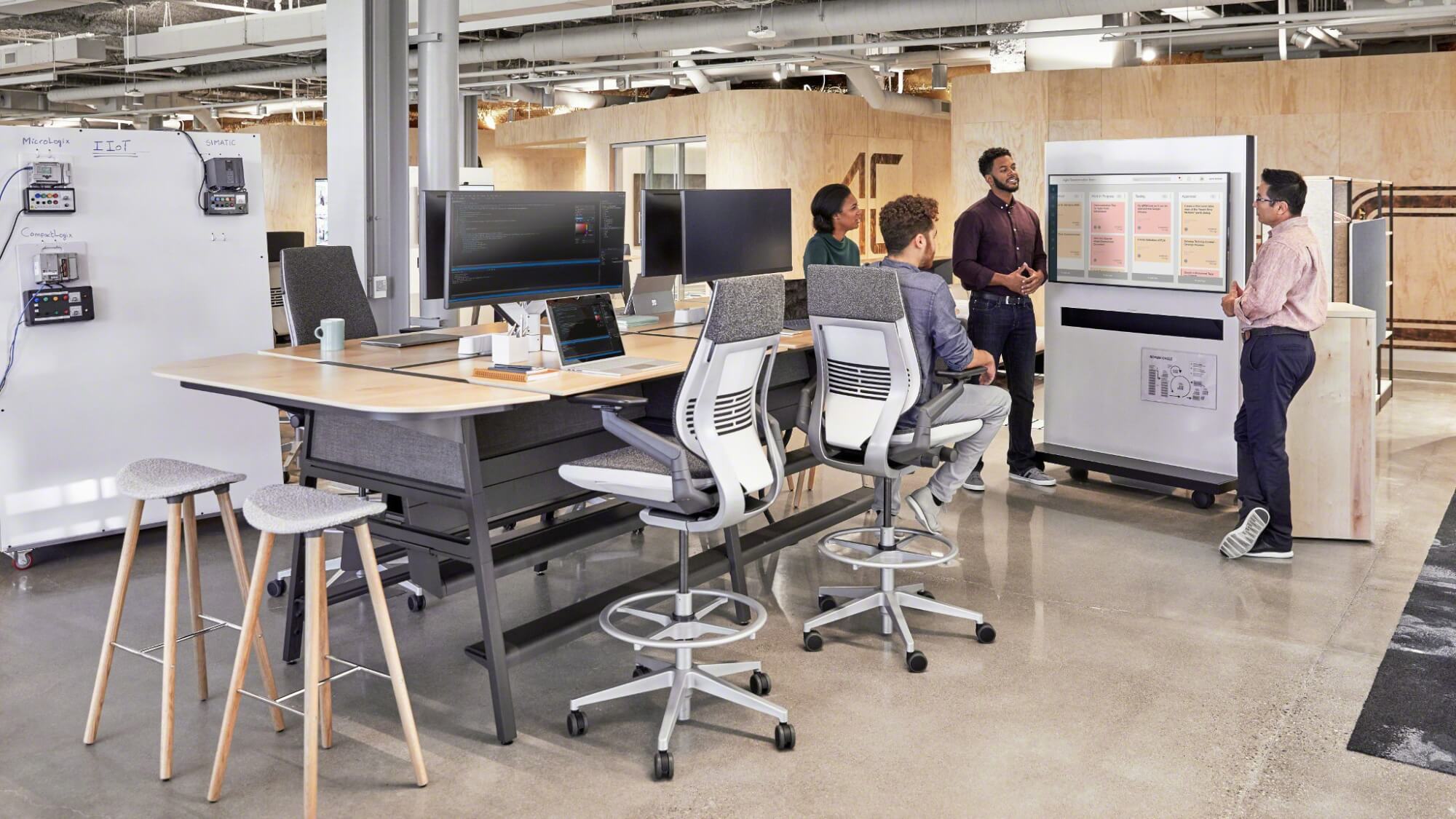
Agile team workspace: A day in the life of an agile team
Agile teams change activity many times a day, and every switch that needs a booking, a lift ride or an email breaks the flow. The fix is a set of settings within reach of the team. Follow Kim and her team through one day and see which spaces carry which moment.
Who the team is
The industrial internet of things (IIoT) is a way for makers to become more efficient, improve quality and control costs. Kim's IIoT team turns those ideas into reality, building platforms that collect facility data around the world and display it visually so people can make better decisions.
The team mixes IT people with business partners such as industrial engineers. For two and a half years they have followed agile principles to get better results faster, and the lessons now reach teams well beyond IT. When Steelcase IT teams moved into their new team-based workspace about a year ago, they increased the amount they got done by 36%.
One day, setting by setting
The day is not a series of meetings. It is a series of moves between settings the team owns or can reach in a few steps.
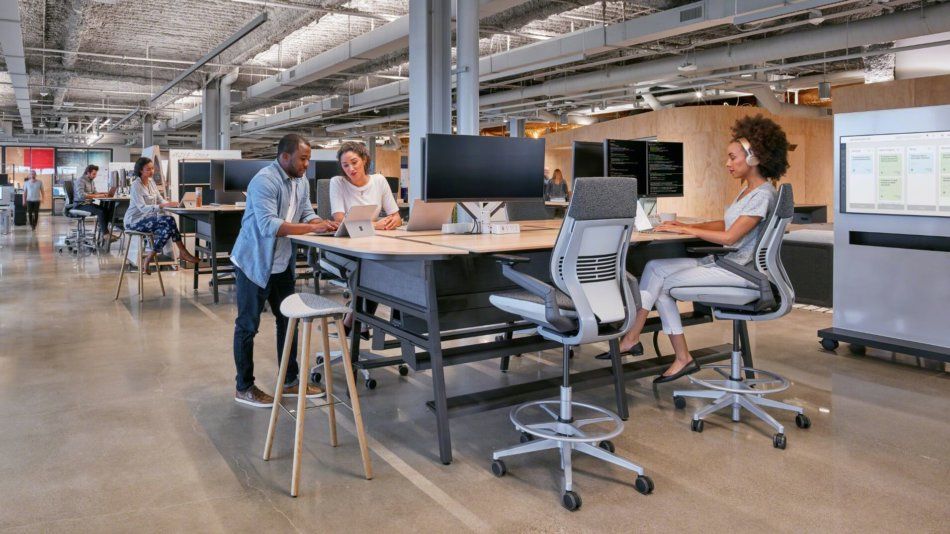
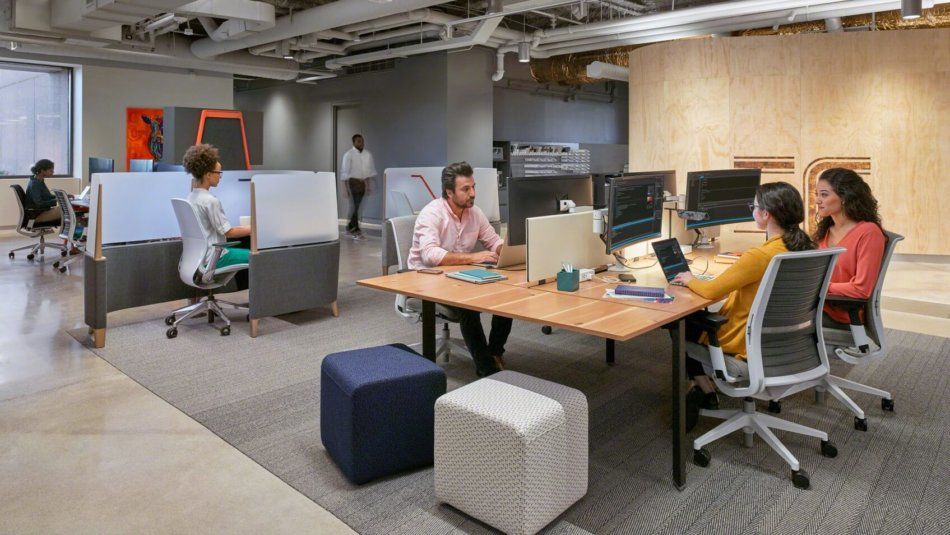
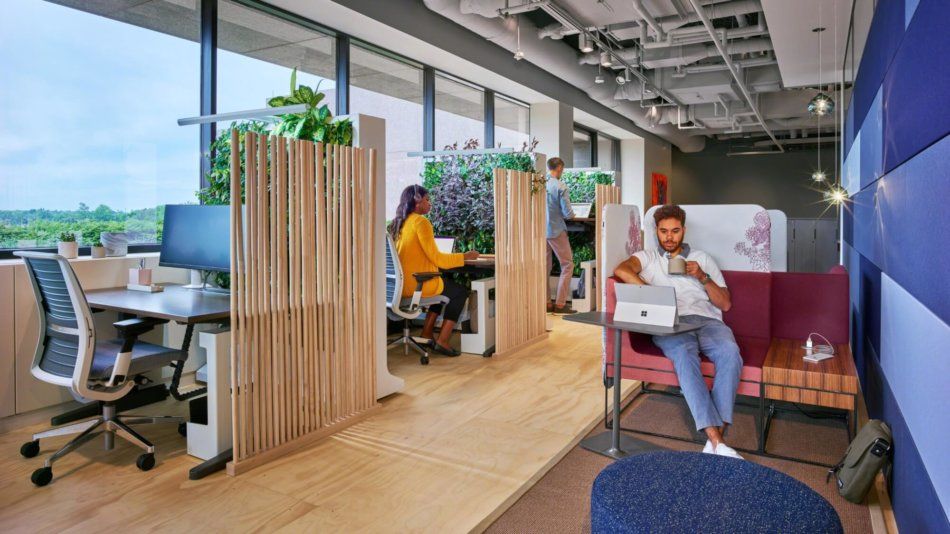
- 8:00 Starting the day — the team checks in together in its own studio. Proximity means questions get answered without scheduling a meeting. A workstation at the back allows focus while staying within earshot.
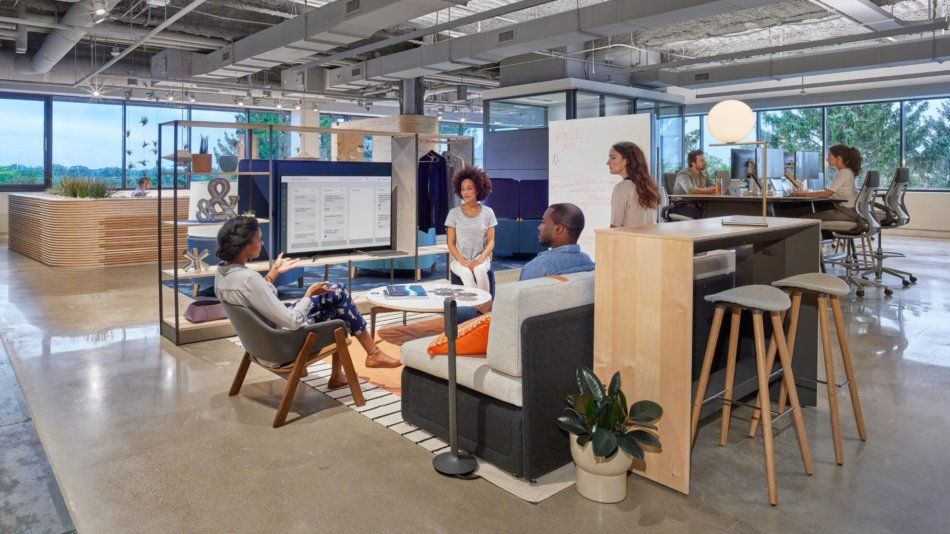
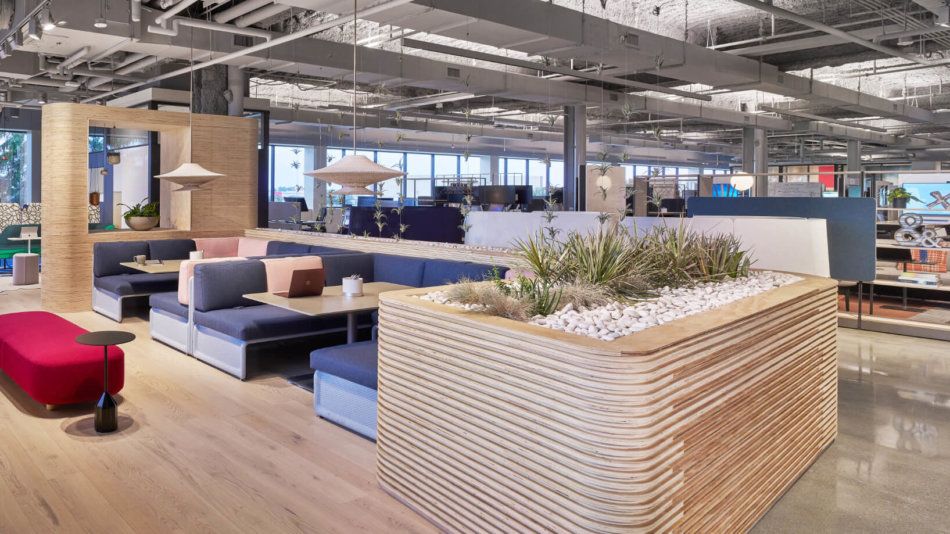
- 9:00 Daily stand-up — held on the Front Porch, an informal spot next to the studio that the team also owns. Relaxed postures keep the conversation open.
- 9:15 Face-to-face work — a block of time together in the studio, where presence builds cohesion and trust.
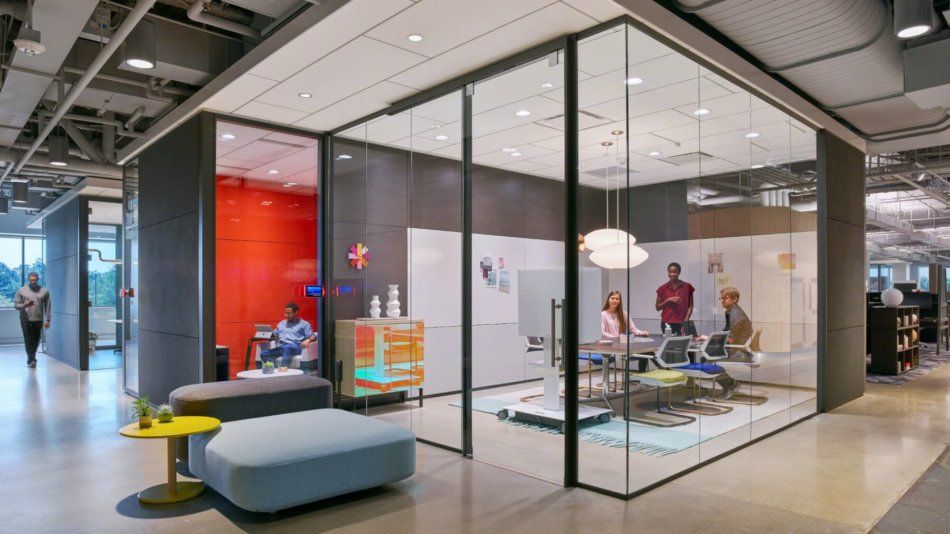
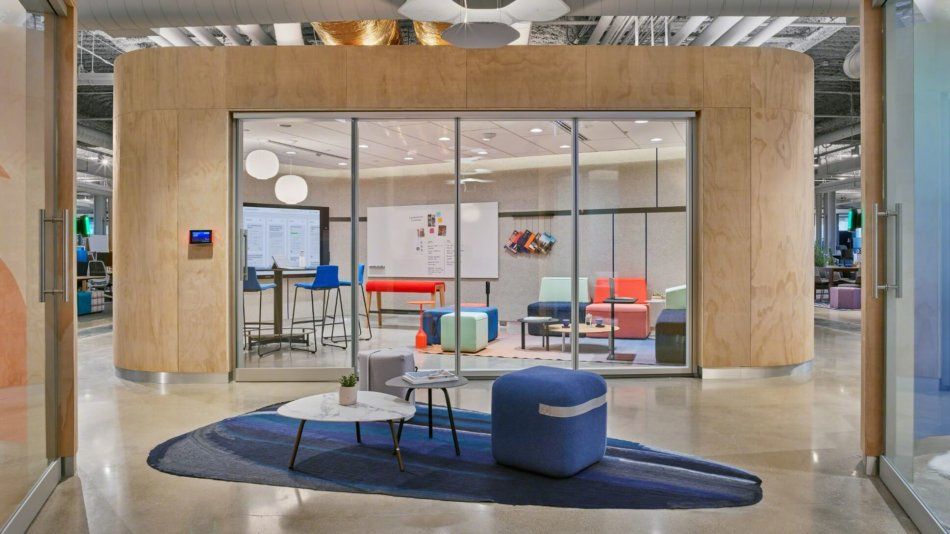
- 10:30 Customer connection — Kim reviews project criteria with an internal business partner in an enclosed room in the Business District, a few steps from the studio.
- 11:00 Camp here — the business partner will join the project, so Kim shows them the Flex Camp, where anyone can camp for hours or weeks to stay near the team.
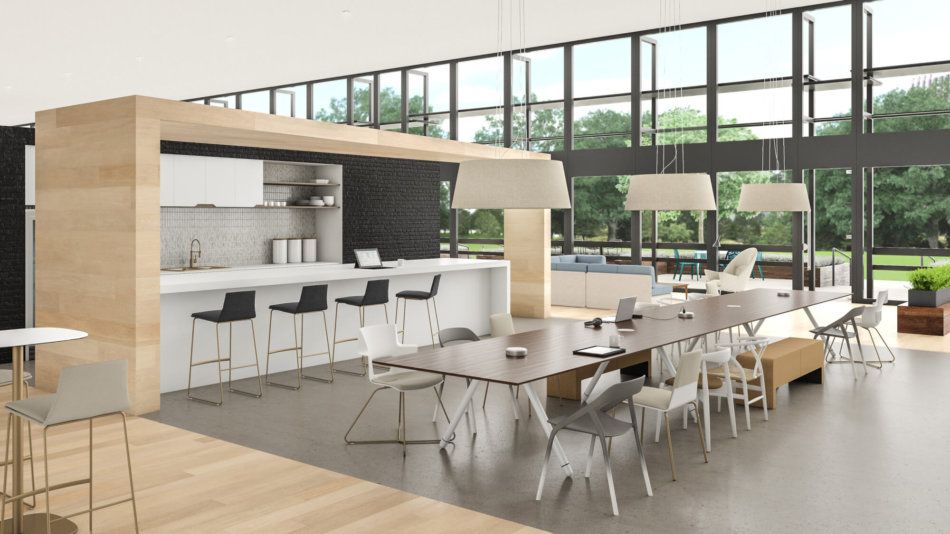
- 12:00 Cafe conversations — lunch in the central cafe, where running into other teams spreads best practices.
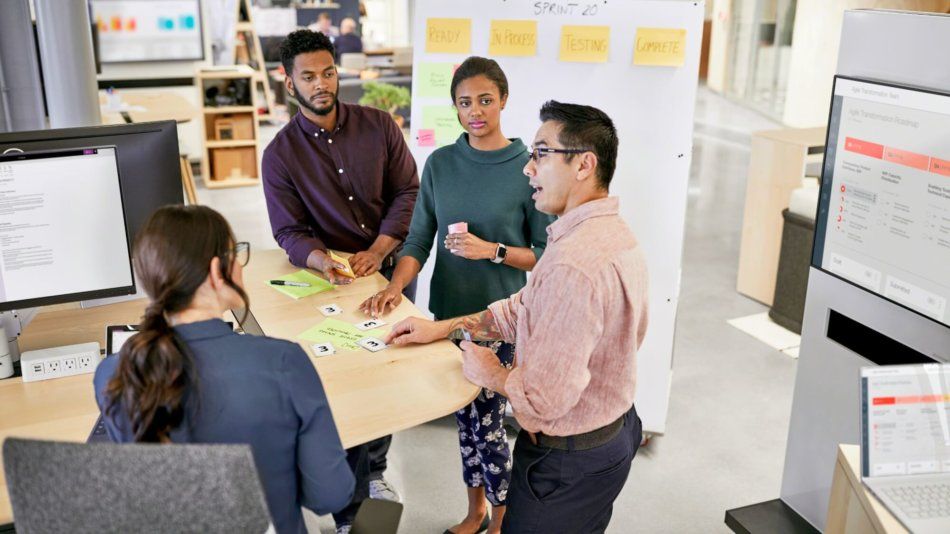
- 13:00 Sprint planning — back in the studio, surrounded by vertical whiteboards and a digital display that make dependencies, challenges and alternatives visible.
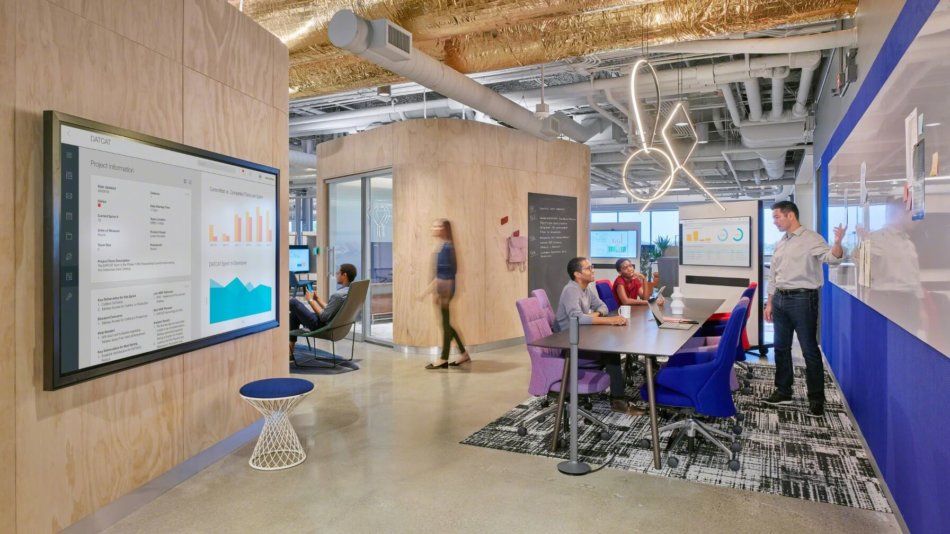
- 14:00 Breaking down barriers — the team walks to the leadership area, where leaders are present and dashboards scroll through project summaries, so blockers get raised.
- 14:30 Re-energise — a retreat to the Garden, where individual spots connect people to nature and collaborative areas offer a place to socialise.
- 15:30 Comfortable collaboration — a video call with a colleague in Portland, Oregon from a shared pod with informal postures that encourage creative thinking.
- 16:30 Team celebration — a short moment together before heading home, building momentum.
What the new space changed
Steelcase measured the move with sensors, observations, interviews and workshops, looking at the intersection of process, culture and place. The early findings on learning and productivity:
- 36% increase in velocity, showing the workplace helps individuals perform better
- 11% increase in the number of people who say they have greater choice in the work environment
- 6% increase in people who say they have places to re-energise
- 18% fewer people concerned about access to equipment and tools
- 9% increase in people who say they have access to privacy
The effects that do not show up as a number
Relationships grew stronger: trust increased, with fewer people concerned about misunderstandings between colleagues, people spent more time connecting outside their own group, and collaboration with external partners and IT customers went up.
People also felt more connected to purpose. Individuals feel more valued by the organisation, leaders became more accessible and visible, the connection to strategy grew, and the number of one-on-ones between leaders and individuals increased.
How to build this in your own office
You can reproduce most of this pattern without a new building. The logic is simple: every recurring activity gets a setting, and the settings sit close together.
- Give the team a studio it owns, with room to work together and to step back and focus
- Add an informal spot next to it for stand-ups and visitors, so guests do not interrupt the work inside
- Keep enclosed rooms for customer conversations within a few steps, not on another floor
- Reserve space where outsiders can camp for the length of a project
- Cover the walls with writable surfaces, because visible work is faster to pick up than reported work
Turning the pattern into a plan
The hard part is proximity: fitting studio, porch, enclosed rooms and quiet spots into the square metres you have. Alternativ designs and builds that layout, so your teams stop travelling through the building to do their work.

Scroll or drag
Frequently asked questions
It is a cluster of settings owned by one team: a studio for shared work, an informal spot for stand-ups, enclosed rooms for calls and quiet places to focus.
When Steelcase IT teams moved into their new agile workspace, they increased the amount they got done by 36%, measured as an increase in velocity.
It is space open to anyone, where a colleague or partner can camp for hours or weeks to work near an agile team during a project.
Want your teams to move through the day without losing flow?
Contact Alternativ to look at your floor plan.