
Agile headquarters: How VodafoneZiggo designed space for an agile culture
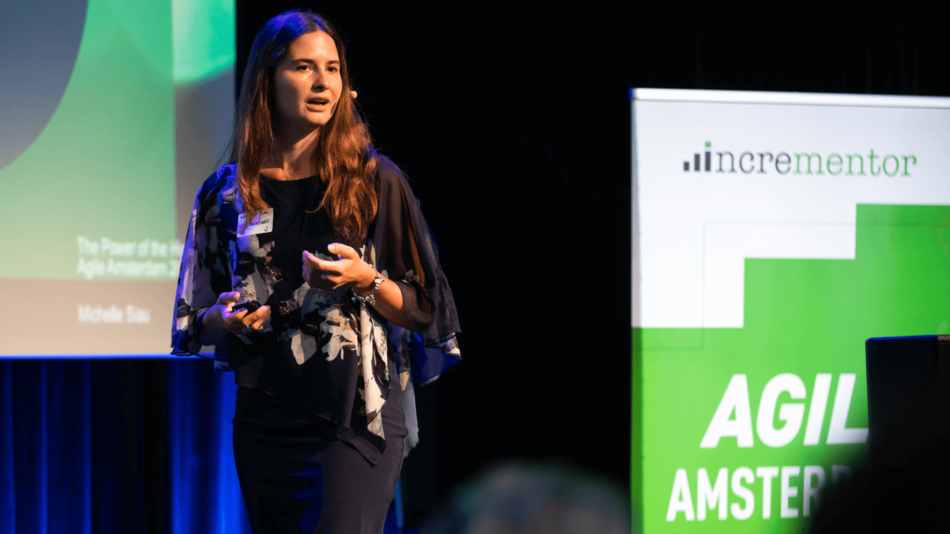
You can train teams in agile and still watch the method stall, because the building keeps working the old way. VodafoneZiggo took the opposite route and used a new headquarters to support the culture it wanted. Here is what agile transformation coach Michelle Siau learned, and which of it applies to your own floor.
One building for companies that used to be separate
VodafoneZiggo describes itself as the driver of Dutch digitalization, building the network of the future. From video conferencing to entertainment, from fixed to mobile, the company connects consumers and businesses.
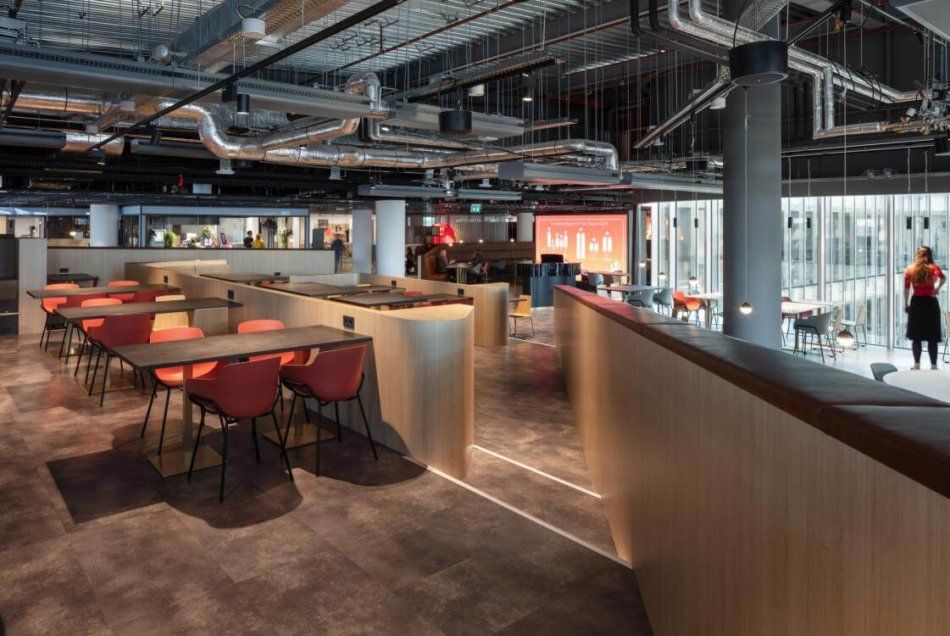
Vodafone, a leading mobile business, and Ziggo, a successful broadband and TV business, came together in 2016. In the autumn of 2018 they moved into a new headquarters in Utrecht, consolidating multiple offices together for the first time. Steelcase worked with VodafoneZiggo, Res and Smit and OCS plus Steelcase to create the workplace. About six months after move-in, 360 visited and sat down with Michelle Siau, agile transformation coach.
What agile actually asks of a space
For agile to succeed, groups need to come together and interact, Siau explains. Teams that used to belong to different companies now share one building, so knowledge moves between them.
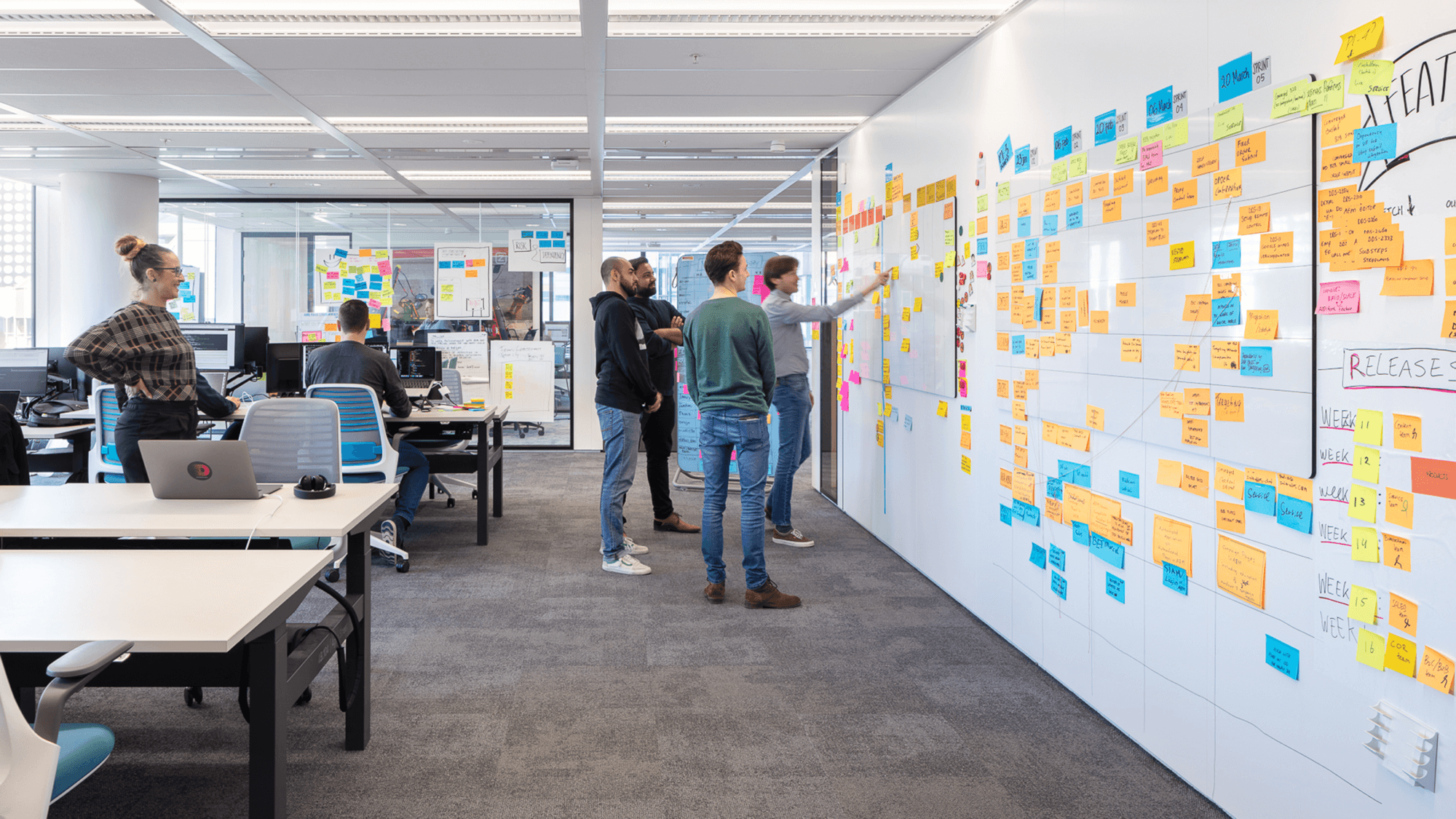
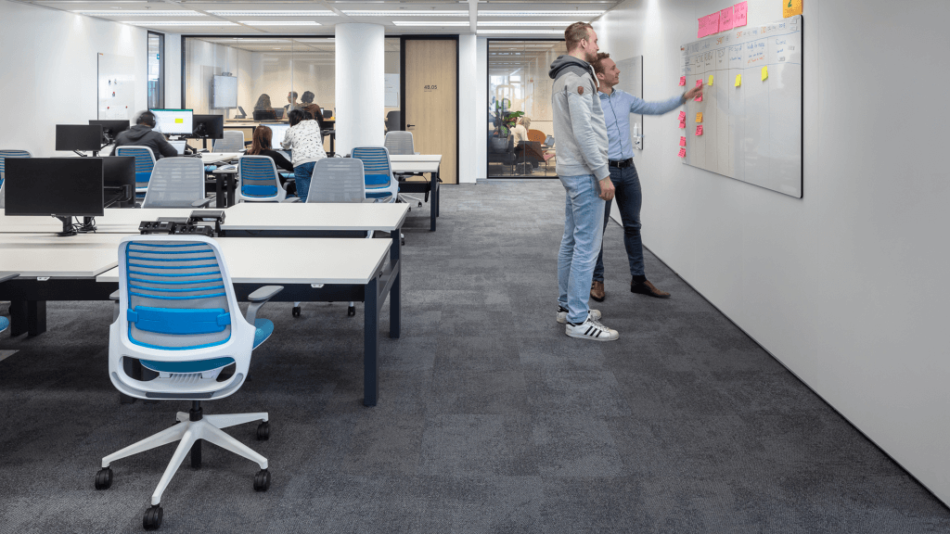
Agile also asks teams to make ideas and plans visible, and to cut a big problem into smaller concrete steps. Morning stand-ups review the plan for the day and name the impediments blocking the goal. That needs spaces where a team can sit together, run a workshop or meet one person, and where any stakeholder or manager can walk by, see progress and offer help.
The huddle room nobody can book
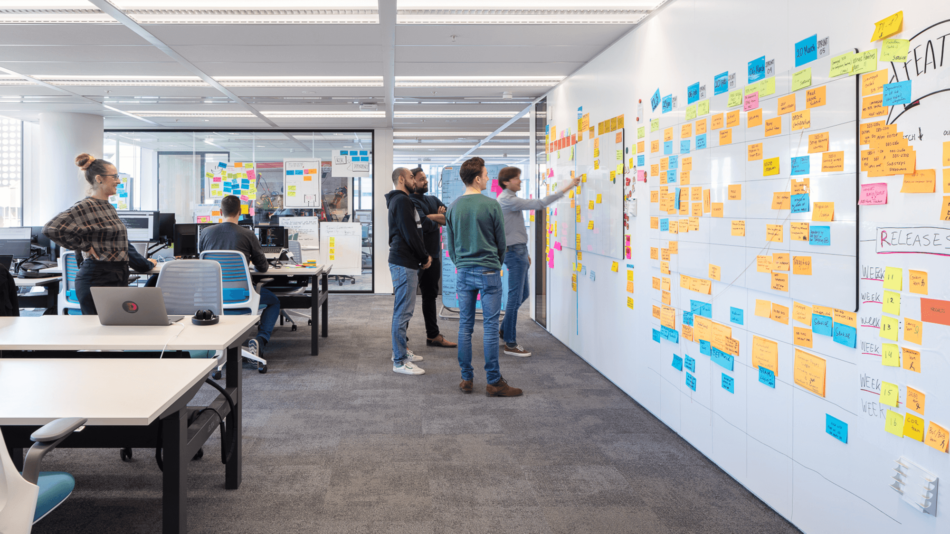
One space says a lot about the approach. The huddle room was designed for people to gather and stand. Whiteboards line the walls, sticky notes cover them, and posters set out the agile values.
Crucially, the room cannot be reserved. People pop in whenever they need to work together, for a stand-up, a strategy discussion or prioritisation. Standing keeps the posture active: teams stand next to their backlog and run through progress and the help they need.
Making the work of 46 teams visible
On the long wall, a visualisation combines the work of 12 agile teams from a scaled environment, showing progress on maturity and transformation topics. Sharing that information creates awareness and makes it easier to ask the wider community for help.
The scale keeps changing. VodafoneZiggo started with about six agile teams and now has 46. The number working with agile values and frameworks such as scrum grew faster than anyone envisioned, and the space adapts to how it is used.
Agile as common sense, not a process to install
In its basic form, agile is about using common sense, Siau says. Teams ask whether what they are doing will get them to their goal, and if it will not, they challenge the status quo, including the processes and tools themselves.
That is also why culture change cannot be forced. You cannot change a person if nothing is wrong, and you do not need to. Once teams question whether their way of working serves the goal, they feel the need to change it themselves. Behind that, Siau notes, sits a simple motivation: people want to do work that means something.
The market leaves little choice. Companies are in the taxi business without owning cars, and in the hotel business without owning beds. With real agility, an organisation can choose to be first mover or smart follower, and anticipate the market instead of adapting to it.
What to take into your own office
You do not need a new headquarters to apply this. Most of it is about what a space allows and what it quietly prevents.
- Give each team a spot it owns, close enough for questions to be answered without a meeting invite
- Keep at least one space unbookable, so spontaneous working sessions always have somewhere to go
- Design for standing: short, active meetings need vertical surfaces more than chairs
- Put work on the walls, so progress and blockers are readable at a glance
- Make leaders visible and reachable in the same area as the teams
- Expect the plan to change, and choose furniture and partitions you can move
From ambition to a floor plan
An office that supports agile is not a style. It is a set of decisions about ownership, visibility and flexibility, taken before the furniture is chosen. Alternativ designs and builds workspaces around how your teams work now and how they are likely to work next.
Scroll or drag
Frequently asked questions
It is an office designed around agile ways of working: team-owned spaces, room for daily stand-ups, visible work on walls and screens, and layouts that can be reconfigured as teams change.
Because agile work happens between meetings. VodafoneZiggo keeps its huddle room out of the booking system so teams can gather the moment they need to.
The company started with about six agile teams and now has 46, growing faster than it anticipated.
It removes or creates obstacles. Space that makes progress visible and puts teams and leaders within reach makes agile behaviour easier to sustain.
Thinking about a workspace that supports agile teams?
Talk to Alternativ about what your floor could do.