
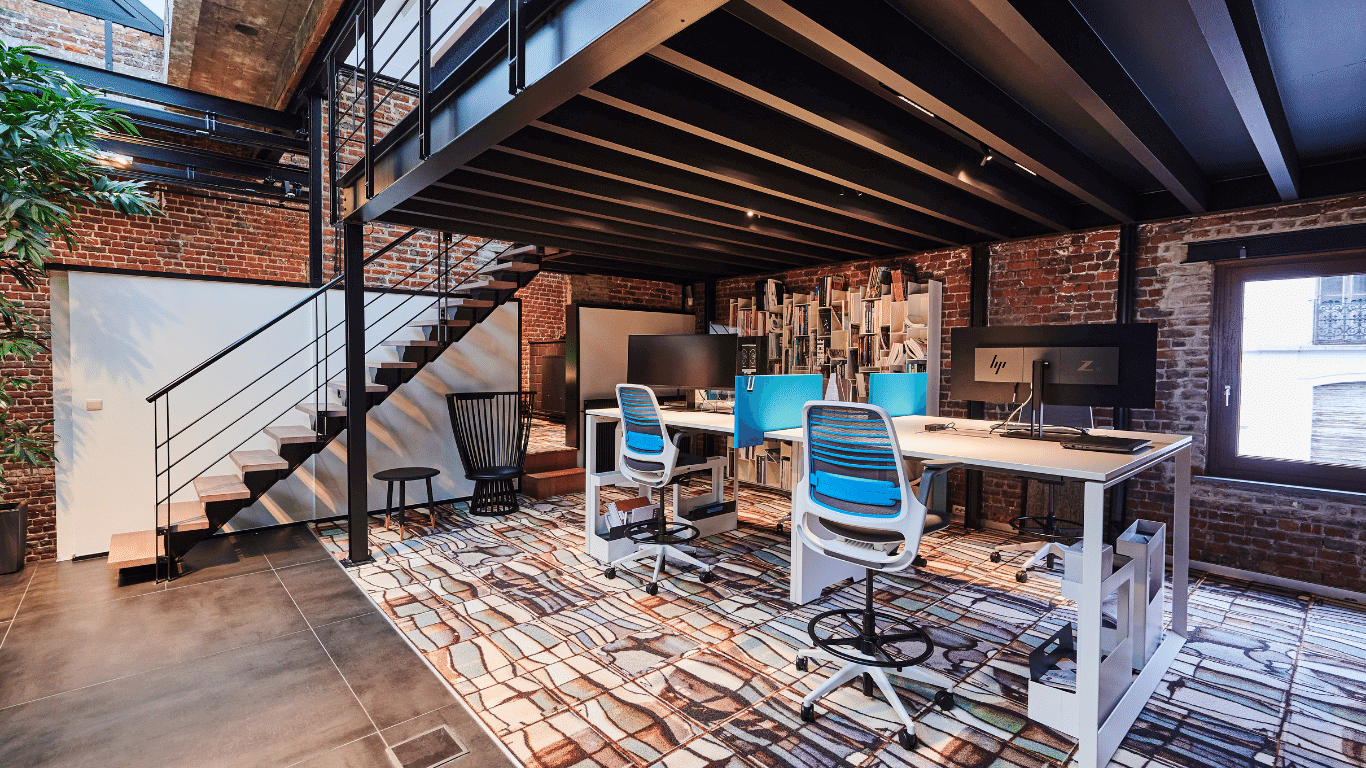
Standing desks in your office: What the research actually supports
Standing desks are popping up everywhere, and the concept is self-explanatory: you stand to work instead of sitting in an office chair. The assumed benefits are that you burn more calories and avoid a stiff neck. Only one of those holds up. Here is what standing desks really deliver and how to use them well.
A weapon against obesity? Not really
Nobody would argue with the fact that standing uses more energy than sitting. The question is how much more, and a study by the University of Pittsburgh a few years ago put a number on it.
The researchers, who published their findings in The Journal of Physical Health, asked 74 American employees to wear a special mask that measures oxygen usage, a method known as indirect calorimetry, while they sat, stood and walked.
The results were modest. Participants used 80 calories per hour while sitting, 88 while standing, and 210 while walking. Standing to work instead of sitting does very little to combat obesity. You achieve far more with a walk at lunchtime.
The benefits standing desks do deliver
So if the calorie argument is weak, why are standing desks worth having? Because the other health effects are more convincing than the one everybody quotes.
Studies have shown that blood sugar levels after a meal return to normal more quickly the longer you stand. And standing desks are an efficient way of combating musculoskeletal issues, which are the most significant cause of workplace illness and absence.
That last point is where the business case sits. Absence caused by back, neck and shoulder complaints is expensive and largely preventable, and posture during the working day is one of the few factors an employer can actually influence.
Why standing all day is also a bad idea
Should your team stand at their desks all day? No. Experts warn that every working position comes with its own set of problems, and that the best approach is to vary your position rather than to pick one.
Stand for too long and your feet get tired, and after a while concentration suffers. There are also fine motor tasks that are simply easier to carry out while seated.
The sit-stand desk: the best of both worlds
A sit-stand desk solves the dilemma by removing it. It offers variety in position, and people choose to sit or stand depending on the activity in front of them.
In practice, that is the version most offices should buy. A fixed standing desk forces a choice; an adjustable one lets the task decide.
- Stand for calls, quick email, reading and short bursts of work
- Sit for detailed, fine motor tasks and long stretches of concentration
- Change position several times a day rather than once
- Keep the screen at eye level and the elbows at roughly a right angle in both positions
How to introduce standing desks without wasting the investment
The most common mistake is buying height-adjustable desks and never telling anyone what to do with them. Desks that go up and down are only useful if they actually go up and down.
A short, practical introduction changes the outcome more than the specification of the desk does.
- Show each employee how to set both the sitting and the standing height correctly
- Give a simple starting rhythm, such as changing position when the task changes
- Check the rest of the workstation too, since a good desk with a poor screen position still causes complaints
- Provide an anti-fatigue mat where people stand on hard floors
- Ask after a few weeks whether people are using the function, and why not if they are not
Standing desks in your office layout
Standing changes sightlines and noise levels, so think about placement as well as product. People standing at a desk are more visible and more audible to those around them, which matters in an open-plan floor.
Group height-adjustable desks sensibly, keep them out of the busiest circulation routes, and make sure the acoustic treatment of the zone can cope with more movement and more conversation.
Choosing the right solution for your team
Whether you need fully adjustable desks for everyone, a few shared standing positions, or a wider ergonomics review depends on the work your teams do. Alternativ helps you weigh that up and supplies desks and chairs that fit the plan.
Frequently asked questions
Barely. In a University of Pittsburgh study, participants used 80 calories per hour sitting, 88 standing and 210 walking, so a lunchtime walk does far more than a standing desk.
Blood sugar levels after a meal return to normal faster the longer you stand, and standing desks are an efficient way of combating musculoskeletal issues, the biggest cause of workplace illness and absence.
No. Every position brings its own problems. Standing for too long tires the feet and harms concentration, and fine motor tasks are easier seated. Varying position is the goal.
Usually, yes. A sit-stand desk lets people switch between positions depending on the task, which is exactly what experts recommend.
Want to know which desks make sense for your team and your floor?
Talk it through with the Alternativ experts.