
Positive company culture: Four things your office layout can do about it
If you want your organisation to stay future-proof and keep your people on board, salary and benefits are not the most efficient lever. A positive company culture is. What is less obvious is how much of that culture is built into the walls, the light and the furniture. Here are four ways your office layout can help.
What a positive company culture actually involves
A company with a positive culture prioritises employee well-being and satisfaction. It watches the balance between home and work, makes sure the work itself is meaningful, and puts real weight on collaboration and communication.
Research has shown that around three-quarters of employees believe a well-being programme contributes towards a positive company culture. Programmes are one route. The office you ask people to spend their week in is another, and it works every day without anyone signing up for it.
1. Encourage well-being with the space itself
For people to feel genuinely at home in the office, physically and emotionally, the environment has to support a healthy working day.
That starts with the obvious measures: fruit and vegetables on offer, psychological support, a decent insurance package. The layout can carry the rest. Sport and relaxation areas inside the office turn well-being from a policy document into something people can walk into between two meetings.
2. Encourage social contact between colleagues
Relationships on the work floor have a significant effect on culture. Picture the difference between an organisation where people barely speak and hardly know each other, and one where colleagues seek each other out to work through problems and mark successes together.
Afterworks, sports sessions and other activities help. So does giving people places to meet without an agenda:
- A breakout space away from the desks
- A cosy coffee corner rather than a machine in a corridor
- A library for quiet, shared downtime
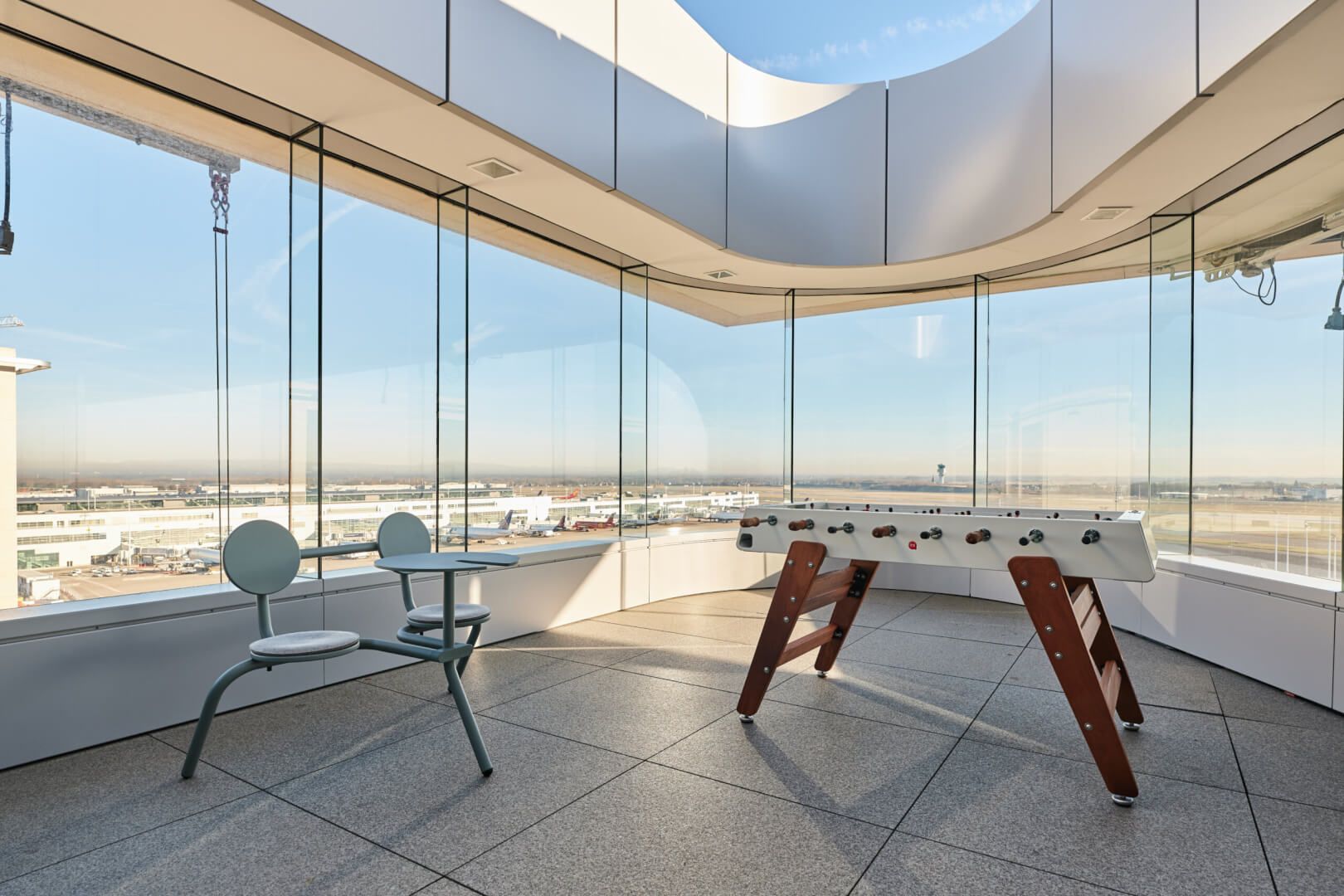
- A games room, if it suits your teams
- Shared tables where people from different departments end up side by side
3. Let natural light flood in
The presence of daylight matters more than most employers assume. A study from Cornell University showed that sufficient daylight reduced the risk of tired eyes by 51%, the risk of headache by 63% and the sense of tiredness among employees by 56%.
PR Newswire, the company the study focused on, described natural light as the best medicine for the office. For a modern layout, that means large and strategically placed windows, and LED lighting that mimics natural light where daylight cannot reach.
Two practical points often decide the outcome. Do not block windows with high storage or full-height partitions, and put the workstations where the light is rather than reserving the perimeter for offices that stay empty most of the week.
4. Beasts of burden: the pet-friendly office
Companies such as Google, Amazon and Uber have chosen animal-friendly offices, where employees can bring their dogs to work. According to some studies, pet-friendly policies could lead to an increase in productivity of 42%, and the presence of pets reduces stress.
The condition is obvious but worth stating: none of the team should be afraid of dogs or of whatever other furry companions arrive. If you try it, agree the rules first, designate which zones are open to animals, and check that food areas and quiet rooms stay separate.
Where to start if you are not sure
You do not need a full renovation to test whether your office supports or undermines your culture. Walk the floor and ask a few blunt questions:
- Is there anywhere to sit that is not a desk or a meeting room?
- Do people from different teams have any reason to cross paths during the day?
- How many workstations have no view of a window?
- Is there somewhere to eat lunch that is not the workstation?
- Would a new colleague know where to go to meet people informally?
Small changes, visible effects
Culture is not built by a single intervention. It is built by a series of small decisions that make the healthier, more social option the easier one.
Alternativ works with companies to find those decisions, from the position of a coffee corner to the lighting strategy for a full floor, and to make them fit the way your teams actually work.
Frequently asked questions
Yes. Layout determines who meets whom, where people can rest, and how much daylight they get. Those conditions shape daily behaviour more consistently than policy does.
A Cornell University study found sufficient daylight reduced the risk of tired eyes by 51%, headaches by 63% and the sense of tiredness by 56%.
Breakout areas, a comfortable coffee corner, and shared rooms such as a library or games room give colleagues reasons to meet without a meeting.
They can be. Some studies link pet-friendly policies to higher productivity and lower stress, provided no team member is afraid of the animals involved.
Not sure whether your current office helps or hinders your culture?
The Alternativ experts will gladly look for a solution that fits.