

Office coffee areas: Why the cheapest engagement tool is a cup of coffee
You can read the news, join a discussion and do most of your job without leaving your desk. What you cannot do from there is build trust. More companies are giving real floor space to in-house cafes and informal gathering places, because that is where relationships, teamwork and culture are actually made. Here is why, and how to design one that works.
What you lose when nobody leaves their desk
Digital tools handle information well. They handle the intangibles poorly. Personal relationships, trust, teamwork and organisational culture are developed in person, rubbing shoulders, talking over a cup of coffee.
Drinks have different roles throughout the day. For example, they can soothe, inspire or accelerate. Our average day is marked by the drink experience, offering structure and continuity, says Dr. Tracy Brower, global vice president of workplace vitality for MARS DRINKS, a 100% workplace-focused division of Mars Incorporated.
That structure matters in a hybrid office. The coffee moment is one of the few reliable reasons people leave their screen and bump into someone from another team.
The four pillars of a thriving workplace
MARS DRINKS commissioned a global study of 3,800 people, across industries and companies of all sizes, to identify the factors that contribute to organisational success. The research identified four interconnected pillars that combine to create a vibrant and thriving work environment.
- Collaboration
- Engagement
- Wellbeing
- Productivity
Why chasing productivity alone backfires
We discovered that collaboration, engagement and wellbeing correlate with greater productivity. Their presence tends to drive greater productivity. The reverse is not true, though. Greater productivity doesn't lead to greater collaboration, engagement or wellbeing, says Dr. Brower.
In fact, according to the research, too much emphasis on productivity to the exclusion of collaboration, engagement or wellbeing has a negative effect on motivation. The solution is to give all four pillars attention and to treat them as connected rather than separate targets.
For anyone planning an office, that is a design instruction. A floor that contains nothing but workstations optimises one pillar and quietly undermines the other three.
From tired break room to a cafe people choose
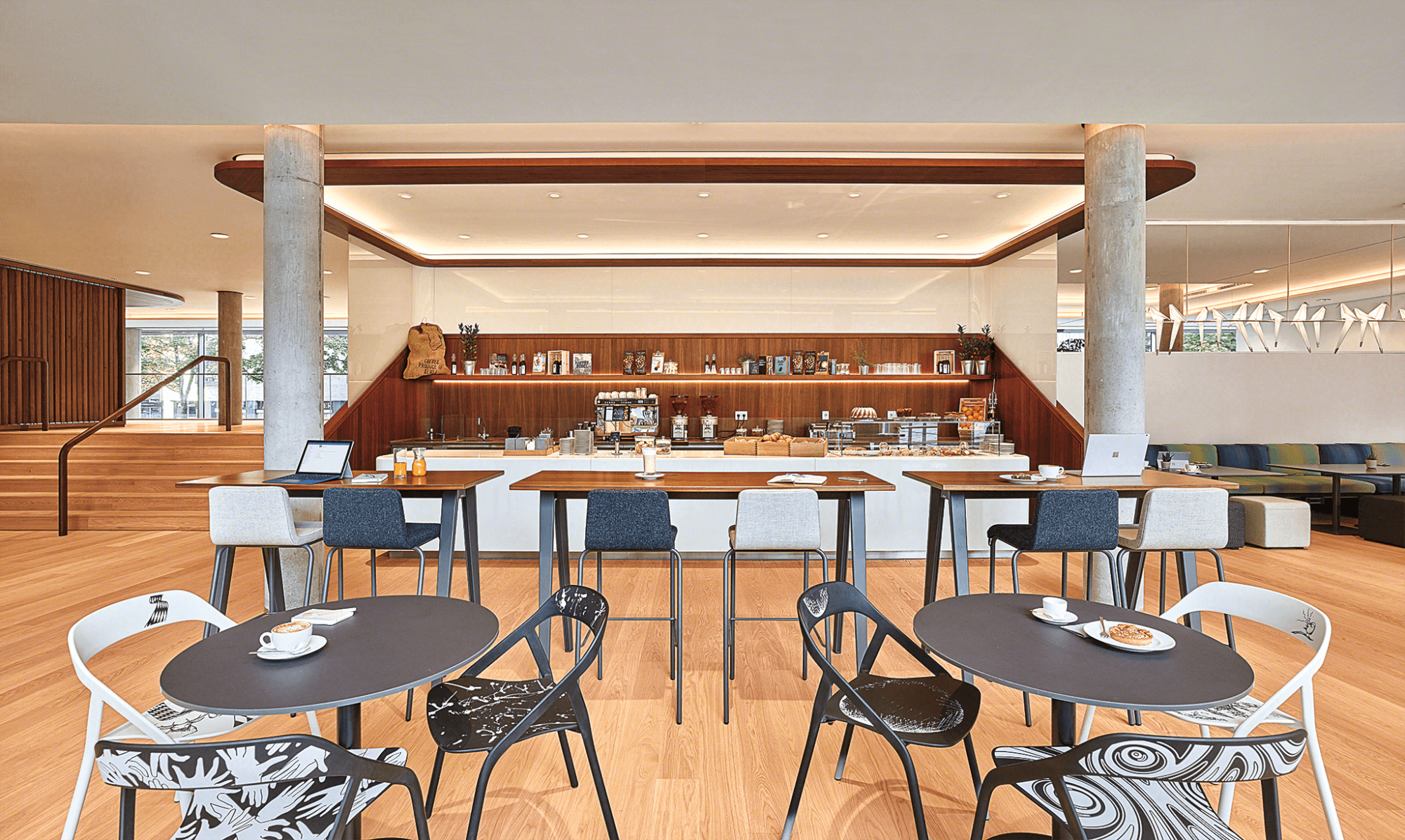
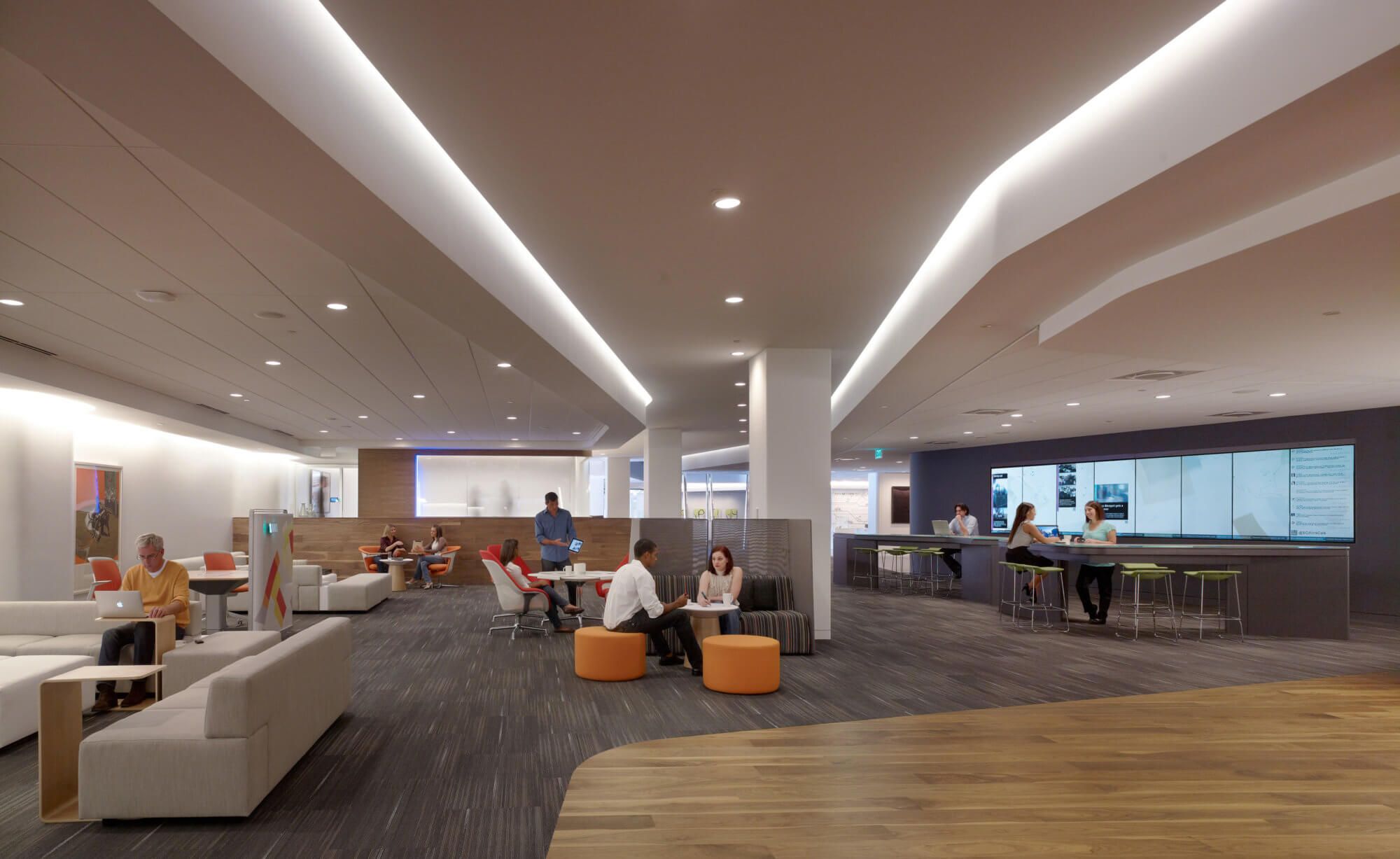
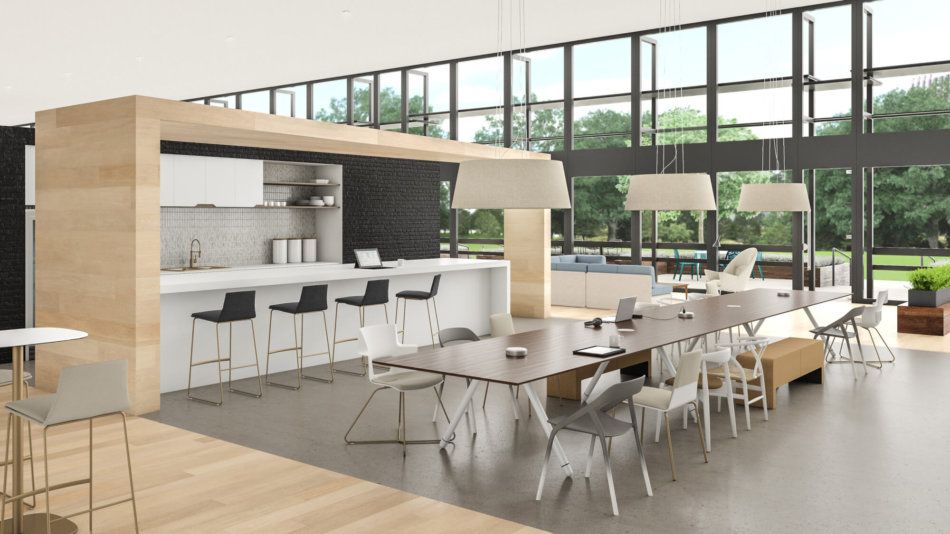
Organisations are getting the message and replacing tired break rooms with inspiring cafe spaces and refreshment bars that are welcoming and productive places for employees, clients, visitors and external resources.
The shift is from a room you use because you have to, to a setting you choose. That changes what the space needs to offer.
- A mix of seating heights: standing bar, lounge and table seating for a working lunch
- Enough acoustic treatment that conversation does not spill into nearby focus zones
- Daylight and planting, so the space feels different from the desk area
- Power and screens, so the cafe doubles as an informal meeting setting
- A layout that lets people join a table easily rather than having to interrupt
The coffee itself is part of the design
MARS DRINKS research also shows that employees place importance on the availability of coffee and on having different choices in coffee. Dr. Brower says research shows that 22 percent of people will leave the office to get great coffee if they cannot get it in the office.
Just think about the effect on productivity. If people are leaving, it is not only the loss of their working time, it is also the lost opportunity for them to connect with colleagues, commented Dr. Brower. Just the presence of the coffee experience can help drive collaboration, productivity, wellbeing, and engagement in the workplace.
Common mistakes when designing an office cafe
Most underused cafes fail for practical reasons rather than aesthetic ones. They are placed in a corner nobody passes, sized for a coffee machine rather than a conversation, or positioned so close to desks that using them feels rude.
Put the cafe on a route people already walk, give it enough room for two groups at once, and separate it acoustically from focus work. Then it becomes the place where informal information actually travels.
Scroll or drag
Frequently asked questions
Because trust, teamwork and culture are built in person. Research across 3,800 workers identified collaboration, engagement, wellbeing and productivity as interconnected pillars of organisational success, and informal spaces support the first three.
No. According to the MARS DRINKS research, collaboration, engagement and wellbeing drive productivity, but productivity does not drive them, and over-emphasising it harms motivation.
The research found that 22 percent of people will leave the office to get great coffee if they cannot get it at work, which costs both working time and the chance to connect with colleagues.
On a route people already use, close enough to be convenient but acoustically separated from focus zones, so conversation does not disturb concentrated work.
Want a coffee area that people actually gather in?
Talk to Alternativ about designing one that fits your floor and your culture.