

A startup mindset: What intrapreneurs need to push boundaries
Every large organisation has them: the people who keep asking why the process works this way and then build something better. They deliver only when specific conditions are met, and most of those conditions are within your control. Here is what research on intrapreneurs found, and what it asks of your workplace.
Who intrapreneurs are
Sometimes called entrepreneurs in residence, intrapreneurs are the boundary-pushing thinkers inside large organisations. They flourish when the conditions are right, and they create those conditions themselves where they can.
In practice, they tend to lead their own teams, want a say in hiring, set their own project parameters and work around traditional corporate hurdles to move projects forward. Turnstone has studied this group for several years. Five conditions came out of that work.
1. A transformational mindset
Intrapreneurs have a healthy disregard for conventional ways of working and thinking. They team up on complex problems and want to change the industry they work in. That mindset gives them the sense of purpose and optimism needed to take real risks, and it feeds a make culture aimed at results.
- 83% say being able to problem solve is very important to their success at work
- 72% say their ideal workplace includes exploring innovative solutions
2. Accountability fuels progress
Accountability is not the enemy of experimentation. With clear goals and metrics, prototypes get presented for further funding, timelines get adjusted and ideas get refined, all of which keeps the pace up. Along the way, intrapreneurs use storytelling to win broad buy-in and keep the work moving.
- 71% strongly agree that being held accountable specifically helps them to innovate
- 84% say learning is part of their personal work style and important to their success
3. Change starts with leadership
Leaders shape the culture around new ideas, and they drive it through their own views on failure, risk and disruption. How empowered a team feels comes directly from the top and works its way down, creating a domino effect built on trust and the freedom to create.
- 96% of respondents agree that leadership drives change
- 66% say autonomy in creating teams and choosing projects is important or very important
4. Working inside constrained agility
These teams are highly collaborative and agile, leaning on design thinking and differing viewpoints to grow ideas. Their agility is then hemmed in by corporate policy and hierarchy: progress made quickly still waits for buy-in, approval and funding. Turnstone calls this constrained agility, and intrapreneurs navigate it with an empathetic, customer-centred approach that gives their work meaning.
- 73% report that adaptability impacts their success a lot or a great deal
- 61% value agility in business structures and physical environments
5. A culture of empowerment
Intrapreneurs thrive on trust. Driven by an intrinsic motivation to solve sticky problems, they often want an independent charter that gives them freedom in hiring and in exploring new territory. Leaders at every level can push boundaries when the work starts from trust.
- 72% say empowerment directly affects their success
- 60% say their ideal workplace culture would be transparent
What this asks of your workplace
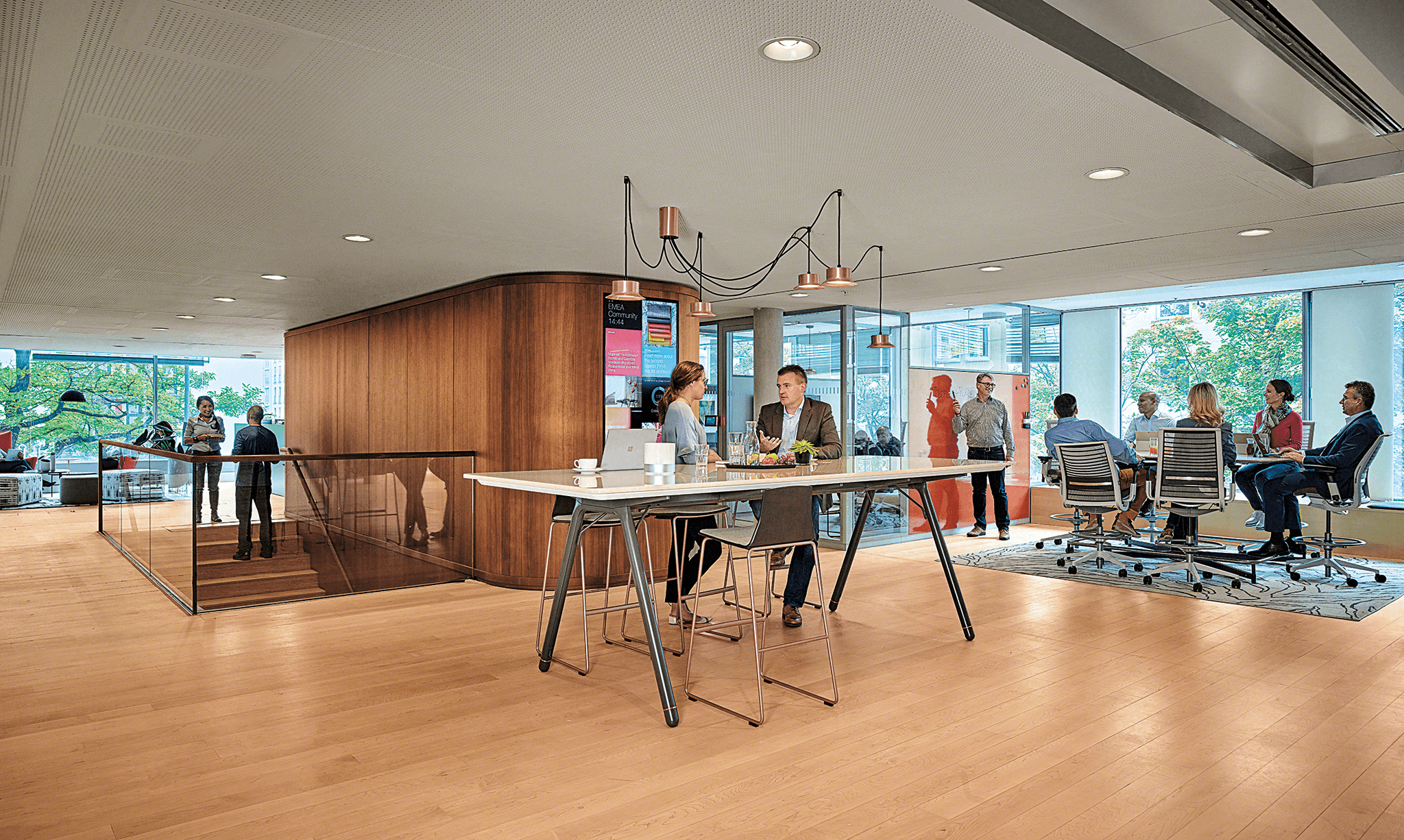
Note that one of these findings is explicitly spatial: 61% value agility in business structures and physical environments. Policy and place are read as one signal. A company that says it wants entrepreneurial behaviour and then houses those teams in fixed rows of desks sends a mixed message.
A workplace that supports this group usually provides:
- A project home the team can claim for the length of the work, with information left up on the walls
- Furniture and partitions the team can move without a facilities request
- Somewhere to build and test rough prototypes without clearing the table afterwards
- Transparency you can see: glazed fronts and visible work instead of closed doors
- Proximity to decision makers, so approvals do not stall the momentum
- Quiet enclosed space, because concentration is part of problem solving too
Designing for the people who change things
If your growth depends on teams that work differently from the rest of the organisation, they need a setting that works differently too. Alternativ designs and builds those spaces, from a single project floor to a full headquarters.




Scroll or drag
Frequently asked questions
An intrapreneur is an entrepreneur inside a large organisation: someone who leads their own team, sets their own project parameters and works around corporate hurdles to get new ideas built.
The research suggests the opposite. 71% of intrapreneurs strongly agree that being held accountable specifically helps them to innovate.
It is the gap between how fast an innovation team can work and how fast the organisation around it approves and funds that work.
61% of intrapreneurs value agility in business structures and physical environments, so adaptable, transparent space reinforces the autonomy and trust they need.
Do your project teams need a space that keeps up with them?
Get in touch with Alternativ.