
Flexible working: How to adapt your office so people actually come in
Hybrid working emerged as an important factor among the office trends of 2022, and it has not gone away. Many businesses embraced working from home, and many employers now ask staff to come in once or twice a week. Whether that works depends less on policy than on layout. Here is how to design for it.
Why full-time home working is not the answer
Working from home full time is not beneficial in terms of commitment and team spirit. People stay productive on their own tasks, but the informal contact that holds a team together quietly disappears.
Stimulating flexible working is the better route. Employees choose the best location for the task in front of them: home for uninterrupted writing, the office for the work that benefits from other people being there.
That choice only exists if the office offers something home does not. Your office layout and design play the major role here.
Flexible working needs places to focus
Landscape offices have been trendy for years. They do not always make employees happy. Collaboration may improve in these open offices, but they often fail to deliver a location that offers peace and quiet.
Flexible working means being able to choose the right place inside the building. The ideal office provides all of these options rather than one compromise setting:
- Breakout areas for a change of scenery and short informal work
- Brainstorming zones with room to write, stick and move things around
- Meeting rooms sized for the meetings you actually hold
- Telephone bubbles for calls and video meetings
- Quiet desks where interruption is the exception, not the rule
Less traffic past the desks
Many employees cite bad acoustics as a source of irritation, and movement is a large part of that. Your employees are far more likely to come in if there are fewer colleagues walking past their desks all day.
In concrete terms, do not place workstations where circulation is heaviest. Keep focus desks away from the natural traffic routes of the floor.
- The entrance and reception area
- Corridors and stairwells
- The coffee corner and kitchen
- Printers and shared equipment
- Toilets and cloakrooms
Combine flexi-places with fixed places
Although we all like to think we are flexible and free-spirited, in reality we are all a bit territorial. We tend to sit at the same tables, and some employees get genuinely irritated when a colleague takes their place.
That is why a mixed system usually works better than pure hot desking. Make part of the workstations available for reservation and leave the rest on a first come, first served basis.
Then make the status visible. When a workstation is reserved or in use, indicate it clearly with a sign or a similar marker, so nobody has to negotiate a seat at nine in the morning.
Flexible working also means flexible seating
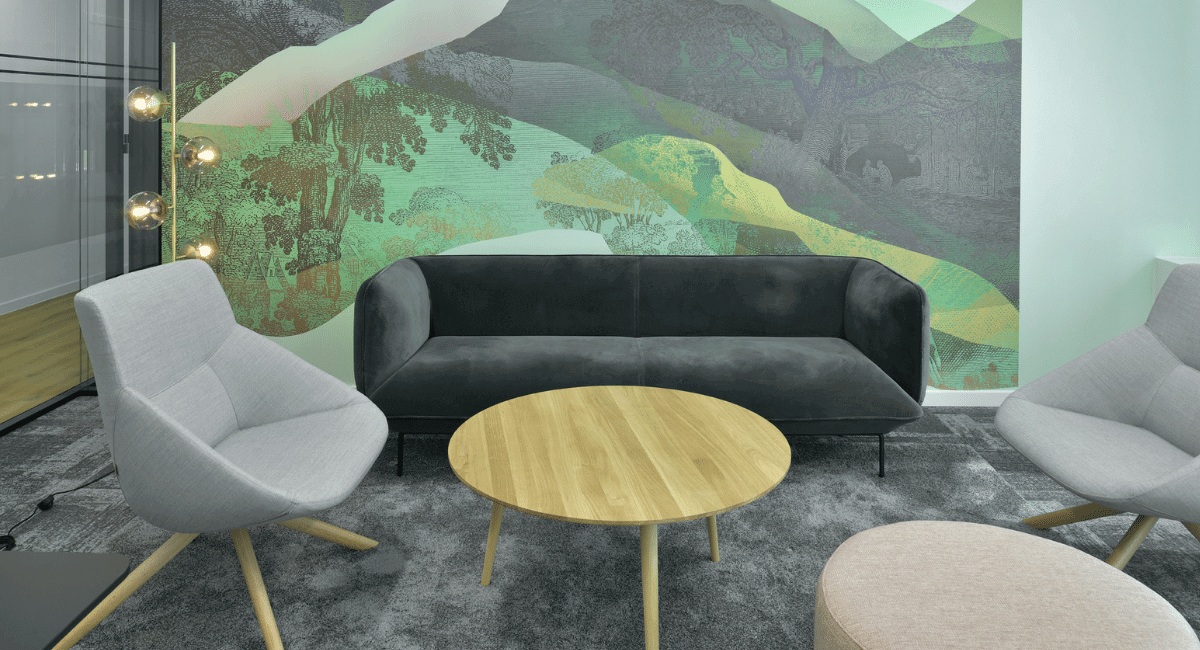
Finally, you keep people happy in the office by offering different types of seating. Some tasks are best carried out in a traditional ergonomic office chair. Others call for a more comfortable, relaxed chair, or even a garden bench outside.
Match the seat to the task rather than buying one chair for the whole floor:
- Ergonomic office chairs for long stretches of screen work
- Soft seating for reading, calls and one-to-one conversations
- Stools and high tables for stand-up meetings that should stay short
- Outdoor seating for the days the weather makes the terrace the best room in the building
Common mistakes when you switch to flexible working
Most flexible working projects fail on the same few points. They remove fixed desks without adding enough alternative settings, so people end up with less than they had. They announce office days without changing anything about the office itself. Or they design one impressive collaboration zone and leave the focus problem untouched.
The cost of getting it wrong is not the furniture. It is the team that quietly decides the commute is not worth it.
Getting the mix right
A flexible office is a balancing act between open and enclosed, bookable and free, active and quiet. The right ratio depends on how your teams work, not on a standard formula.
Alternativ helps you set that balance and supplies the seating to match, from ergonomic chairs to relaxed lounge pieces across a wide range of brands.
Frequently asked questions
It means employees choose the best location for the task they have to do, at home or in the office, and can also choose the right setting once they are in the building.
Not entirely. A mix works better: part of the workstations bookable in advance, the rest on a first come, first served basis, with clear signs showing what is taken.
Open offices improve collaboration but rarely provide peace and quiet. Without focus zones, telephone bubbles and meeting rooms, people have nowhere to go for concentrated work.
Keep workstations away from high-traffic routes such as the entrance, the coffee corner and shared printers, and give calls their own enclosed space.
Want an office your team chooses rather than tolerates?
Get in touch with Alternativ and we will look at your floor plan together.