
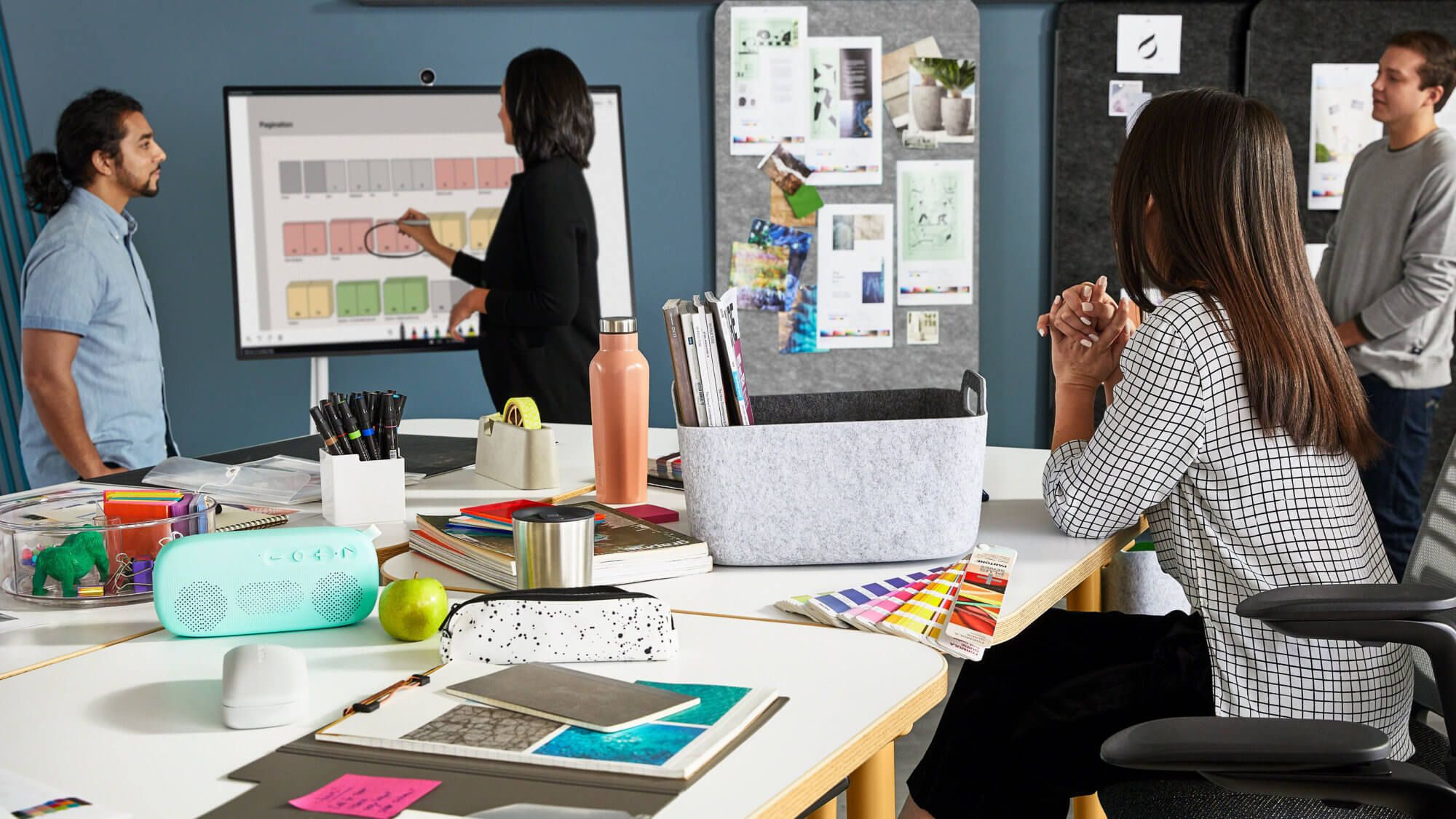
Agile team workspace design: Why the solitary genius is a shattered myth
The lone genius makes a good story and a bad operating model. The companies that thrive have learned that teamwork, and a culture that supports it, is the only way to make innovation happen. Their offices have to keep up. Here is how modern teams work now and what that asks of your space.
From hierarchy to modern tribes
Teams face an unprecedented level of complexity and an intense need for speed, and they have changed radically in just a few years.
They have morphed quickly from the hierarchy-laden culture and practices that shaped work in the past into modern tribes: tight-knit units that behave in fundamentally different ways than they did even five years ago. These tribes are a work family, and their hallmark is hyper-collaboration, working interdependently in rapid cycles with instant messages and sticky notes flying in their wake.
Agile and design thinking have gone mainstream
Modern tribes embrace practices such as agile and design thinking to stay ahead of the competition. Once the domain of IT or creative teams only, these methods are now adopted and adapted widely to help teams learn faster, mitigate risks and get things done.
The rituals that come with them each need a setting:
- Daily standups, which need room to gather without booking anything.
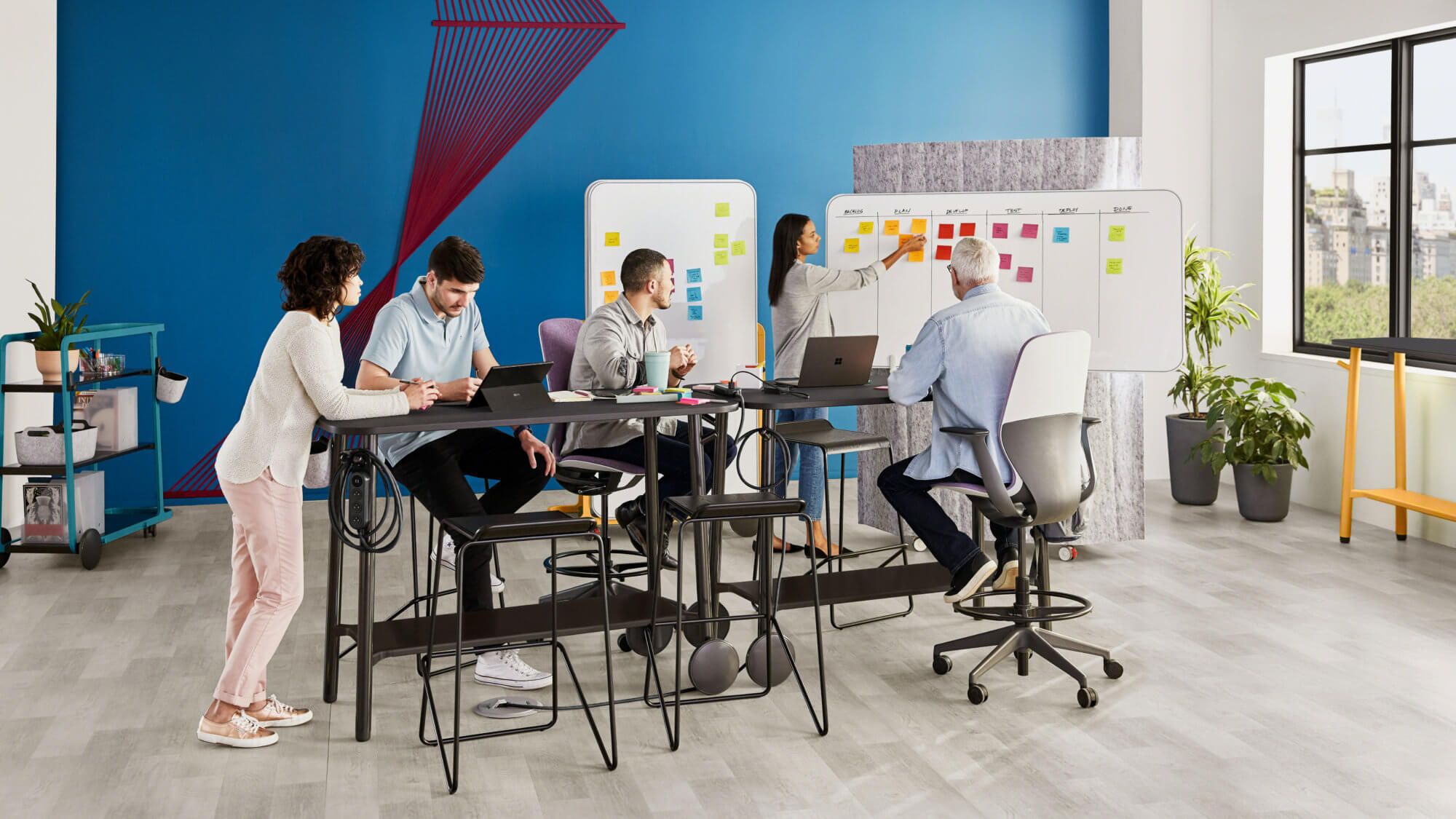
- Sprints, which need a place where work in progress can stay visible for days.
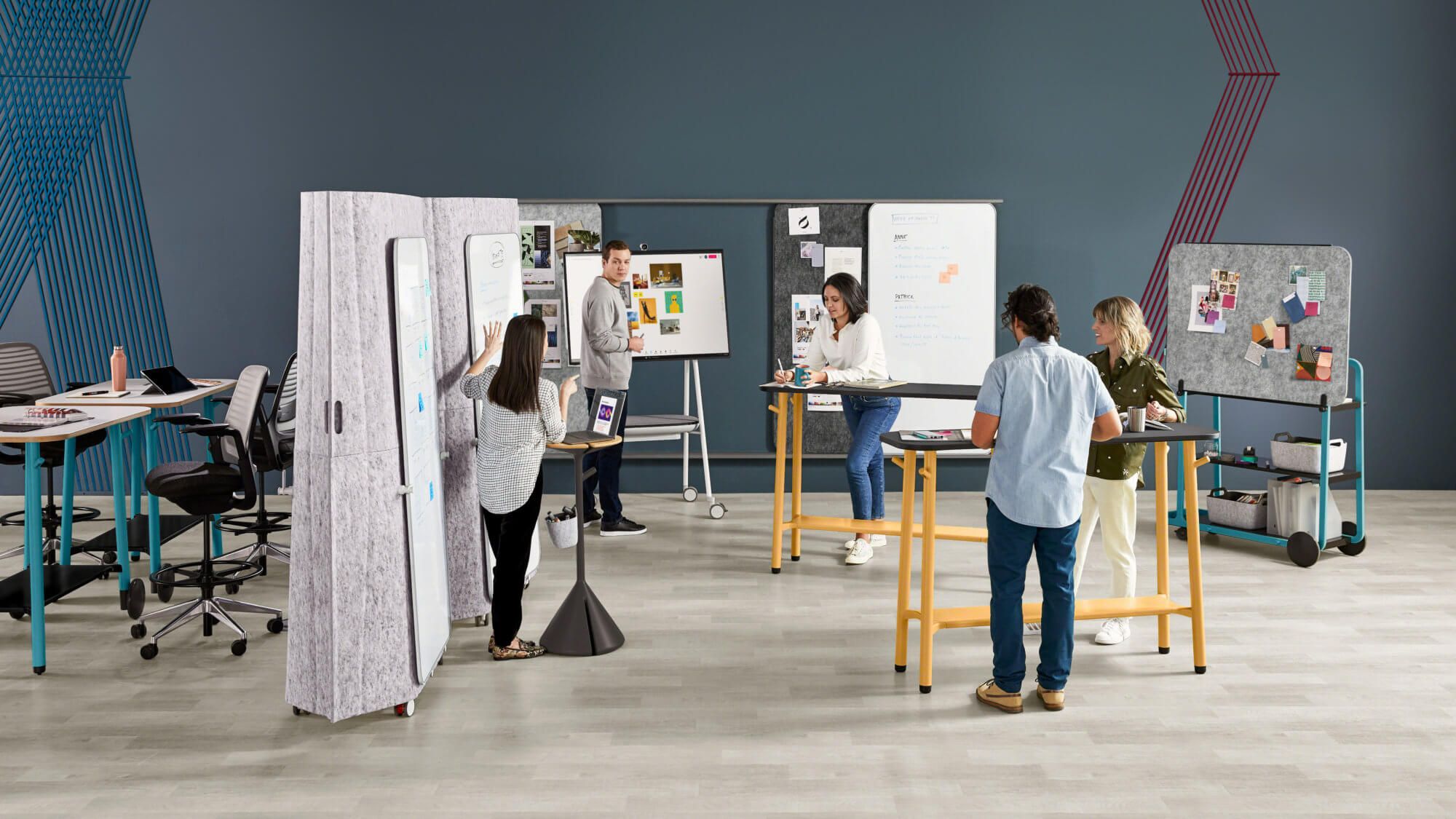
- Brainstorms, which need writable surfaces and space to move around them.
- Workshops, which need a layout that can be rearranged in minutes rather than hours.
It is all about control
Once teams start working in such fundamentally different ways, they quickly realise that typical work environments created for more linear, individual processes simply do not work anymore.
"Teams need flexibility to change their day-to-day activities. Particularly, teams using agile and design thinking practices need to be able to change how they work over time. This shift in how teams are working required us to look at solutions through a new lens," says Bill Bennie, Steelcase design director.
What the researchers saw on the ground
Bennie was part of a multi-disciplinary team of Steelcase designers, researchers, engineers and project managers who went out to observe creative and high-tech teams in the United States, Europe and the Middle East, starting in 2017.
They talked to people who had grown frustrated and discouraged trying to muddle through with spaces and technology that did not support their needs. They learned the most from renegades unwilling to put up with the status quo, who began hacking their existing spaces.
Those hacks, together with a body of primary and secondary research about team-based work, inspired designers to envision radically different solutions.
A system, not a single product
The idea was to create an interconnected system that supports the activities of the larger team as well as individual work.
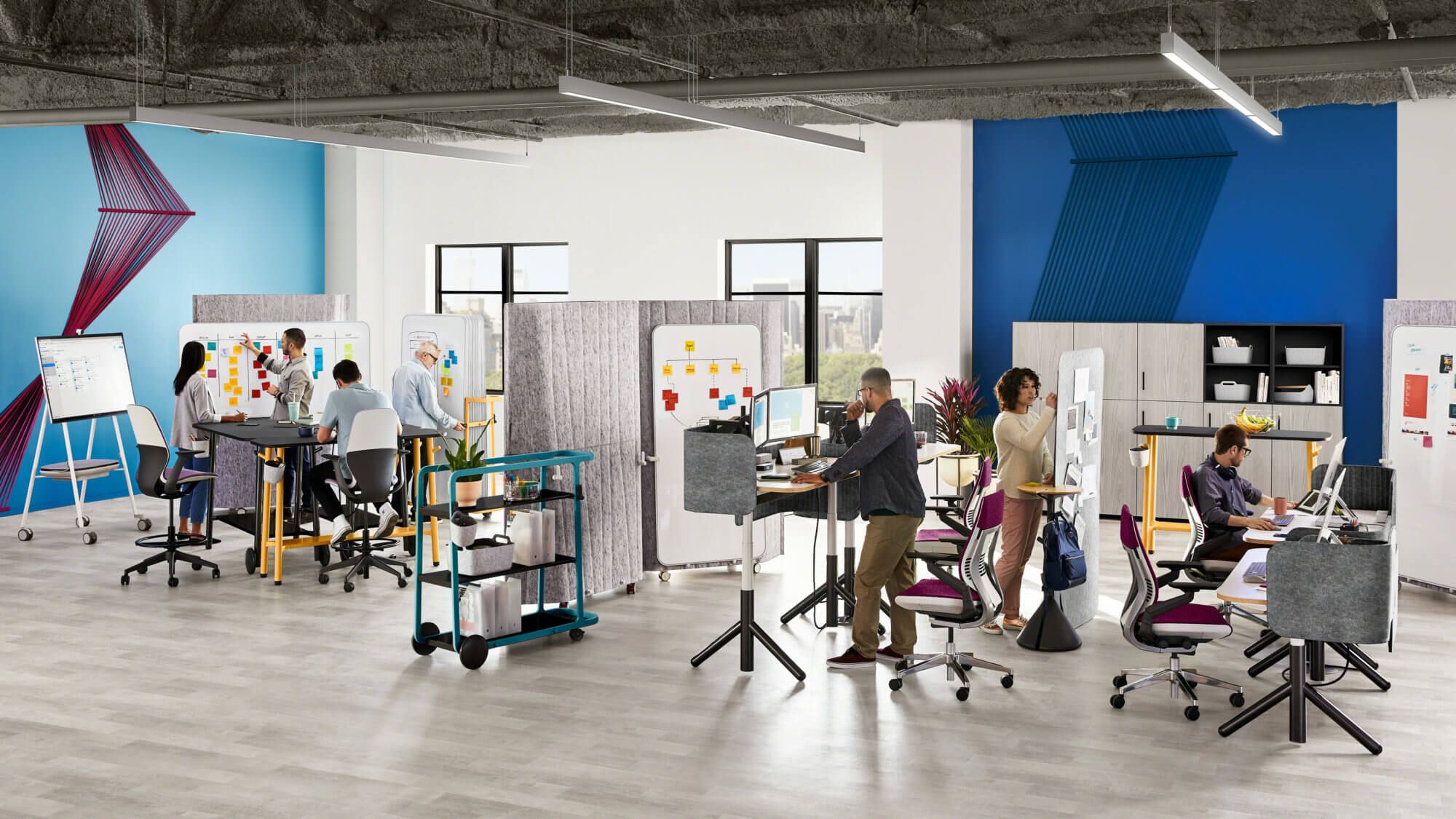
"Instead of one new thing, we ended up creating pieces that all move and work together to let people reconfigure their space in a matter of minutes. The pieces work well on their own, but just like a team, they work better together," says Bennie.
Embracing agile concepts, the designers enlisted Steelcase IT teams to test new ideas in a prototype space, collaborating with fast, cyclical feedback that allowed continuous improvement on the initial models.
What the Flex Collection actually gives a team
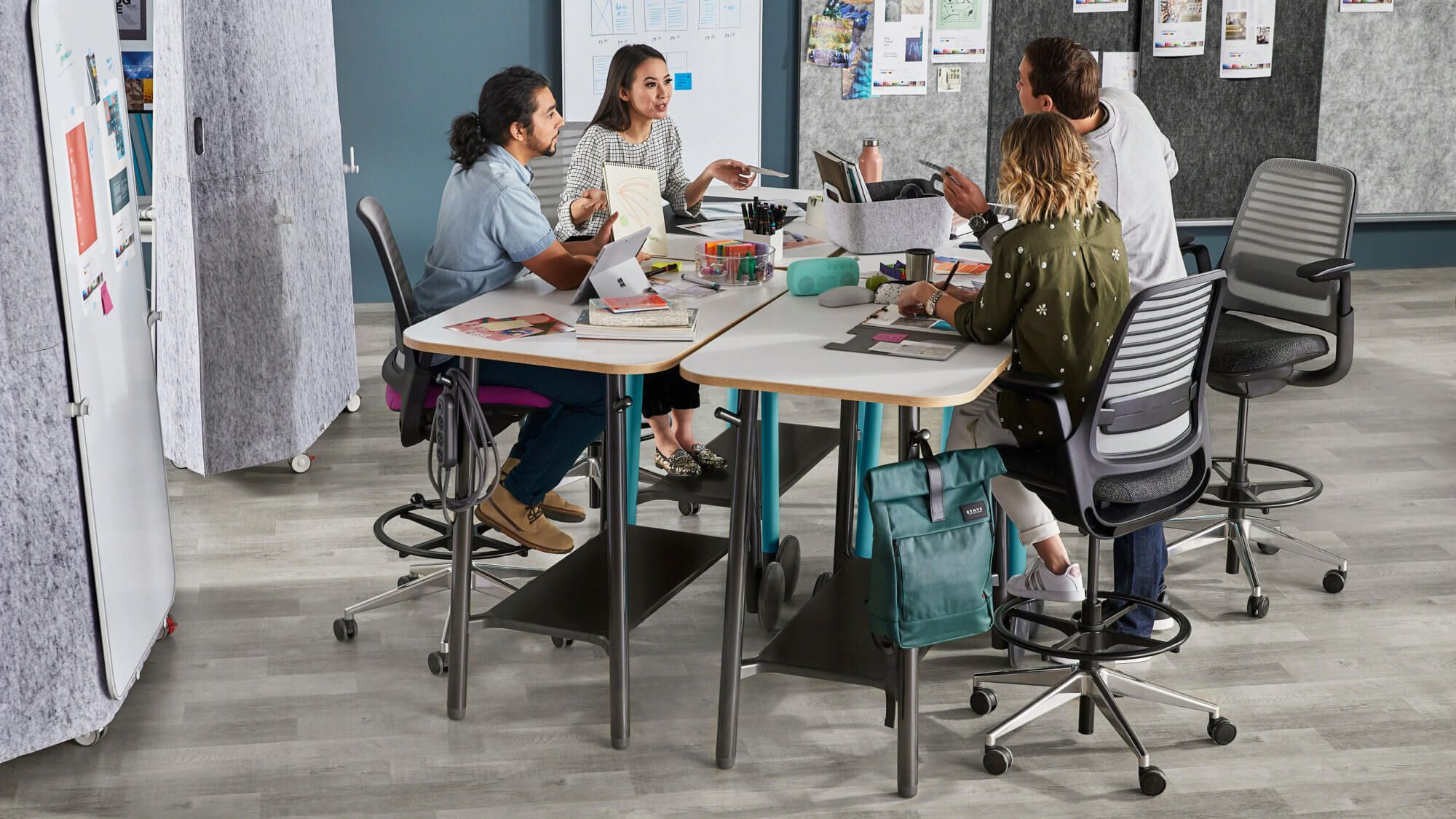
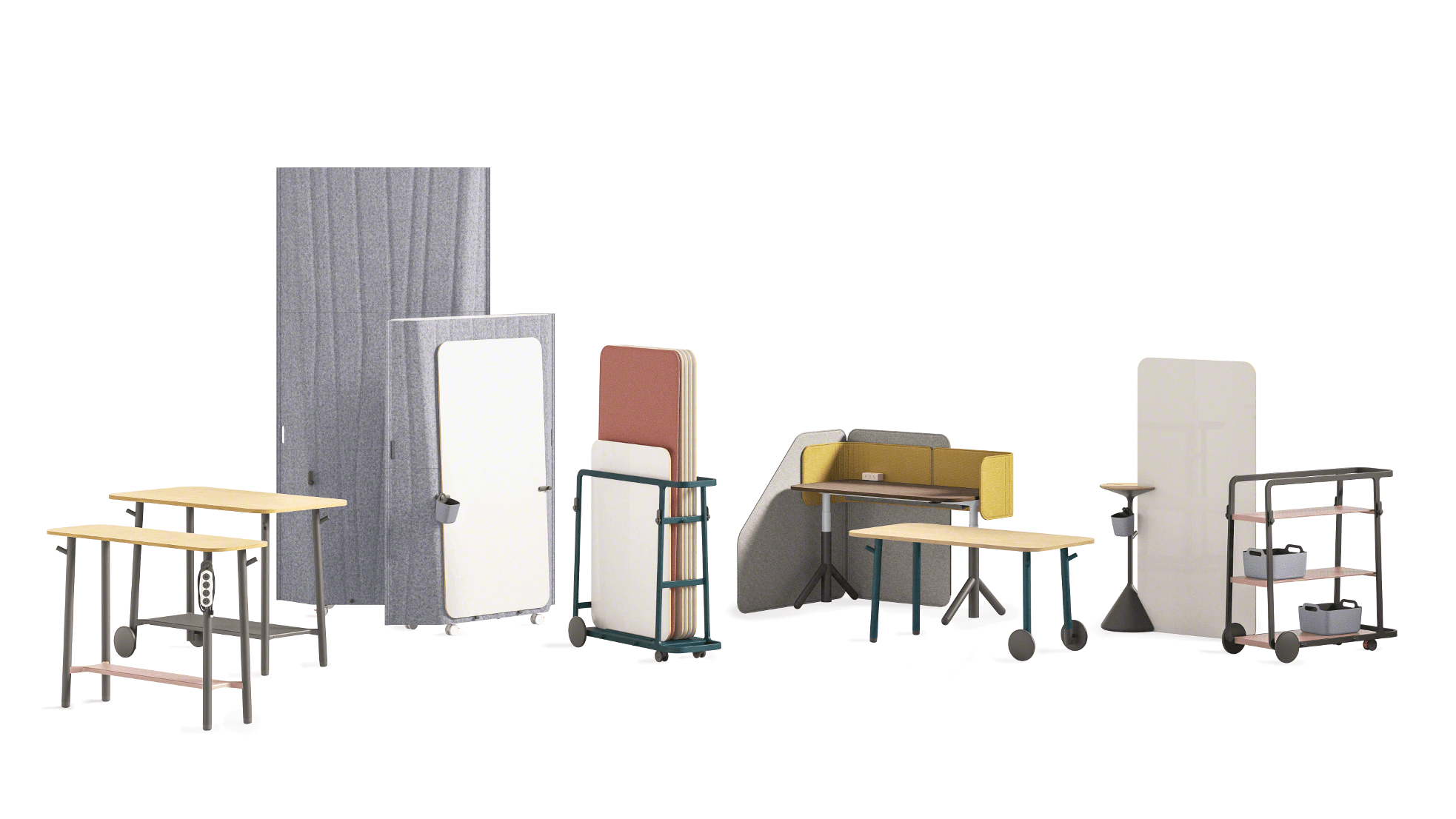
The result became the Steelcase Flex Collection, aptly named because the idea is all about flexibility: movable desks, tables, markerboards, carts, screens and accessories that anyone can rearrange on demand, to create the environments that both teams and individuals need.
The collection is designed to make it easy to shift between activities, from a brainstorm to a workshop, or from a daily standup to a sprint review. Whether on wheels, rollers or glides, Flex moves easily and gives teams permission to take control and make a space their own.
Details were designed with the needs of the team and of the individuals who make it up in mind, such as the board cart that holds eight whiteboards and the pegs on the tables for hanging a backpack or other accessories.
Where to start in your own office
You do not need to rebuild a floor to work this way. Start with one team and one ritual that currently has no home, then give it the settings it needs and watch what changes. For a deeper look at tomorrow's world of work, the 306 magazine from our partner Steelcase is worth reading, and the full range is on the Flex Collection product page.
Scroll or drag
Frequently asked questions
A space built around movable furniture and writable surfaces that a team can reconfigure itself, so the layout follows the activity rather than the other way around.
They were created for linear, individual processes. Agile teams change how they work over time, and a fixed layout becomes a barrier to that change.
Movable desks, tables, markerboards, carts, screens and accessories that can be rearranged on demand by anyone.
Designers, researchers, engineers and project managers observed creative and high-tech teams in the US, Europe and the Middle East from 2017, then tested prototypes with Steelcase IT teams.
Ready to give your teams control over their own space?
Contact Alternativ to explore what that would look like.