

Which types of workspaces does your office actually need?
Inspiring workspaces are good for staff, customers and the business, but only if they are designed for the work that happens in them. That means one layout is rarely enough. War room, lab, corpoworking, workbox: these terms come up in every fit-out conversation. Here is what each one means and how to decide which belong in your office.
Why one layout is never enough
How do you encourage creativity? How do you speed up decision-making? The short answer is that inspiring spaces boost creativity, so you need an ecosystem of settings geared to the type of work carried out in each one.
The harder question is which environment suits which task. Open plan? A flex-office with no permanent desks? Both can work, and both fail when they are adopted as a policy rather than tested as a design. Try a setting with a real team before you roll it out across a floor.
The war room: where decisions get made
The term is a direct reference to Winston Churchill's war cabinet. During the Second World War, major military decisions were taken in the war room, its table piled high with maps and situation reports.
The war is long won, but the term has been dusted off for a room where ideas are examined and important decisions taken. Different era, same concept: a space for sharing information and making analyses, so an organisation can respond strategically to whatever the urgent issue of the day happens to be.
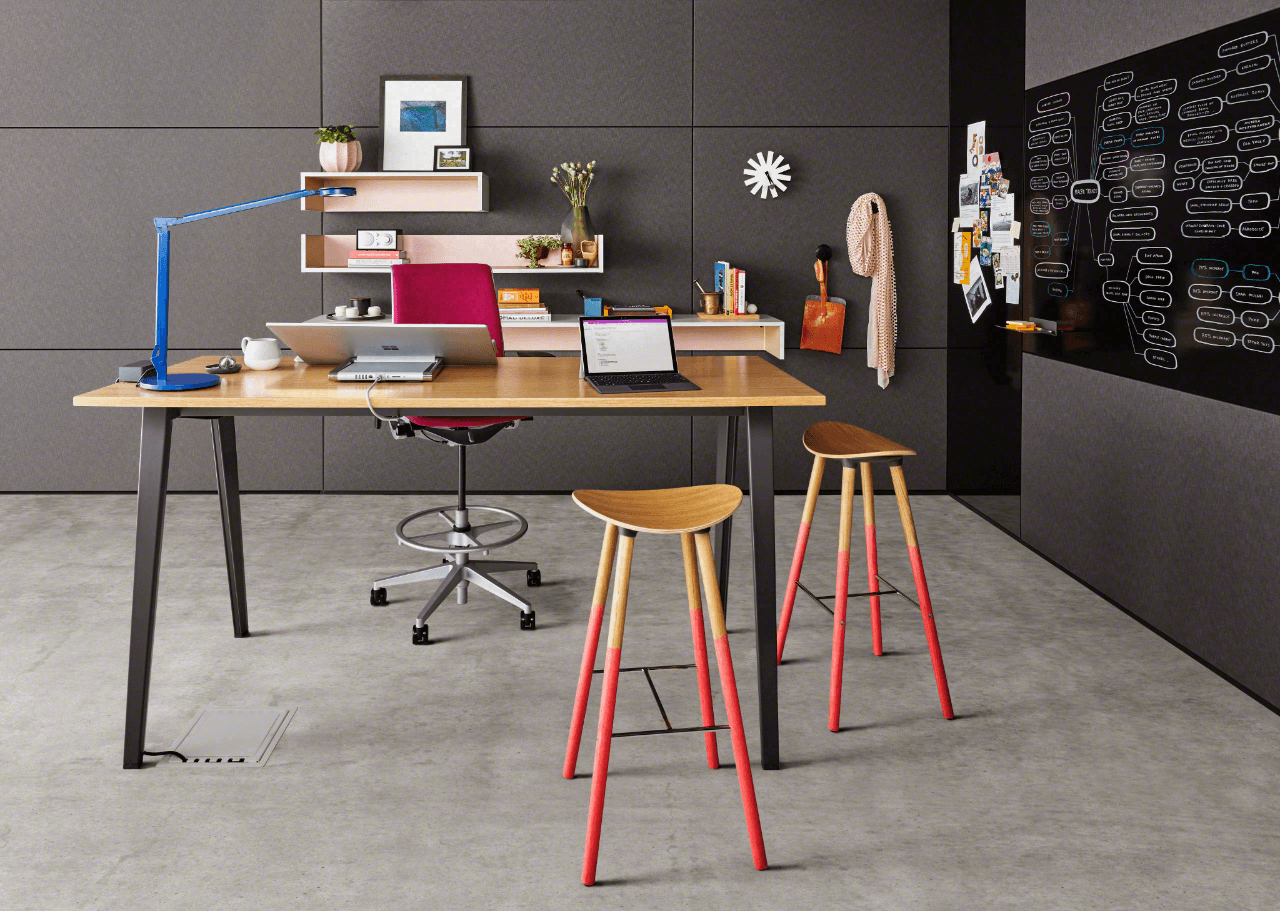
A war room should feel corporate, because it conveys the functional identity of the company. Practically, it needs the means to capture everything:
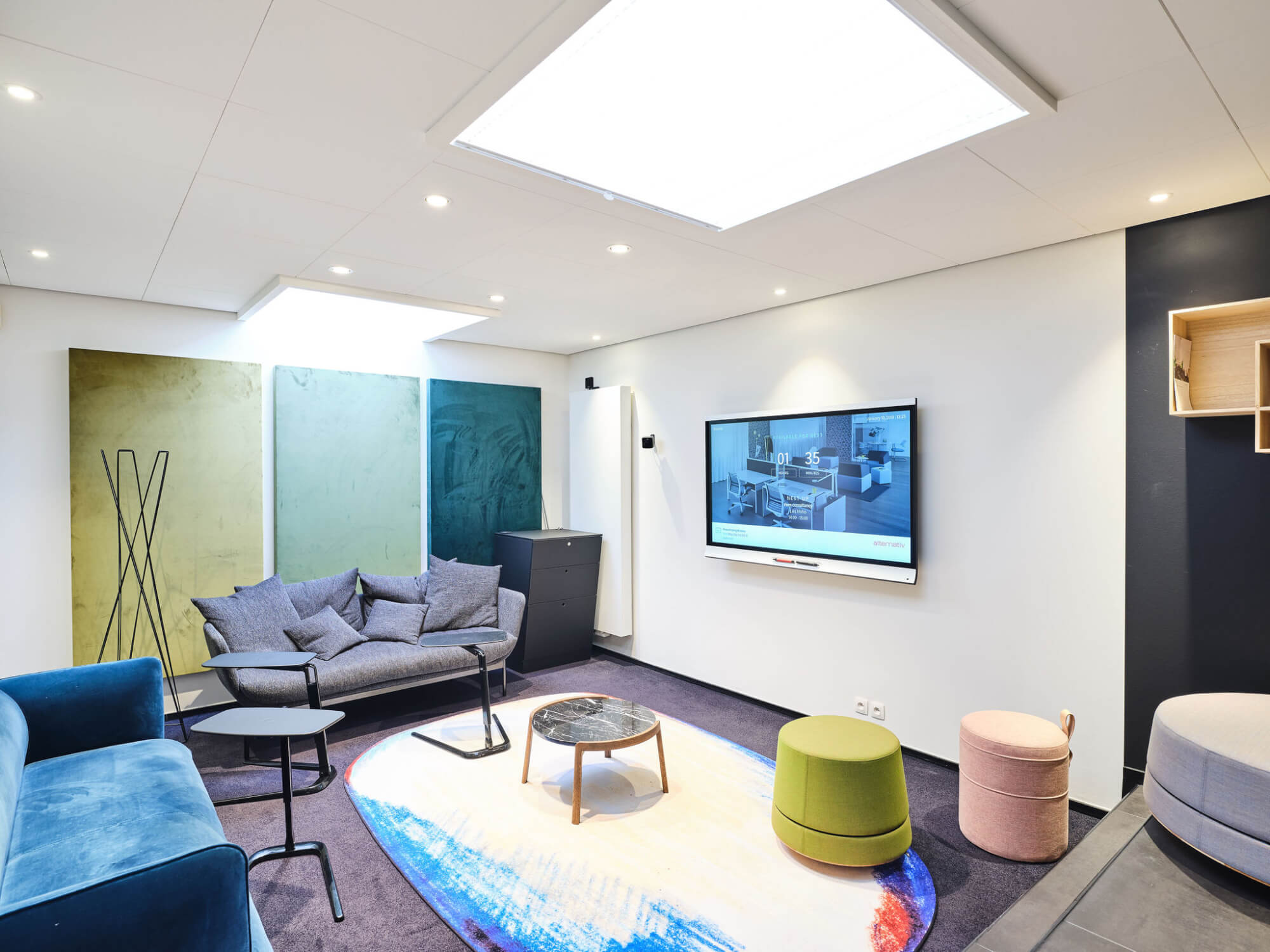
- Plenty of digital screens
- Whiteboards and a Post-it wall
- Cameras, so feedback can be captured and shared
The lab: where ideas get tested
A lab, as in laboratory, is a space that invites teams to come up with ideas and test solutions. It is dedicated to thinking, so it has to be welcoming: a moveable space that can be configured to suit the team, perhaps with a micro-grandstand or footstools.
It also has to be practical, which in most cases means writing walls. A lab should never be a fixed space. People need to be able to appropriate the area and make it work at the same rate as their thinking.
Corpoworking: coworking inside your own walls
Giving staff somewhere to meet that is not a conventional individual office may not sound revolutionary, but it lets people break from routine and helps nurture a genuine spirit of community.
That is corpoworking, a contraction of corporate and coworking. It creates a space for discussion and exchange inside the company itself. In fit-out terms it needs to be completely open and modular, so groups can form and reform without asking anyone's permission.
Workboxes: concentration inside the open plan
Workboxes are small meeting areas that can be inserted into an open plan office. They are designed in particular for staff who find it hard to concentrate in an open configuration.
They also go by other names: silent rooms, silent areas, think tanks. Anything, in other words, other than open plan, and anything that promotes concentration and thought. If your people regularly book a meeting room simply to get some quiet, workboxes are the missing setting.
How to choose your mix
Start from the work, not from the list of names. Spend a week logging what your teams actually do and where each activity currently happens.
- Count the recurring activities: focus work, calls, quick meetings, workshops, decisions, informal contact
- Match each activity to a setting and note which ones have no home today
- Check the balance: most offices over-invest in meeting rooms and under-invest in concentration
- Place loud and quiet settings apart, and treat acoustics as part of the design from the start
- Build in modularity, so a lab or war room can change shape when the work does
The mistake that undoes the whole plan
The most common error is relegating work to a single individual office. That neglects the greater good: the interaction, the pooled knowledge and the way different skills fit together. The opposite error is just as costly, removing every enclosed space and leaving nowhere to think.
A good office holds both. Alternativ designs that balance from the brief onwards, because we think twice to deliver once.

Scroll or drag
Frequently asked questions
A room for sharing information, analysing a situation and taking important decisions. It typically has digital screens, whiteboards, a Post-it wall and cameras to capture feedback.
Corpoworking is a contraction of corporate and coworking. It is an open, modular space inside the company where staff can meet, exchange ideas and break from their normal routine.
A small enclosed meeting or focus area inserted into an open plan office, also called a silent room or think tank, designed for people who struggle to concentrate in open space.
As many as you have recurring activities. List what people actually do in a week, then check which of those activities has no suitable setting today.
Not sure which settings your office is missing?
Alternativ is glad to map it out with you, without obligation.