
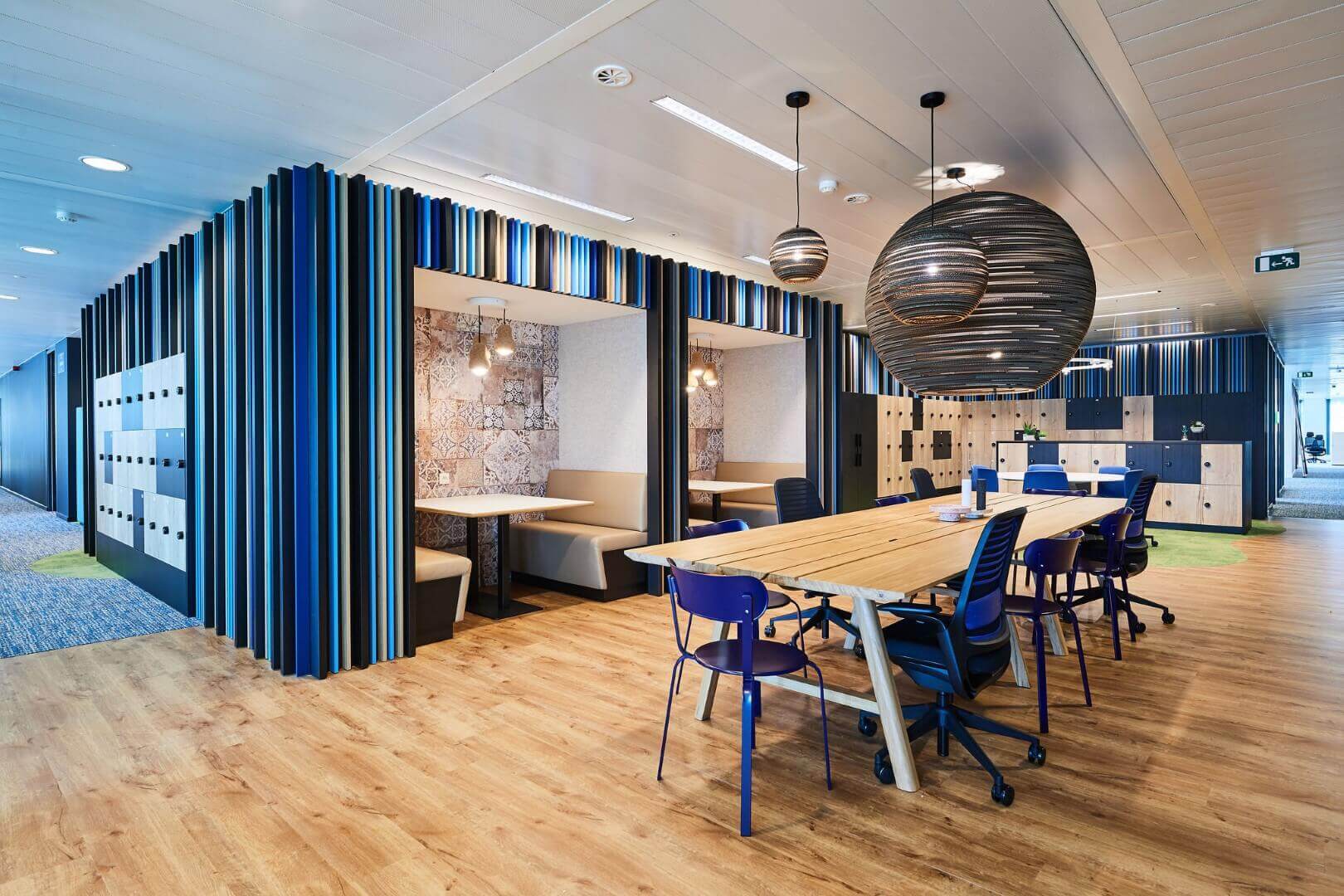
Returning to the office: Rethink the workplace before you refurnish it
Asking people to come back to an office designed for 2019 rarely works. The building has not changed, but the reason to be in it has. Before you buy a single desk, you need to know what your teams come in to do together. This article shows how to get to that answer and what it changes in your floor plan.
Creation, connection, community
What matters most to employees today, especially those belonging to the so-called Generation C, is being able to connect and collaborate, physically as well as digitally.
To welcome that generation and keep them happy and productive, employers have to provide the right tools and the right environment, one in which each individual has full choice and full control.
What does that mean exactly? The answer differs from company to company. There is no version of this you can copy from a competitor and expect it to fit.
The questions most workplace projects skip
Arriving at a creative, dynamic and flexible workplace, where new technologies help your team get things done, means asking uncomfortable questions first. Do you really need that 60-person meeting room you use once or twice a year? What is your plan for all those desks and chairs crowding your office, now that working from home is here to stay?
A useful starting set:
- Which activities genuinely need people in the same room, and which do not?
- How many desks do you occupy on your busiest day, not on paper?
- Where do people go when they need to concentrate, and does that place exist?
- Which rooms are booked constantly, and which sit empty week after week?
- What would make someone choose the commute over their kitchen table?
A blueprint for better businesses
Because there is no one-size-fits-all approach, Alternativ never puts specific proposals on the table at the start of a new project. The aim is to challenge you and reach the best solution together.
Before building anything, the process takes a step back to lay bare the skeleton of your business. What do you want to achieve? How do you work? How do your people collaborate, and how would they like to?
Those discussions produce an organisational blueprint. The blueprint gets fleshed out in the steps that follow, so the office design, the look and the feel all match your company DNA rather than a catalogue.
Helping Telenet make the change
Telenet, one of the leading telecom providers in Belgium, created new work-from-home rules in light of the pandemic. They came to Alternativ because they wanted their 12.000 m2, traditionally furnished office to reflect that new policy.
That was the starting point for a trajectory of co-creation. It kicked off with several workshops to gather the necessary information, from the fact that Telenet personnel are allowed to work remotely to the typical agility of the teams.
All of those ingredients were merged into a scenario. On that basis, Alternativ could tell Telenet what they actually need, so the provider can create a place where employees want to be rather than have to be.
What changes on the floor plan
Once the blueprint exists, the layout decisions become much easier to defend. A workplace built around collaboration and choice usually shifts in the same directions.
- Fewer identical desks, more settings tailored to a specific type of work
- Large meeting rooms broken into several smaller, better-equipped spaces
- Enclosed rooms and booths for video calls, so calls stop disrupting the open floor
- Quiet zones for focus work, because concentration is the hardest thing to do at home for some people
- Social spaces treated as work infrastructure, not as decoration
The cost of doing nothing
Leaving the office exactly as it was has a price, even though it never appears as a line in a budget. You keep paying rent and energy on square metres nobody uses, while the rooms people do need stay fully booked.
More importantly, attendance policies without a reason to attend wear down goodwill. If the office is the place where focused work is hardest and collaboration is no better than on video, people draw their own conclusions.
Rethinking the workplace is how you turn the return to the office from an instruction into an invitation.
Frequently asked questions
Mainly to connect and collaborate with others, physically as well as digitally. That is the work that is hardest to replicate remotely.
With your organisation, not your furniture. Map what you want to achieve and how your people work and collaborate, then translate that into an organisational blueprint before any design work begins.
Challenge them. A 60-person room used once or twice a year is usually better replaced by several smaller, well-equipped spaces that match how teams actually meet.
Give people choice and control: a range of settings for focus, collaboration and social contact, so the office offers something their home desk cannot.
Want help reorganising your workplace so it can face today and tomorrow with confidence?
Drop a line at leads@alternativ.be.