
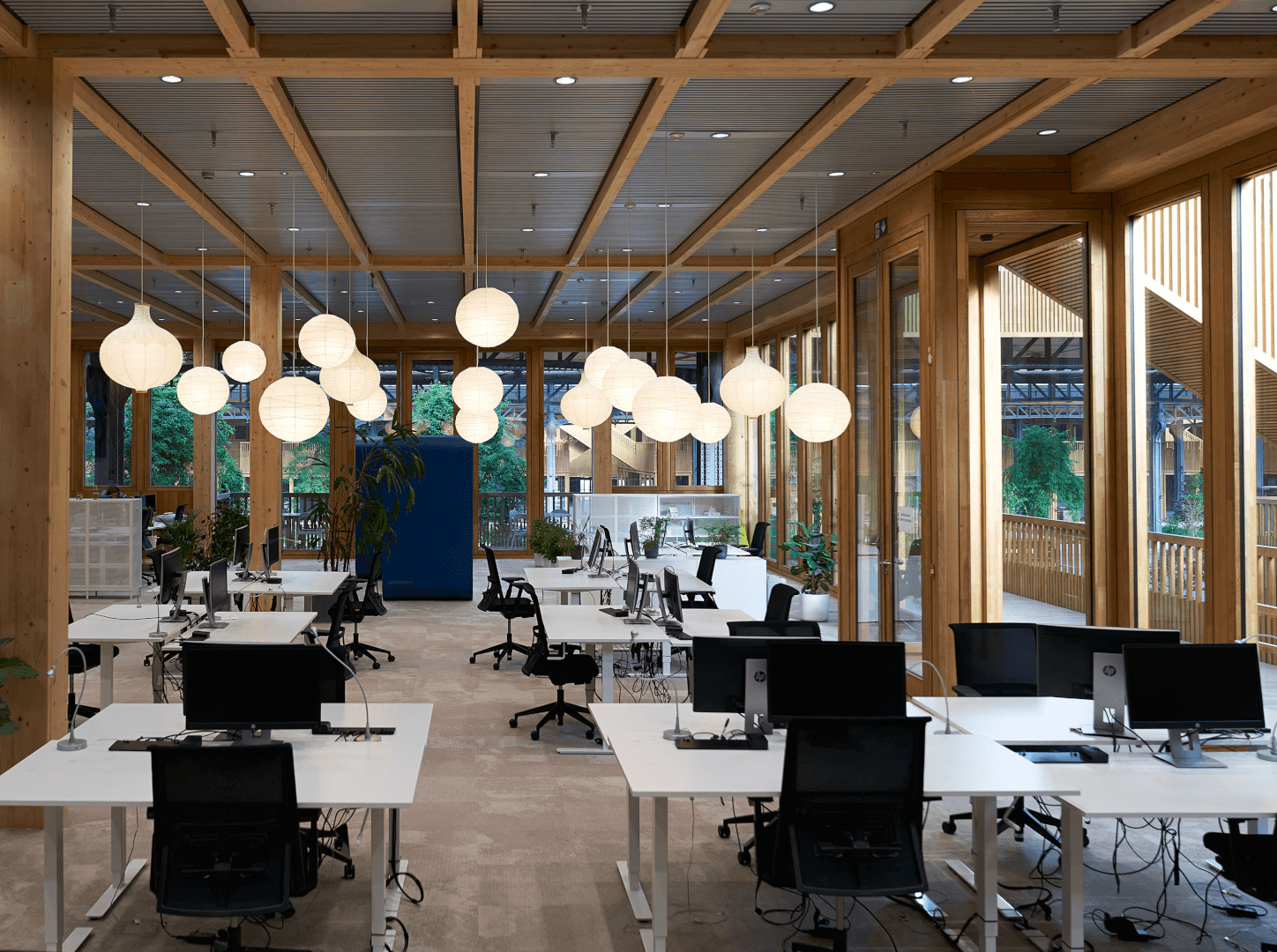
How to improve concentration in an open plan office without rebuilding it
Closed doors and small offices have made way for open-plan spaces, natural light and plenty of contact with colleagues. The upside is real, but so is the downside: noise that breaks concentration. You do not need a full renovation to fix it. Here are three practical interventions and a simple rule for how much acoustic treatment you need.
The open office trade-off
A study among 231 participants, published in Occupational and Environmental Medicine, alongside other sources, makes clear that employees who work in an open office are more physically active than those who spend their days in a traditional office setting. A landscape office also encourages creativity and collaboration.
There is one significant disadvantage. The noise that comes with this type of set-up causes concentration problems, and that is what most complaints about open offices are really about.
The goal is not to undo the open plan. It is to give people somewhere to go when the work needs quiet.
1. Introduce activity-based working
Hearing every conversation between colleagues is not only disruptive, it is also bad for privacy. Some experts argue that landscape offices can actually lead to less collaboration if there is no large, separate space for meetings, discussions or brainstorming. People who do not want to be overheard send an email rather than walk over to a colleague's desk.
Activity-Based Working (ABW) resolves much of this. You set up different types of rooms so colleagues can choose the right environment for each kind of encounter.
A workable set usually includes:
- Meeting rooms for scheduled discussions and client conversations
- Telephone bubbles for calls and video meetings
- Informal breakout spaces for quick, unplanned conversations
- Quiet zones or focus rooms for work that needs sustained attention
- Open benches for the collaborative work the landscape office is good at
2. Encourage walking meetings
Limited options for creating separate rooms in your landscape office? Encourage your team to find privacy by organising a walking meeting near the office.
The change of environment often generates new insights, the exercise is good for your health, and it is simply a pleasant way to talk. It also takes a conversation off the floor, which helps everyone still sitting there.
This works best for one-to-ones, catch-ups and early-stage thinking. It works least well for anything that needs a screen or written notes, so do not force it.
3. Install acoustic panels
Acoustic panels are highly effective at improving concentration in an open office. You can install dividing panels between desks, but keep them low enough that you do not cancel out the benefits of the open layout. You can also mount panels on walls or ceilings to limit how far noise travels.
No idea how many ceiling panels you need? The rule of thumb is that ceiling panels should cover between 35 and 50 percent of the floor surface when ceilings are lower than three metres. If your ceiling is higher than three metres, cover between 50 and 65 percent of the office surface area instead.
The rest of the layout matters too. Rugs, carpet and upholstered furniture all dampen noise, so treat the panels as one part of a wider acoustic plan rather than the whole answer.
Where to start if you can only do one thing
Most offices get the biggest gain from separating loud activities from quiet ones. Calls and impromptu meetings generate the noise that breaks focus most reliably, because speech is the hardest sound to tune out.
So start with containment: a phone booth, an enclosed room, or at minimum a defined zone away from the focus desks. Then add absorption to ceilings and walls where people actually sit.
Only then look at the finer details, such as flooring and furniture. Doing it in that order avoids spending a budget on panels that never reach the real source of the problem.
Signs your open office has a concentration problem
You rarely need a measurement to know. Watch for these patterns instead.
- Headphones are standard equipment rather than a personal preference
- Meeting rooms are booked for solo calls because there is nowhere else to take them
- People come in early or stay late to get demanding work done
- Colleagues email each other rather than speak, even when sitting metres apart
- Focus-heavy roles quietly shift their deep work to home days
Frequently asked questions
Speech is the main culprit. Hearing colleagues talk breaks concentration and reduces privacy, which is why people default to headphones or email.
With ceilings under three metres, cover 35 to 50 percent of the floor surface. With ceilings above three metres, cover 50 to 65 percent.
Activity-Based Working means providing different types of space, from meeting rooms to telephone bubbles and breakout areas, so people pick the setting that fits the task.
They do, but keep them low. Panels that are too high block noise at the cost of the light, sightlines and openness the layout was chosen for.
Want the open plan to work for focus as well as collaboration?
Make a no-obligation appointment with Alternativ and we will look at your layout together.