
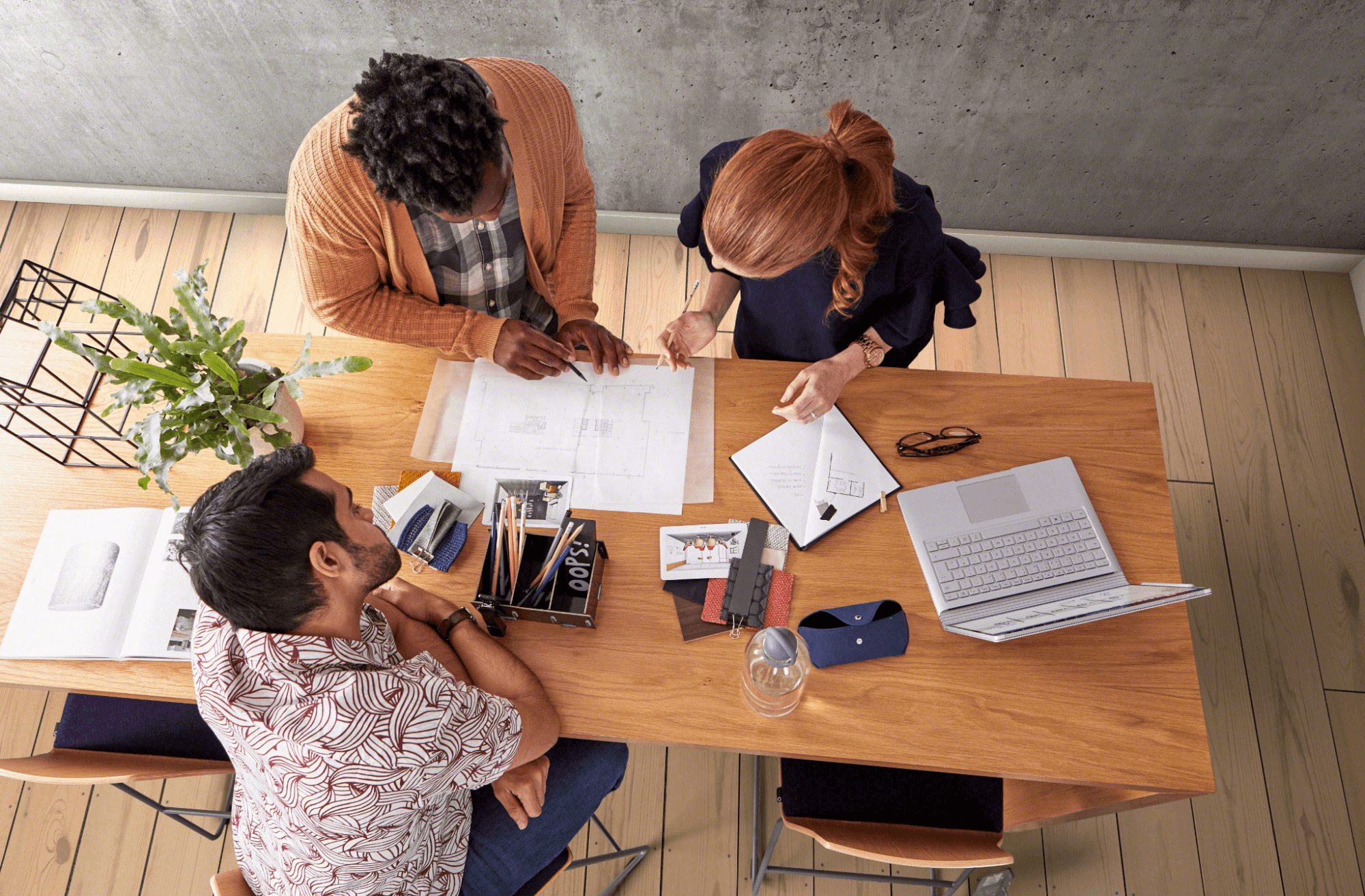
New work, new rules: Designing for teamwork and me work
Your teams are collaborating more than ever, and your office was probably built for a quieter era. That mismatch shows up as booked-out meeting rooms, nowhere to concentrate, and decisions that take longer than they should. This article explains how hyper-collaboration changes the demands on a workplace, and what to change to support both team work and focused solo work.
Why teams, why now
Speed. Complexity. Disruption. These are the conditions companies deal with every day if they want to survive and grow. Innovation is the response, and innovation requires a culture that fosters a new breed of hyper-collaborative teams.
Studies confirm that people working in teams innovate faster, achieve better results and report higher job satisfaction. Companies that promote collaboration in the workplace are five times more likely to be high performing, and more profitable with it.
The pressure, however, is on those same teams to move faster than ever.
What the highest-performing teams do differently
Little about their work resembles what teams did in the past. Their days are filled with a continuous exchange of information and ideas, working in rapid cycles of iteration. Tasks are interdependent and projects stay fluid.
Everyone is accountable for keeping the work moving forward, which means people need to reach each other without scheduling a meeting three days out.
Swim team or basketball team?
Think about the difference between a swim team and a basketball team. Swimmers stay in their own lane. Basketball players interact and transition constantly, relying on each other to win.
Teams today have to play basketball: navigating a fast flow, bouncing between team members, iterating and improving on each other's ideas. A floor plan of individual lanes makes that physically awkward, no matter how good the culture is.
What hyper-collaboration asks of your office
Constant exchange only works when the space removes friction. In practice that means a small number of concrete requirements.
- Proximity — team members within sight and earshot of each other, without crossing the building
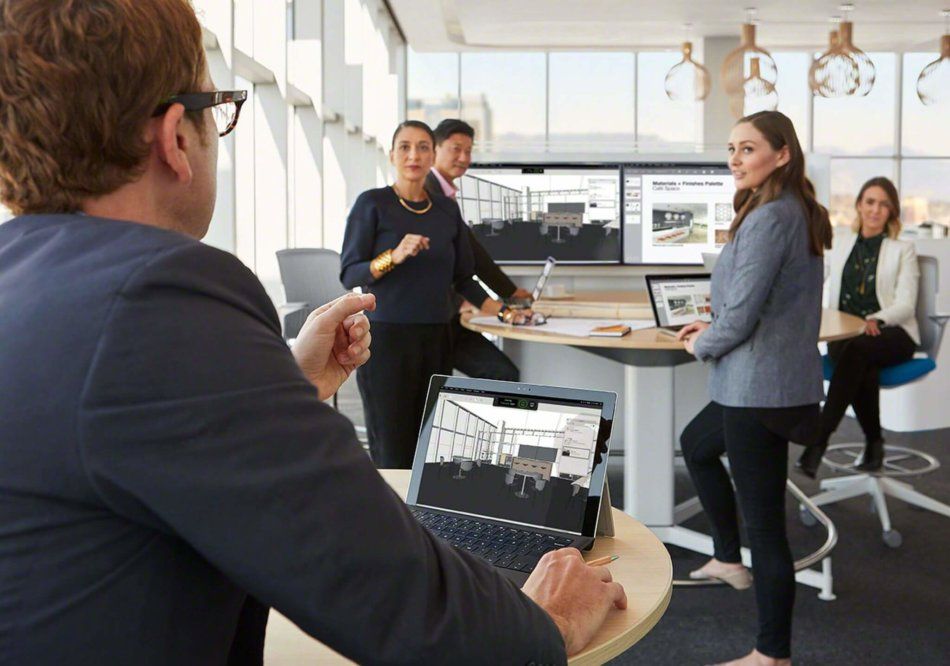
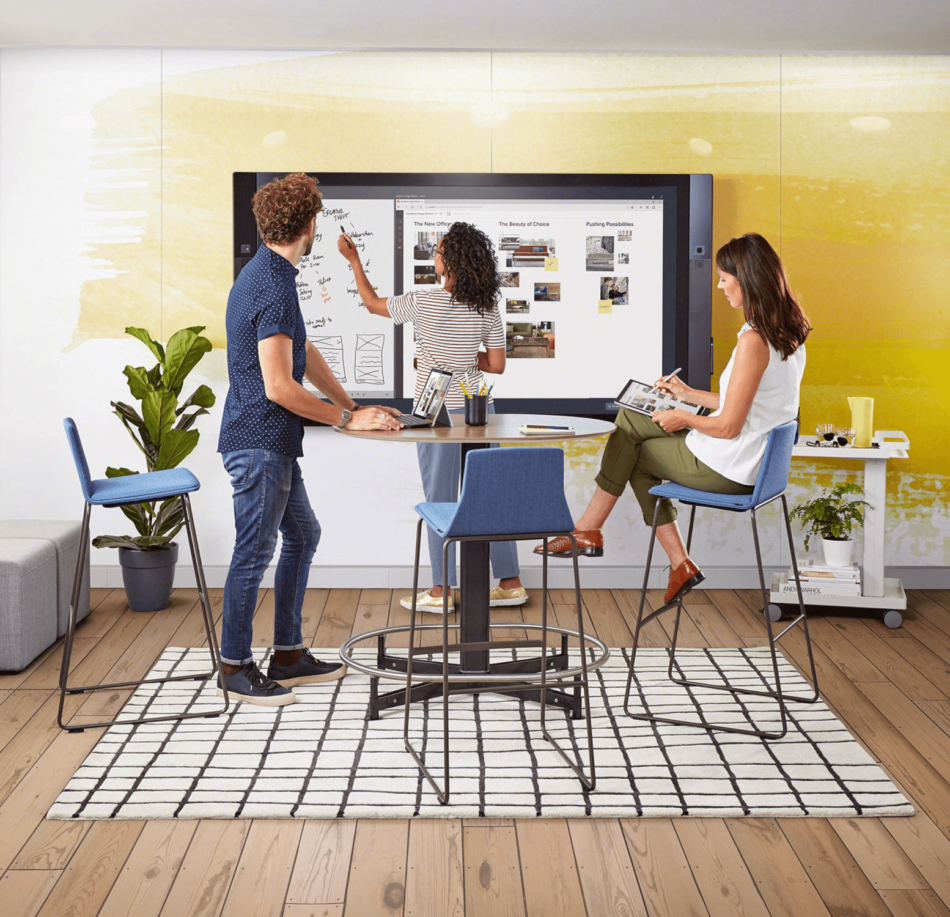
- Visible work — walls, boards and screens where the current state of a project stays up between sessions
- Unbookable space — settings a team can simply use, because a booking system kills a two-minute conversation
- Adaptable boundaries — modular partition walls and mobile furniture, so zones follow projects rather than the other way round
- Shared technology — screens and tools designed for a group, placed so people can gather around them
Do not sacrifice me work
The common mistake is to read hyper-collaboration as an argument for removing every wall. It is not. Teams that iterate constantly also need to think, absorb information and write. Without somewhere to do that, people either stay home or wear headphones all day.
A balanced floor gives both modes a proper home, close enough that switching between them costs nothing.
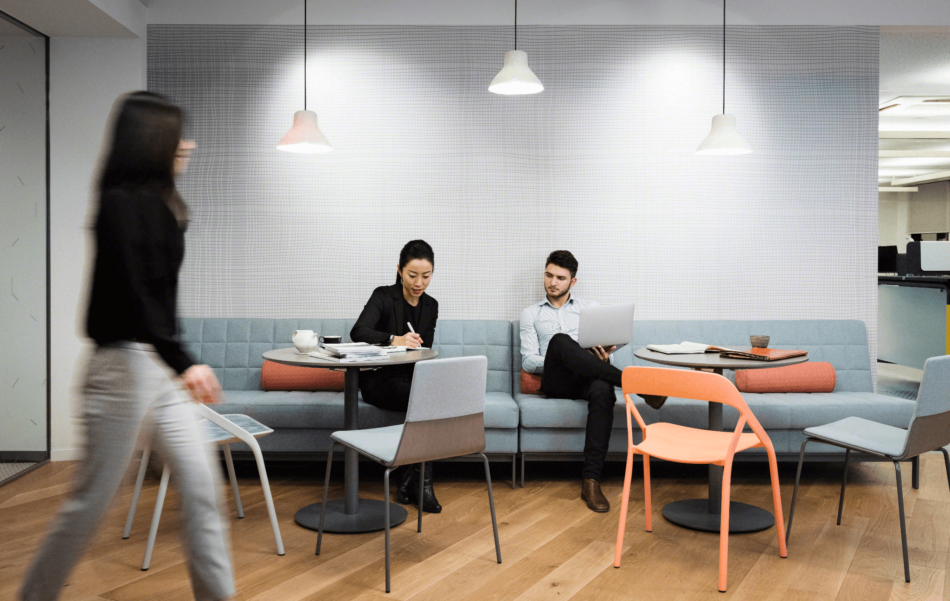
- Enclosed focus rooms and phone booths near the team zones, not on another floor
- A quiet zone with clear, agreed rules rather than informal etiquette
- Acoustic separation between collaboration areas and desks where people concentrate
What it costs to leave it alone
The cost of an office built for the old rules rarely appears in a budget. It appears as meetings that exist only because there was nowhere to have a quick conversation, as decisions delayed by a week, and as good people who prefer to work anywhere but the office.
It is measurable if you look. Count how many meeting rooms are booked by two people. Count how many desks are empty on a Tuesday. Ask how often someone gives up on finding a quiet spot.
A practical starting point
Pick one team and redesign around their actual week. Give them a home base with visible work, a place to gather without booking, and quiet settings within a few steps. Watch for a month, then decide what to repeat elsewhere.
That sequence of observe, test and only then build is how Alternativ approaches a workplace project: we think twice to deliver once.
Scroll or drag
Frequently asked questions
It is a way of working in which teams exchange information and ideas continuously, in rapid cycles of iteration, with interdependent tasks and fluid projects rather than separate hand-offs.
Studies confirm that people working in teams innovate faster, achieve better results and report higher job satisfaction, and companies that promote workplace collaboration are five times more likely to be high performing.
No. Teams that collaborate constantly also need places to concentrate. The goal is proximity between collaboration zones and quiet settings, with acoustic separation between them.
Me work is focused individual work such as writing, analysis and reading. It needs enclosed or acoustically protected settings, placed close to the team so switching modes is easy.
If your office still feels like a set of separate lanes, Alternativ can help you redraw it around the way your teams really work.