
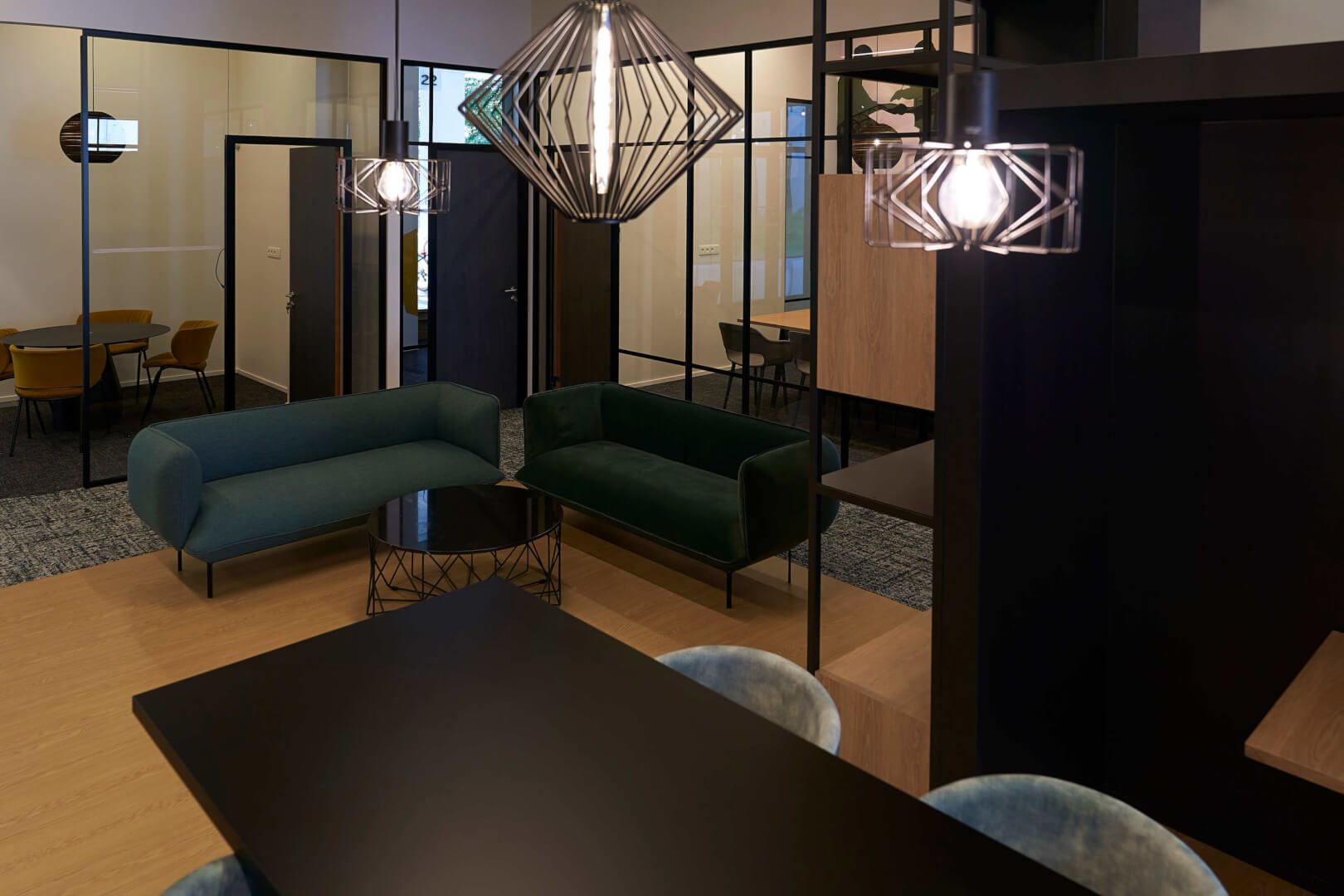
Choosing office furniture: Branding, comfort and sustainability in one decision
Office furniture is usually bought under time pressure, judged on price per desk, and regretted within two years. The pieces that work hard for a decade do three jobs at once: they show visitors who you are, they let people work without pain, and they last. Here is how to weigh all three before you sign an order.
Start with the job your furniture has to do
Furniture is the part of your office people touch every day. It carries your identity to visitors, it decides whether your team can concentrate, and it makes up a large share of the footprint of your fit-out.
So before you compare catalogues, write down what the space has to deliver. How many people are in on a typical day? Which activities happen where?
Branding: let the furniture say who you are
Office furniture is a useful tool for underlining your identity. The most obvious route is colour: picking up the shades of your logo in chair upholstery, a reception sofa or the floor covering makes an immediate impression.
Colour is only the start. The furniture also has to match the personality of your organisation. If you position yourself as a rebellious, trend-driven brand, classic armchairs in reception send the wrong signal. If you want clients to see you as a steady partner, flashy colours work against you.
A simple test: show a photo of your proposed reception to someone outside the company and ask what kind of business they think it is. If the answer surprises you, the furniture is telling the wrong story.
Comfort and productivity: ergonomics beyond the chair
An office has to be a pleasant place to work, which makes ergonomics a major consideration. That goes further than buying ergonomic office chairs.
Height-adjustable desks let people switch between sitting and standing during the day. Dividing walls create a more intimate atmosphere and encourage calm working, even in an open office. Some models add an acoustic function, so one colleague tapping enthusiastically on a keyboard does not break the concentration of the person opposite.
Think in zones rather than in products. Once you know where focus work, calls and collaboration happen, the right furniture for each zone becomes obvious.
- Adjustable chairs and desks that suit different body types, not just one average user
- Acoustic dividing walls between focus areas and busy, social zones
- Storage that lets people clear a desk completely at the end of the day
- Softer, informal seating for the conversations that do not need a meeting room
Sustainability: useful life first, then footprint
Several things make office furniture sustainable, and useful life is the most important. Meeting tables, office cabinets and drawer units that last are always preferable to cheaper counterparts that give up after a few years. Replacement is the hidden cost of a low purchase price.
Manufacturing footprint is the second item on the list. Alternativ works as a partner of Steelcase, an American manufacturer that has been selling high-end office furniture for years. Steelcase received the 2021 Better Practice award for its energy management from the American ministry of energy, and is part of Shaw's 2020 sustain[HUMAN]ability Leadership Recognition Program. Shaw, America's largest carpet company, rewards businesses for their tremendous effort and progress to support the wellbeing of people and the planet amid the unprecedented challenges of 2020.
If buying locally matters to you, the Alternativ range includes Belgian names such as Extremis, Polyvision, Robberechts and BuzziSpace, which works exclusively with recycled materials. Our northern neighbours are well represented too, by brands such as Arper, Artifort and Moooi.
Common mistakes when buying office furniture
Most furniture regrets follow the same few patterns.
- Buying for the headcount on paper instead of the number of people actually in on a busy day
- Ordering one chair model for everyone, so smaller and taller colleagues are left uncomfortable
- Treating acoustics as a later add-on rather than part of the furniture plan
- Choosing worktop finishes that show every coffee ring and fingerprint
How to make the decision with your team
Involve the people who will use the furniture. A short survey and a walk around the floor tell you more about what is missing than any spreadsheet.
Then test before you commit. Ask for sample chairs on the floor for a few weeks and let different body types try them.
Frequently asked questions
Start with how the space is actually used: how many people are in on a typical day, and which activities happen where. That decides the mix of desks, meeting spaces and quiet zones before any brand choice.
Through colour and character. Picking up your logo colours in upholstery or flooring is the visible part, but the style also has to match how you want clients to see you.
Mainly a long useful life, backed by the manufacturer's environmental record and the availability of spare parts. Furniture you do not have to replace is the most sustainable option there is.
Yes, because the alternative shows up as back and neck complaints and lost days. Adjustable chairs and height-adjustable desks let one workstation suit many different people.
Need help choosing office furniture that fits your brand, your team and your budget?
Get in touch with the Alternativ experts for a no-obligation conversation.