
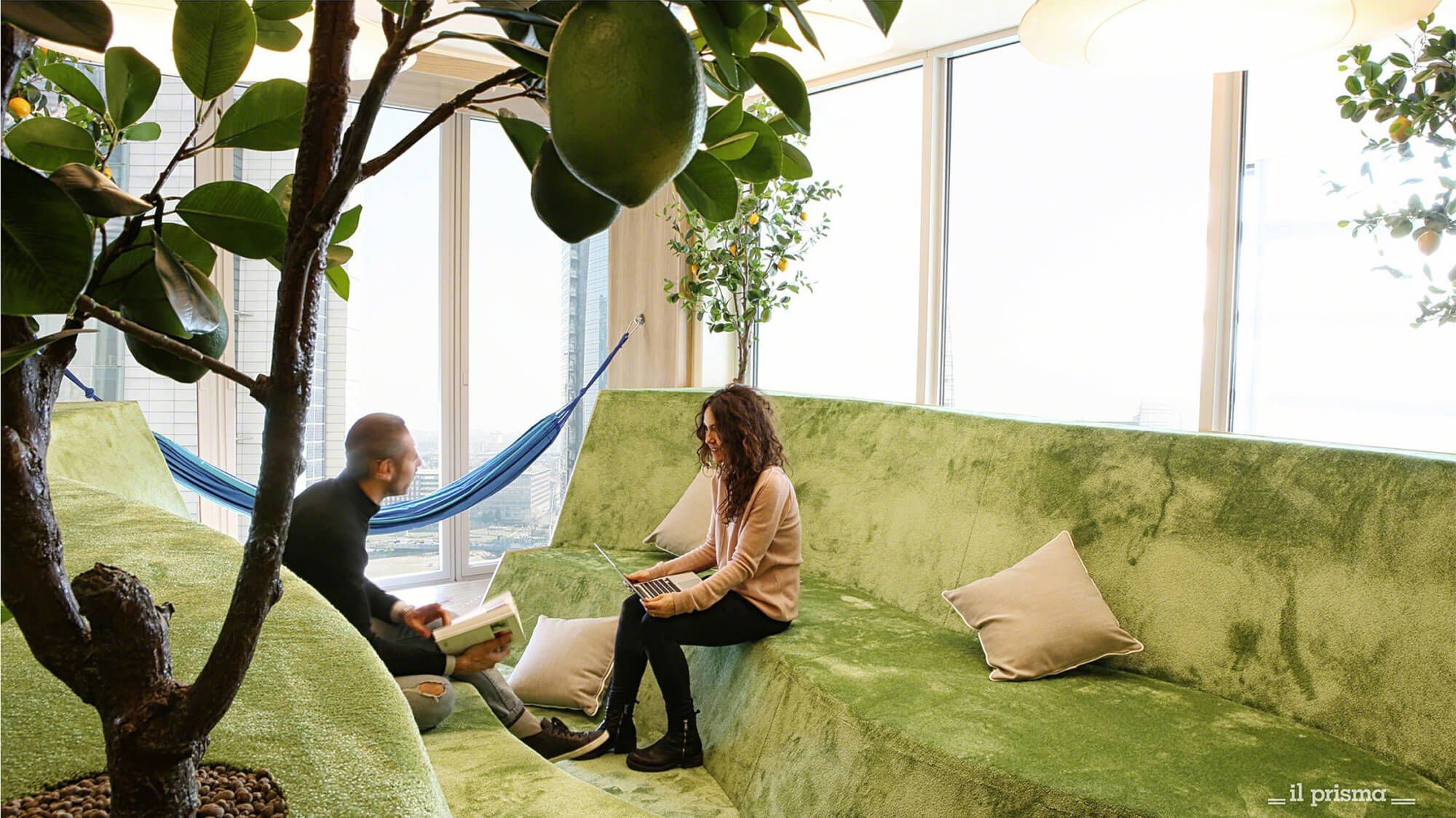
Biophilic office design: How nature boosts wellbeing and productivity
Biophilic design brings nature into the workplace, and the evidence behind it is strong. Natural light, greenery, organic materials and nature-inspired patterns lower stress and support focus, so people feel better and work better. Here is what biophilia is and how to apply it in your office.
What is biophilia?
The term comes from Edward O. Wilson, the American biologist often called the father of biodiversity. His idea is simple: humans have an innate need to connect with nature in order to thrive. Decades of research in psychology and cognitive science support it. Visual contact with nature, water, greenery or daylight lowers blood pressure and reduces stress hormones in the blood.
Why biophilic design works at the office
A workplace cut off from nature works against the people in it. Studies link natural elements to lower stress, better mood, sharper cognition and higher productivity. According to Steelcase researcher Beatriz Arantes, 42% of office workers work in spaces without natural light, even though daylight is known to improve mood, support learning and lift performance. The psychiatrist Norman Rosenthal demonstrated the link between light and mood as far back as the 1980s, and the evidence has only grown since.
The mechanism is restoration. Focused work draws down our attention; contact with nature, even a view, a plant or a natural texture, helps it recover. In an office, that translates into people who stay sharper for longer and feel less drained at the end of the day.
The two design levers: direct and indirect nature
Biophilic design works through two complementary levers. The strongest results come from using both.
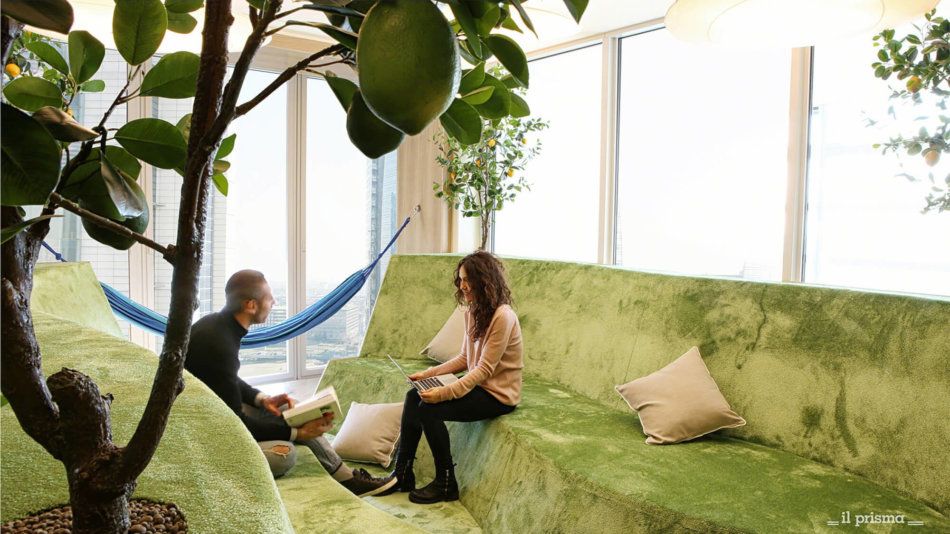
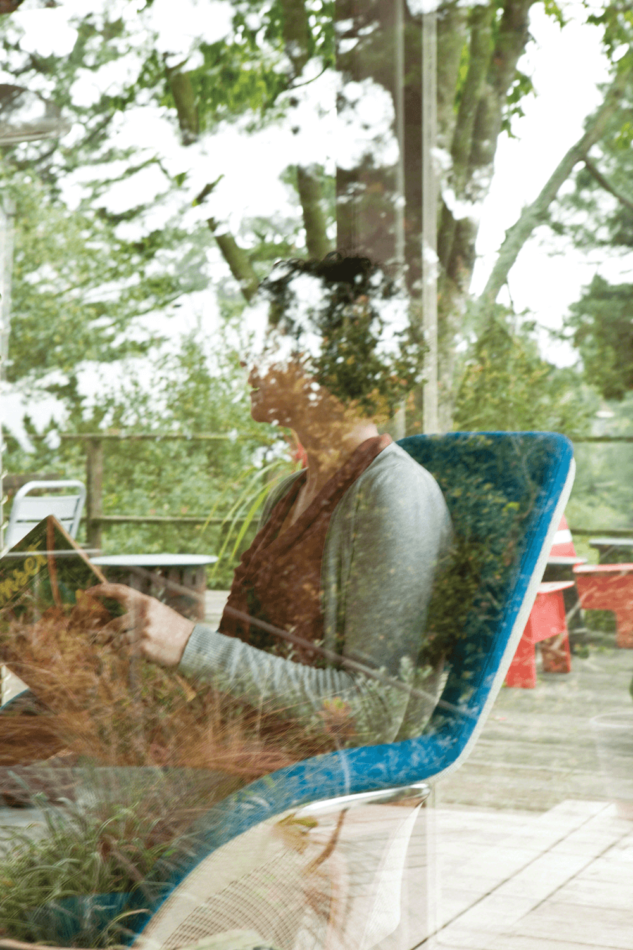
- Direct nature. Bring real natural elements into the space: plants and green walls, daylight and views, natural ventilation and water features. Greenery supports air quality, calm, inspiration and creativity, so prioritise it where people sit.
- Indirect nature. Where daylight or greenery is limited, evoke nature through design. Use natural materials such as wood and stone, an organic colour palette, and biomorphic patterns like curves, spirals and domes. There are no right angles in nature, and these cues signal a natural environment to the brain.
Biophilic design in practice
Materials and patterns do a lot of the work. Steelcase brands such as Coalesse and Designtex have created fabrics whose patterns echo the undulation of water, sand and earth for a calming effect. As Arantes puts it, you can fool the brain into thinking it is in a natural environment. Combined with organic shapes and a natural palette, these details turn an ordinary office into a space that supports wellbeing, without needing a forest outside the window.
Where to start with biophilic design
You do not need a full renovation to benefit. A sensible order of priorities:
- Maximise daylight. Seat people near windows and keep sightlines open so light reaches deep into the floor.
- Add greenery. Start with planting in shared areas and at workstations, and consider a green wall as a focal point.
- Choose natural materials. Favour wood, stone and natural textures in furniture and finishes.
- Layer in biophilic patterns. Use organic forms, nature-inspired textiles and a calm, natural colour palette.
- Frame the views. Where you have a view of greenery or sky, design the layout to make the most of it.
Biophilic design and the return to the office
As organisations rethink why people come in, biophilic design is one of the most effective ways to make the office somewhere people actually want to be. A space that feels calm, healthy and human competes far better with working from home than a grey open-plan floor. It is a wellbeing investment that doubles as an attendance and retention strategy.
Scroll or drag
Frequently asked questions
No. Plants help, but light, materials, colours and patterns matter just as much. The best results combine direct and indirect nature.
Research links natural elements to lower stress and better focus, which support performance and wellbeing over time.
Yes. Natural materials, biomorphic patterns and the right colours can evoke nature even in low-light spaces.
Begin with daylight and greenery where people sit, then layer in natural materials and biophilic patterns.
Alternativ is the official Belgian partner of Steelcase, the global leader in office furnishings. Contact us to explore biophilic design for your workspace.